Eli Weiss on Why Your Best Customers Leave - And Why Better CX Starts Before They Complain
Most e-commerce brands think about retention too late. They look at repurchase rates, email flows, loyalty programs, discounts, and churn. Then, when customers don't come back, they call it a retention problem.
But in this episode of CX After Hours, Eli Weiss makes the case that retention usually breaks much earlier. It breaks when a product disappoints, when a return is painful, when a loyal customer gets slapped with a policy, or when a bot gives a fast answer that doesn't actually solve the problem.
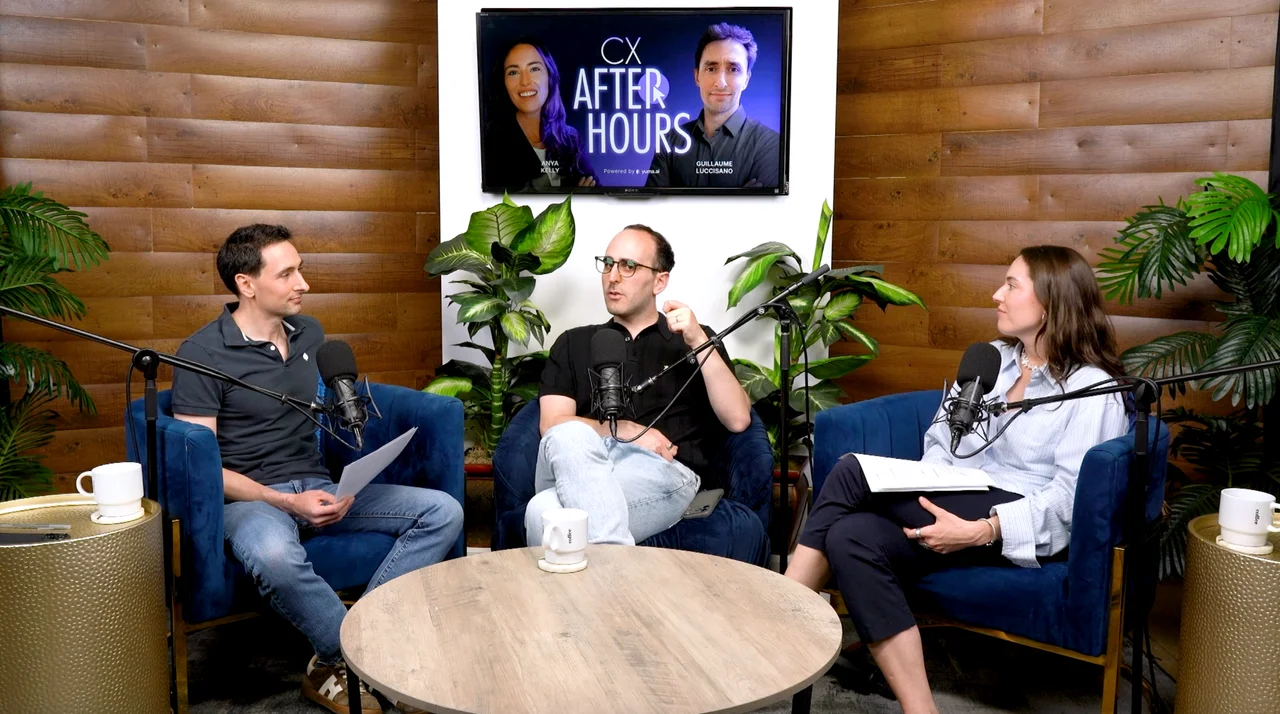
And often, it breaks without the customer ever saying a word. As Eli puts it, "The quiet leavers don't get tracked."
That line gets to the heart of the episode. The most at-risk customer is not always the one opening tickets, leaving bad reviews, or demanding refunds. Often, it is the customer who has a bad experience, decides the brand is not worth the effort, and simply never comes back.
In this episode, hosts Guillaume Luccisano and Anya Kelly sit down with the one and only Eli Weiss, now in an advocacy role at Yotpo after years leading CX and retention at brands like OLIPOP and Jones Road Beauty, to unpack where ecommerce retention really breaks - and what CX leaders can do about it.
(Eli also runs one of the best newsletters in the business - 'All things CX and Retention'. Check it out and subscribe here: eliweisss.com)
Watch or listen to the full episode:
Apple Podcasts
Spotify
YouTube
Retention is not just marketing
E-commerce brands often treat retention like a marketing function. They send better emails, build better flows, offer a discount and try to get the customer to buy the next thing.
All of that can help. But, as Eli mentions in this episode, if the actual experience is broken, marketing is often just trying to win back trust the business already lost.
"I think most of retention is actually product. And it's boring because a CX practitioner can only surface that, not fix it."
That is a familiar tension for CX teams. They hear the complaints first, but the root cause often sits elsewhere: product, operations, fulfillment, marketing, finance, or leadership. CX sees the pattern, but it cannot always fix the system that created it.
Eli contrasts this with brands where the product itself does most of the retention work. Apple doesn't need to email you every day to convince you to buy another phone. But many DTC brands operate differently.
"D2C brands operate in a different vernacular where it's like 'you bought this, but your wallet's still out. Can you buy the next 10 things?'"
That's where brands get retention backwards. They push for another purchase before asking whether the first experience earned it.
AI is not the problem - faster slop is
"My experience as a customer has gotten progressively worse since the advent of AI. As a customer, for 90% of brands, when I ask a question, now I get a really fast, sloppy response. In the past, it took 10 hours to get slop. So now you have faster slop, but the slop is not less sloppy most of the time."
That phrase should sting a little. A lot of e-commerce teams are under pressure to move faster, automate more, reduce volume, and lower cost. But speed only matters if the answer actually helps. A fast bad answer is still a bad answer.
This is where Eli pushes back on the obsession with automation percentages. Everyone wants to talk about automating 60%, 70%, 80%, or 90% of tickets. Eli is more interested in what happens to the remaining 5-10%.
"Everyone's talking about whether it's the 60%, 70, 80, 90%, whatever it is. There will always be the remaining 10%. And I think there's limited understanding of how we can make people better at that 10%."
That final 10% is where loyalty is often won or lost - the angry customer, the confused customer, the high-value customer, the weird edge case, or the person who has already tried the bot and is now even more frustrated.
Eli believes "between 5 and 10% will be there forever." Not because AI will not improve, but because some moments are too nuanced, emotional, or commercially important to treat like a standard workflow.
The opportunity is not just to automate more. It is to design a system where automation handles the repetitive work, while humans are better prepared for the moments that matter. That requires context, clean data, segmentation, edge-case routing, and good judgment. As Eli says, if AI sees that someone is a top 1% customer, "just fork it and send it to a human."
What's the aim? Deflection or resolution?
For many brands, deflection has become the goal - and AI is helping drive it to new heights. Deflect more tickets, reduce contact volume. Keep customers away from human agents and lower the cost to serve.
On paper, that sounds great. Fewer tickets, lower costs, less pressure on the team. But Eli challenges the whole premise from the customer's point of view.
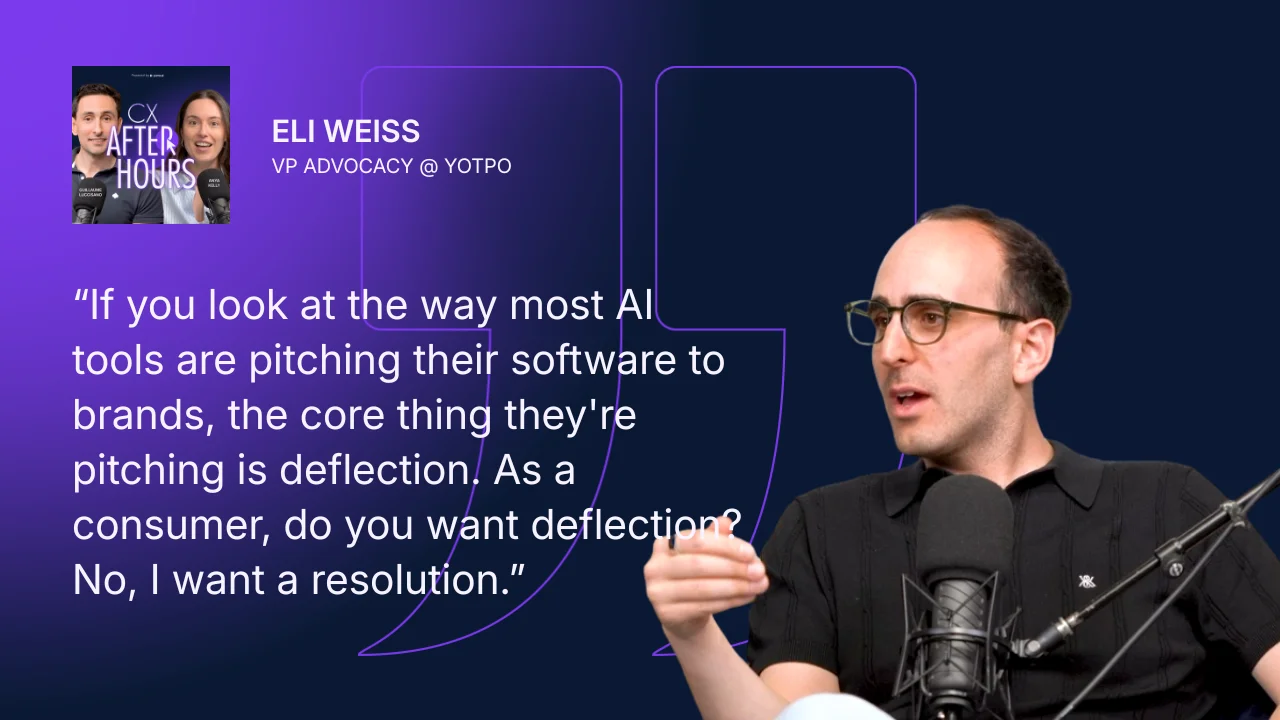
"As a consumer, do you want deflection? No, I want a resolution."
That is the distinction ecommerce CX teams need to hold onto. A deflected ticket is not automatically a resolved issue. Sometimes the customer got what they needed. But sometimes they gave up, closed the chat, and decided not to bother.
That might look clean in a dashboard, but it can quietly damage retention.
"When I see those numbers as a CX practitioner, I say, 'Is this deflection because this sucks, or is this deflection because it's been resolved?'"
That is a much better question than "Did ticket volume go down?" Did the customer get the right answer? Did they trust it? Did they come back? Did they buy again?
Eli is also sceptical of metrics that only capture the customers who are willing to speak up: "NPS is biased towards the super excited customers or the super miserable customers." But many of the most important customers are in the middle: mildly disappointed, quietly annoyed, not angry enough to complain, but unlikely to return.
That is why fewer tickets can be misleading. It might mean the experience is improving. Or it might mean customers have been trained not to expect help.
The boring parts of e-commerce CX are the moments that matter
In the episode, Eli talks about buying a few new pairs of socks from a brand he regularly purchased from. One pair ripped after two wears, so he reached out. This should have been easy: a high-value customer, a small issue, a low-cost replacement, and a chance to build trust.
Instead, the brand leaned on policy. It had been 31 days since purchase. Out of policy. Sorry.
After a long back-and-forth, he was eventually offered a small gift card. His view is simple: "Just send me a new pair of socks and apologize."
That story works because every e-commerce CX person recognises the pattern. Returns, refunds, exchanges, credits, and replacements feel operational. They sit in policies, macros, help docs, and workflows. But to customers, they are often the moments that define the brand.
"Most returns is such a boring part of the business, but so badly done 90% of the time."
"Returns, refunds, credits, exchanges...when the energy's high and when you have a potential to either win them or burn them, those are the '10% boring things' that most brands can immediately increase LTV by focusing on."
That is the practical takeaway. These are not just support issues. They are LTV moments.
When a customer asks for a refund, exchange, or replacement, something has already gone wrong. The brand can either make them feel like a problem, or make them feel like someone has understood the problem.
That does not mean giving every customer everything they ask for. Eli is clear on that too.
"Refunds, returns, exchanges are all tools. And these are tools that can make the money for the company or lose the money for the company, but can also win the customer, lose the customer."
The goal is not to blindly follow policy or blindly side with the customer. The goal is to understand what will rebuild trust. As Eli puts it, "The reason why people ask for a refund is because they lost trust in you. They wanted the product to begin with."
CX knows where the business is breaking
Eli goes on to talk about how CX is often the company's early warning system. CX hears the complaints before they show up in revenue. CX sees the patterns before they become public. CX knows when customers are confused, disappointed, or quietly losing faith.
But not every company wants to hear it.
Eli draws a clear distinction between brands that want CX to quiet the noise and brands that want CX to surface the noise.
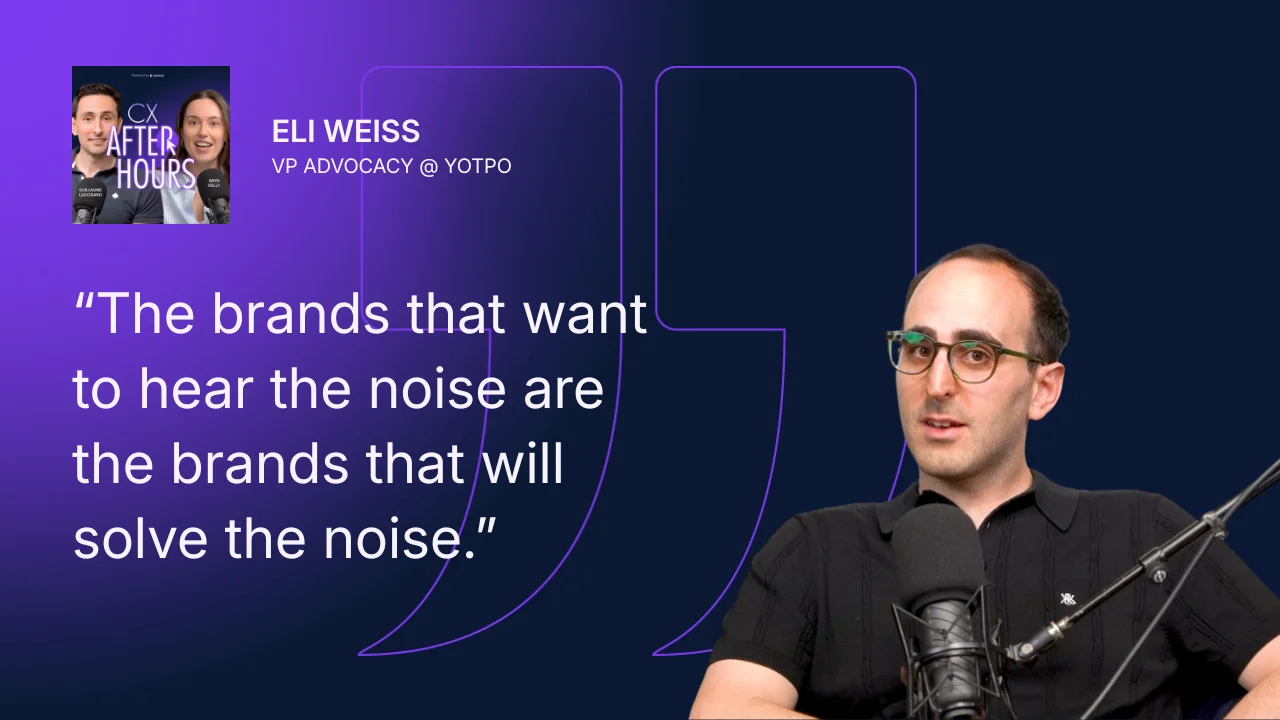
"The brands that want to hear the noise are the brands that will solve the noise."
Some companies hire CX leaders to keep complaints contained. But that is not strategic CX. That's just noise management.
The best companies use CX as a feedback engine. They want the patterns and the uncomfortable truths. They want CX to bring the customer into the rooms where product, operations, marketing, and leadership decisions are made.
"It's a question of will you hear it now or will you hear it two years later - and two years later you lost half the revenue you could have gotten."
And the insight is not only in the help desk. It is in reviews, social comments, TikTok videos, Facebook groups, Reddit threads, and the places where customers talk when they are not talking directly to the brand.
Eli is especially pointed on Reddit: "I've seen maybe 5% of brands that actually look at Reddit." He adds, "They look at their Zendesk and their Gorgias, and that's kind of it."
For e-commerce brands, that is a major blind spot. Customers are often more honest with each other than they are with you. If they are discussing your product, policies, shipping, quality, or support somewhere public, that is not outside CX. That is part of the customer experience.
The future of CX = bots + exceptional humans
Despite the criticism of bad bots, poor implementation, deflection metrics, and faster slop, Eli is optimistic about the future of CX.
He believes AI will get better and that customers will happily use bots when bots actually solve the problem. And he believes many repetitive CX tasks should be automated.
But that does not make humans less important. It raises the bar for what humans should do.
The future CX team is not a large group of people answering the same shipping policy question 75 times a day. It is a more skilled group handling the moments where judgment, empathy, commercial understanding, and creativity matter.
As Eli says, "CX will be back to the glory days of delivering fantastic experiences, and everything else the bots do."
Eli imagines a future where the best CX people spend less time grinding through repetitive tickets and more time doing the work that made many of them love CX in the first place: turning bad experiences into memorable ones.
"Think about the best CX experience you've had as a practitioner...the best refund story, save story, make somebody go from hate your brand to love your brand. Imagine you can just do that instead of answering the 75th email about the shipping policy."
Check out the full episode here:
Apple Podcasts
Spotify
YouTube


