AI Customer Service Software: Top 14 Tools for 2026
A research-driven guide to the top AI customer service software platforms of 2026: definitions, a transparent rubric, concise vendor rundowns with Yuma #1 for ecommerce, a comparison table, buyer’s checklist, trends, FAQs, and a sober conclusion.
Maya runs customer care for a fast-growing Shopify store. By 9:07 a.m. her screen already looks like a pinball machine: forty browser tabs, three spreadsheet trackers, two Slack channels pinging in stereo. The rest of her morning disappears into searches, note-taking, and wrap-up work.
If “customer support” is supposed to mean supporting customers, why does Maya devote so little time to any interaction that feels remotely human?
For years we assumed this was an immutable trade-off. Scale demanded efficiency, empathy demanded time, and optimizing one would cannibalize the other. But 2026 is forcing us to think again.
A 2025 peer-reviewed study of 5,172 customer support agents found that a large-language-model copilot boosted issues resolved per hour by 15% on average, and, remarkably, customers became more polite. Real-world pilots in telecom, retail, and airlines echo the pattern: AI trims the drudgery (hunting policies, summarizing tickets) while freeing humans to do what algorithms still can’t: detect nuance, improvise goodwill, and say “sorry” like they mean it.
Yet speed alone won’t win loyalty. A 2025 ServiceNow survey of 17,000 consumers across 13 EMEA countries found that 91% rank friendliness and empathy among their top customer service priorities, not far behind speed, accuracy, and ease of resolution. That means the real challenge is amplifying agents, not replacing them: designing systems where AI handles the repetitive so humans can handle the relational.
That’s the paradox this guide sets out to solve. Over the next sections we’ll dissect the 14 AI platforms most likely to reconcile empathy with efficiency, starting with Yuma AI, the only tool in the lineup purpose-built for ecommerce brands. Along the way you’ll get a transparent scoring rubric, a decision matrix, and candid data on where the technology can fall short.
What are AI customer service tools, and what do they do?
AI customer service tools are software platforms that combine natural-language processing, machine learning, and generative AI in customer service to interpret, answer, and even anticipate customer questions. They pull from knowledge bases, order data, and policy docs in milliseconds, deflecting the “Where’s my order?” avalanche so human agents can tackle nuanced issues.
AI customer service software vs traditional helpdesk platforms
Traditional helpdesks route and store tickets. AI customer service software resolves them, pulling order data, applying policies, and closing tickets without a human in the loop.
Gartner predicts agentic AI will autonomously resolve 80% of common customer service issues without human intervention by 2029 (2025). Drafting a reply and waiting for a human to approve it is no longer the ceiling. Modern AI agents pull order data, trigger refunds, update subscriptions, and close tickets end-to-end.
The capabilities table below covers the full range of what that looks like in practice.
Methodology: how we chose the top 14
Every tool in this list was scored against the same 10 criteria and grounded in a consistent framework for AI customer service evaluation. Here’s what we measured and how much each dimension counted.
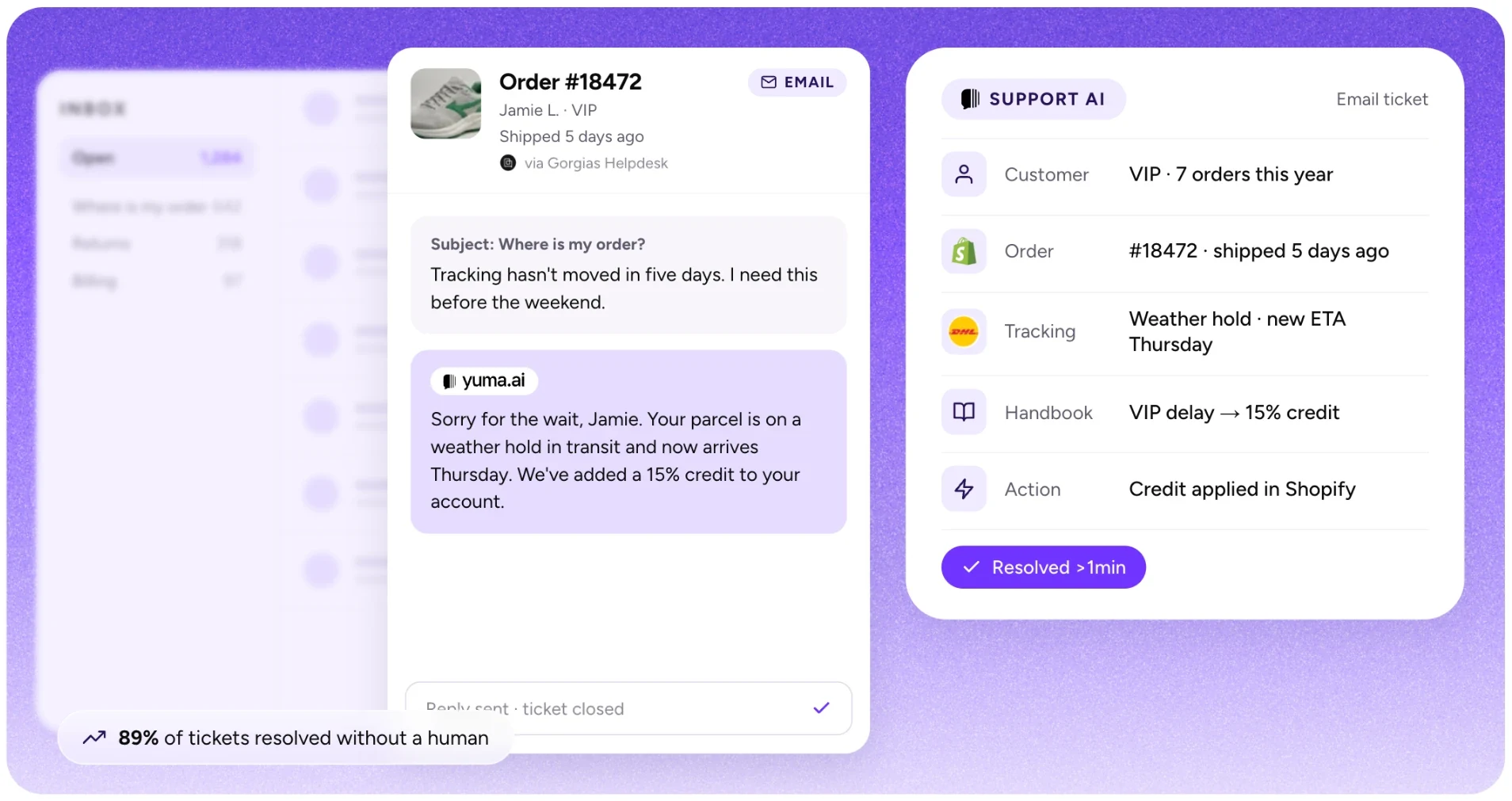
Yuma is an AI customer service platform for ecommerce brands. With Yuma 2.0, one written Handbook, managed in plain language, runs every customer conversation across email, chat, SMS, WhatsApp, social DMs, outbound outreach and phone calls. Ask Yuma writes the Handbook from your SOPs or real tickets, every playbook carries its own tests, and changes roll out gradually. Yuma works inside your existing helpdesk, takes actions in your backend, and with Web Actions can complete tasks in tools that have no API.
Best for: ecommerce teams that want full resolutions, not just replies.
Proof: EvryJewels 89% of tickets automated, Petlibro 79%, Clove 70%.
Yuma plugs into the helpdesk and commerce stack you already use: Shopify, BigCommerce, etc. on the commerce side; Zendesk, Gorgias, Kustomer, Re:amaze, Front, etc. on the helpdesk side. No re-platforming required.
It comes ready for retail workflows, including refunds, exchanges, subscription retention, order edits, and WISMO. Yuma executes those actions directly from the ticket thread, delivering 24/7 automated customer support without additional headcount, and it answers the phone the same way with Yuma Voice.
Generic platforms are suitable across many industries, but they often treat ecommerce-specific flows as add-ons. Yuma's defaults assume orders, shipments, and subscriptions, which is why tasks like issuing refunds or editing orders happen inside the support thread without complex setup. Yuma is SOC 2 Type II certified with a live trust center.
The bottom line is that if your roadmap reads "fast setup, faster answers, no re-platforming," Yuma is the ecommerce-first option to trial first. Most brands are live within a week. Prove value during the 30-day free period, then scale on a pay-for-resolution model. Explore the full Support AI product page to see how it works, or read our complete guide to ecommerce customer service with generative AI.
Yuma AI top features
The Handbook (one written source of truth of brand pages, playbooks and procedures that runs every channel)
Ask Yuma (writes and manages the Handbook in plain language from your SOPs or real tickets, investigates tickets, and generates reports; every change lands as a draft until you publish)
Tests and gradual rollout (every playbook carries its own tests, rerun as simulated conversations, and goes live on a share of conversations first)
Yuma Voice (answers your support phone line 24/7 and takes backend actions mid-call, reading the same Handbook)
Web Actions (drives a real Chrome browser to complete tasks in tools with no API, set up by recording a video; the tool must be reachable on the open web, without a VPN)
Outbound (event playbooks start conversations by email or SMS from order and delivery events)
Flows (deterministic decision trees for predictable, compliance-critical processes)
Sales AI (pre-sales PDP widget for Shopify that answers product questions and drives conversions, running on the same Handbook)
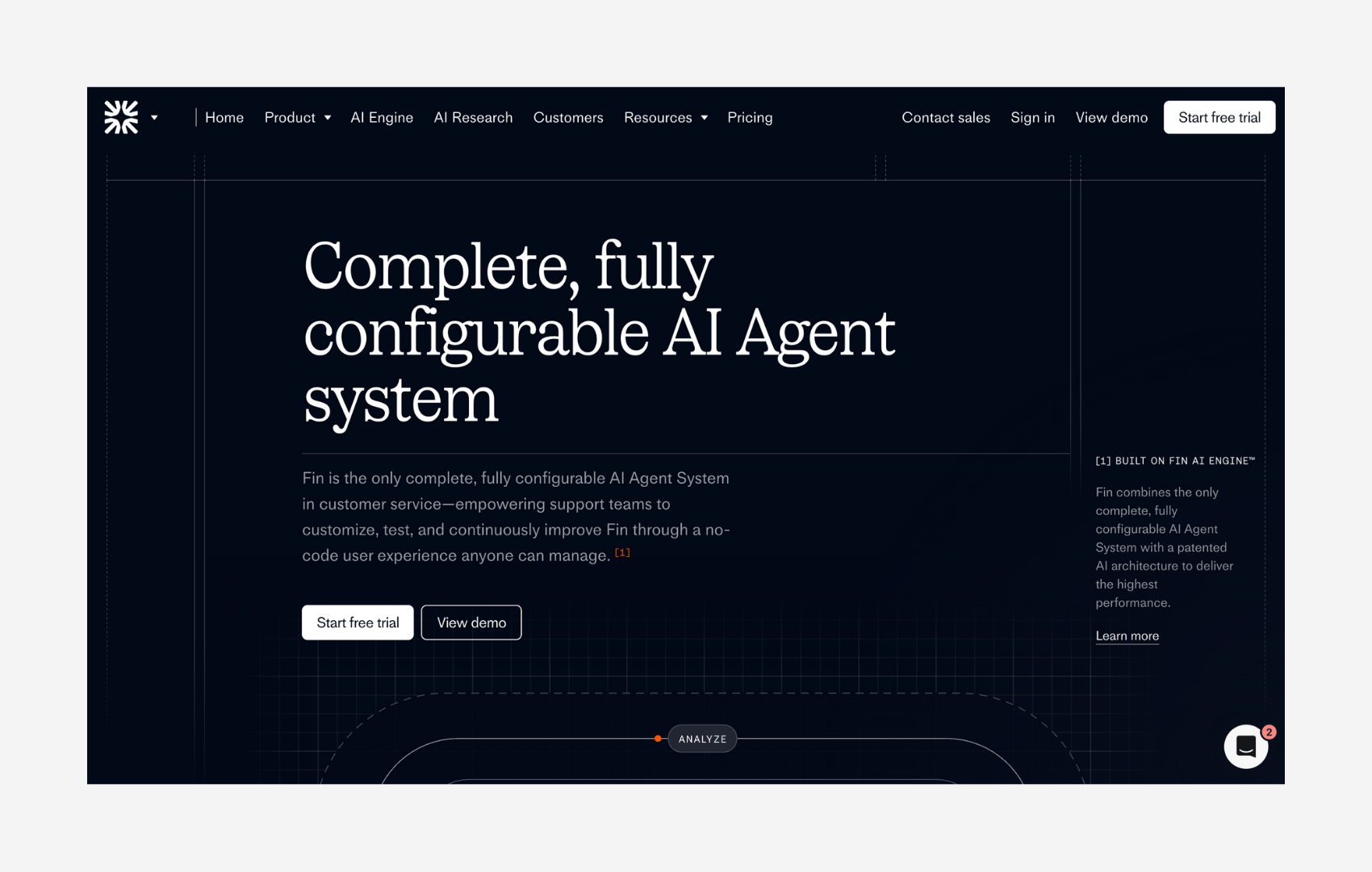
Intercom pairs a customer-facing Fin AI Agent with Fin AI Copilot for agents, packaged inside its broader helpdesk suite. Fin answers, takes actions, and resolves issues; Copilot drafts and summarizes for reps. Recent updates add Fin Tasks (agentic workflows), Model Context Protocol (MCP) action connectors, and expanded analytics.
Intercom leans into outcome-based pricing. Fin is $0.99 per automated outcome, with suite seats starting “from $29/mo,” and a 14-day free trial.
Good coverage for many merchants, though retail flows are configured via integrations rather than being commerce-native by default like Yuma AI.
Top features
Fin AI Agent
Fin AI Copilot
Fin Tasks and Data Connectors
Pricing + trial
Helpdesk seats from US$29/mo
Fin AI Agent US$0.99 per outcome
Free trial: 14 days
3. eesel AI: an AI teammate inside your existing helpdesk
Image source: eesel AI
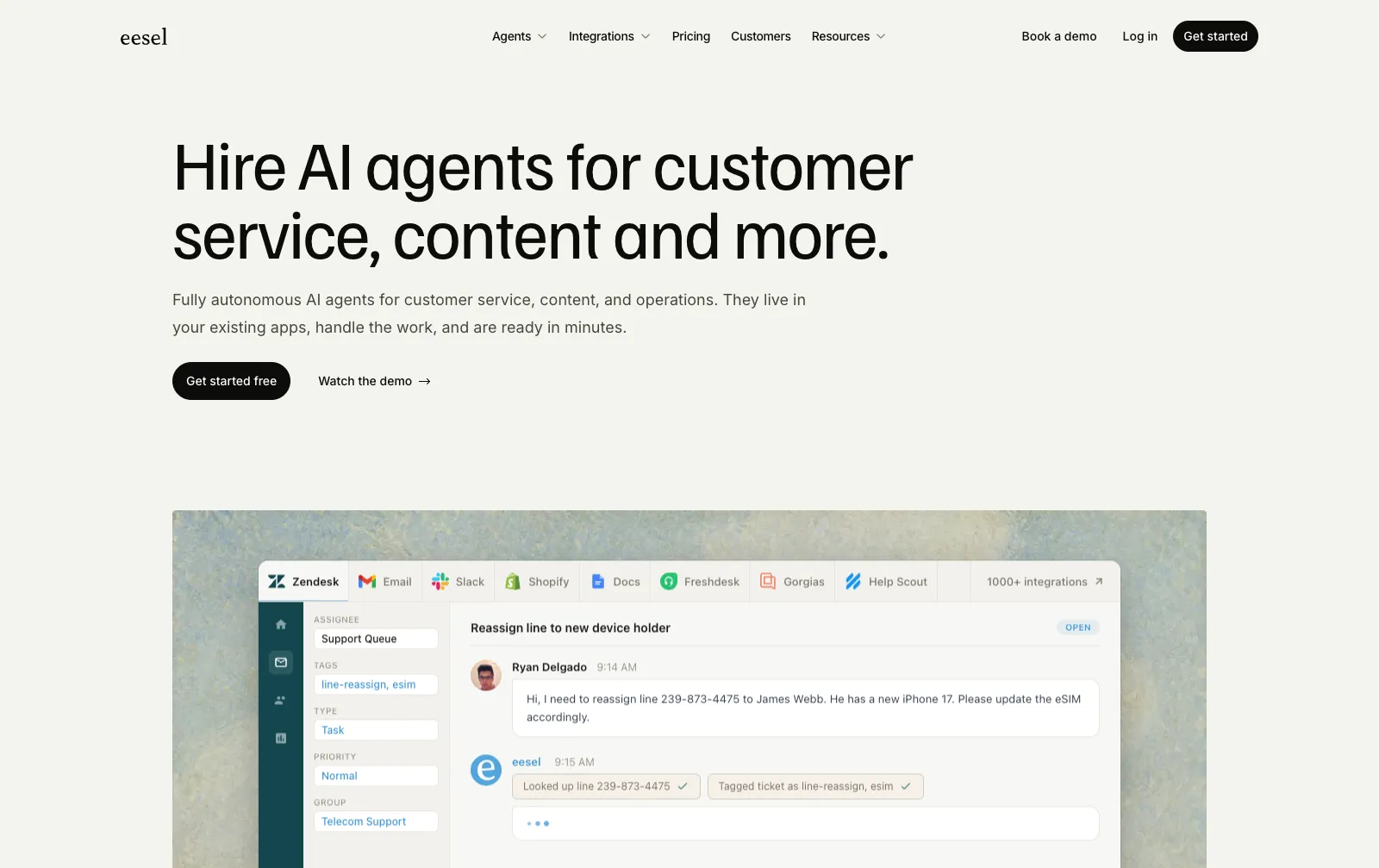
eesel AI builds what it calls AI teammates for support teams. Instead of replacing the helpdesk, it works inside the one a team already runs, including Zendesk, Freshdesk, Gorgias, and Front, and it can also answer in Slack. It learns from existing help docs and past tickets, drafts and resolves routine requests, and escalates anything it is unsure about to a person.
Rollout is built to be gradual. Teams can run eesel over historical tickets before it touches a live queue, which shows how it would have answered real customers, broken out by theme, and where the knowledge base has gaps. Escalation rules then decide when a request reaches a human, so automation can expand topic by topic rather than all at once.
For ecommerce teams, the Shopify integration handles order tracking and refund status questions, follows the store’s return policy, and hands off to an agent when needed. A good fit if you want to keep your current helpdesk and phase AI in carefully, though retail actions run through integrations rather than being commerce-native by default like Yuma AI.
Top features
AI agent inside Zendesk, Freshdesk, Gorgias, Front, and other helpdesks
Training from help centers, past tickets, and docs such as Google Drive, Confluence, and Notion
Simulation over past tickets before going live, with coverage by theme
Escalation rules for handing requests to human agents
Shopify order tracking and refund status answers
Answers in Slack and Microsoft Teams
Pricing + trial
No per-seat fee: every plan includes unlimited agents, so cost tracks volume rather than headcount
Teammate: from US$299/month for 500 credits, up to 5,000 credits for US$1,749/month
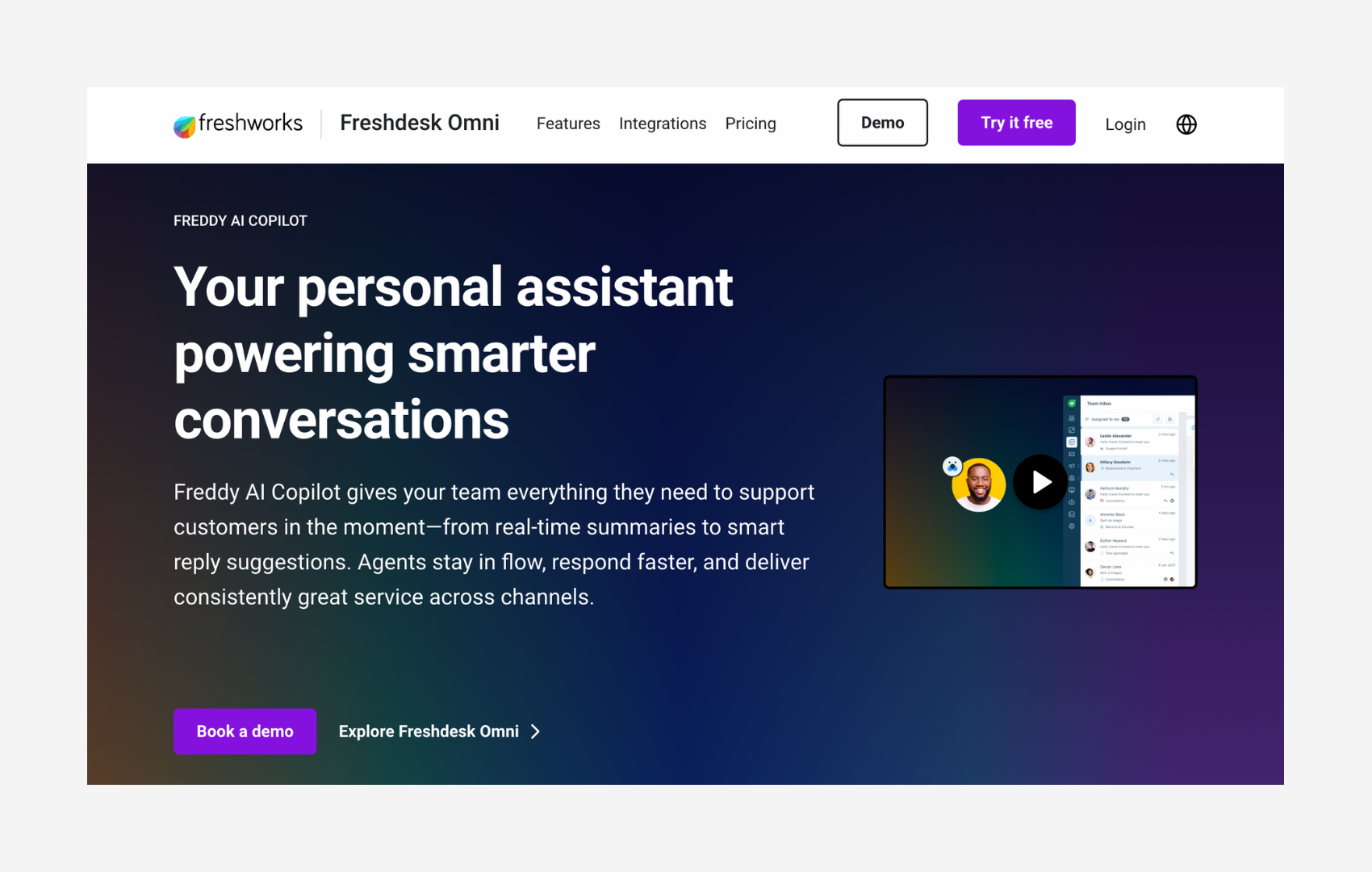
Freshdesk pairs a mature multichannel helpdesk with two AI layers: Freddy AI Agent for customer-facing automation and Freddy Copilot for agent assist. The AI Agent can tap your back-end systems to process refunds, update orders, verify details, and resolve routine issues automatically, while Copilot drafts replies and surfaces knowledge in the agent workspace. For ecommerce teams, the official Shopify integration lets agents cancel or refund orders directly inside Freshdesk. Useful if you’re already standardized on Freshdesk and want retail actions without leaving the console.
Top features
Freddy AI Agent
Freddy AI Copilot
Freddy AI Insights
Pricing + trial
Seats from US$19/agent/month (annual)
Freddy AI Agent: session-based add-on
Copilot add-on: from US$29/agent/month
Free trial: 14 days
5. Chatbase: AI customer service platform for support, sales, and ecommerce
Image source: Chatbase
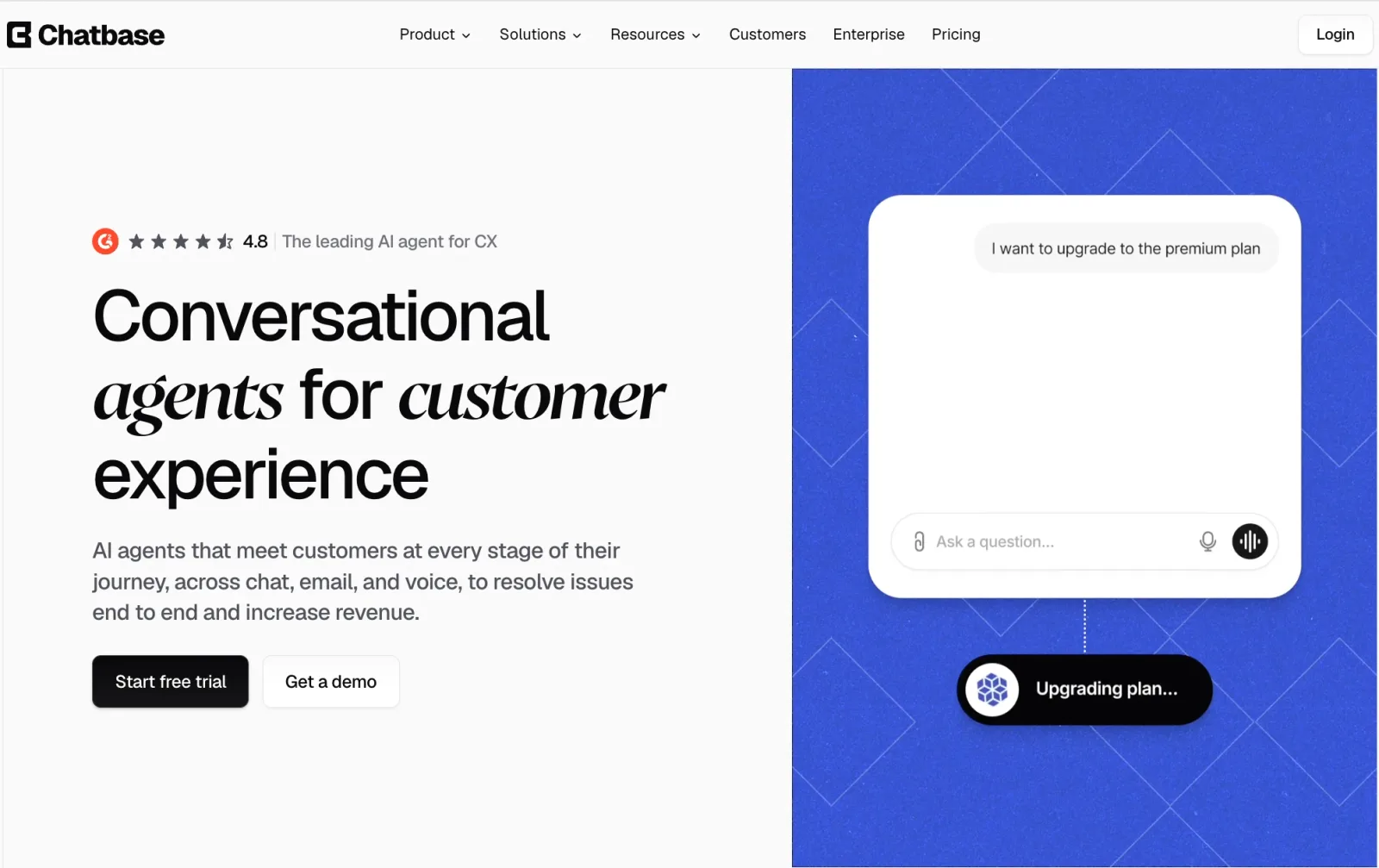
Chatbase is an AI customer service platform for businesses that want customer-facing AI agents to answer questions, take approved actions, follow defined workflows, and involve a human when needed.
Teams can ground agents in websites, help centers, documents, support tickets, and business data, then deploy them across chat, email, WhatsApp, Slack, voice, and other supported channels. The platform also includes a Helpdesk where AI and human agents can work from the same customer conversation. Chatbase currently positions its agents across customer support, sales, product guidance, and several industries rather than limiting the platform to one use case.
Actions and Procedures extend the agent beyond question answering. Teams can define required steps, control what the agent can decide independently, require human approval for selected actions, branch workflows based on returned data, and retrieve information from connected systems such as Shopify or Stripe. This is useful for workflows such as refunds, identity checks, billing disputes, account changes, and order support.
For ecommerce teams, Chatbase can support product discovery, order-related questions, cart and customer workflows through Shopify and connected systems. For SaaS and other service businesses, the same platform can handle product questions, account support, lead qualification, routing, and escalation. Larger teams can add enterprise controls such as custom roles and permissions, SSO, audit logs, SLAs, and HIPAA-eligible environments.
Top features
AI agents for customer support, sales, product guidance, and customer experience
Training from websites, help centers, documents, support tickets, and business data
Actions for retrieving data and carrying out approved tasks in connected systems
Procedures for structured workflows with required steps, branching, approvals, and escalation
Built-in Helpdesk for AI and human agents working from the same conversation
Deployment across website chat, email, WhatsApp, Slack, voice, and other supported channels
Shopify and ecommerce workflows for product and order-related customer requests
Outbound campaigns for proactive customer communication
Analytics, testing, and source Suggestions for improving agent performance
Enterprise controls including custom roles and permissions, SSO, audit logs, SLAs, and HIPAA eligibility
Chatbase’s current site explicitly supports chat, email, voice, WhatsApp, and other channels, while Procedures support required checks, data-driven branching, and human approval where needed.
Pricing + trial
Free: US$0/month
Hobby: US$40/month
Standard: US$150/month
Pro: US$500/month
Enterprise: Custom pricing
Free trial: 7 days on Hobby, Standard, and Pro
Standard adds Helpdesk, voice, telephony, outbound campaigns, API access, personalization, and advanced integrations. Pro adds higher usage limits, advanced analytics, source Suggestions, and support tickets as a training source. Enterprise adds higher limits, flexible billing, custom roles and permissions, SSO, audit logs, priority support, a customer success manager, SLAs, and HIPAA eligibility.
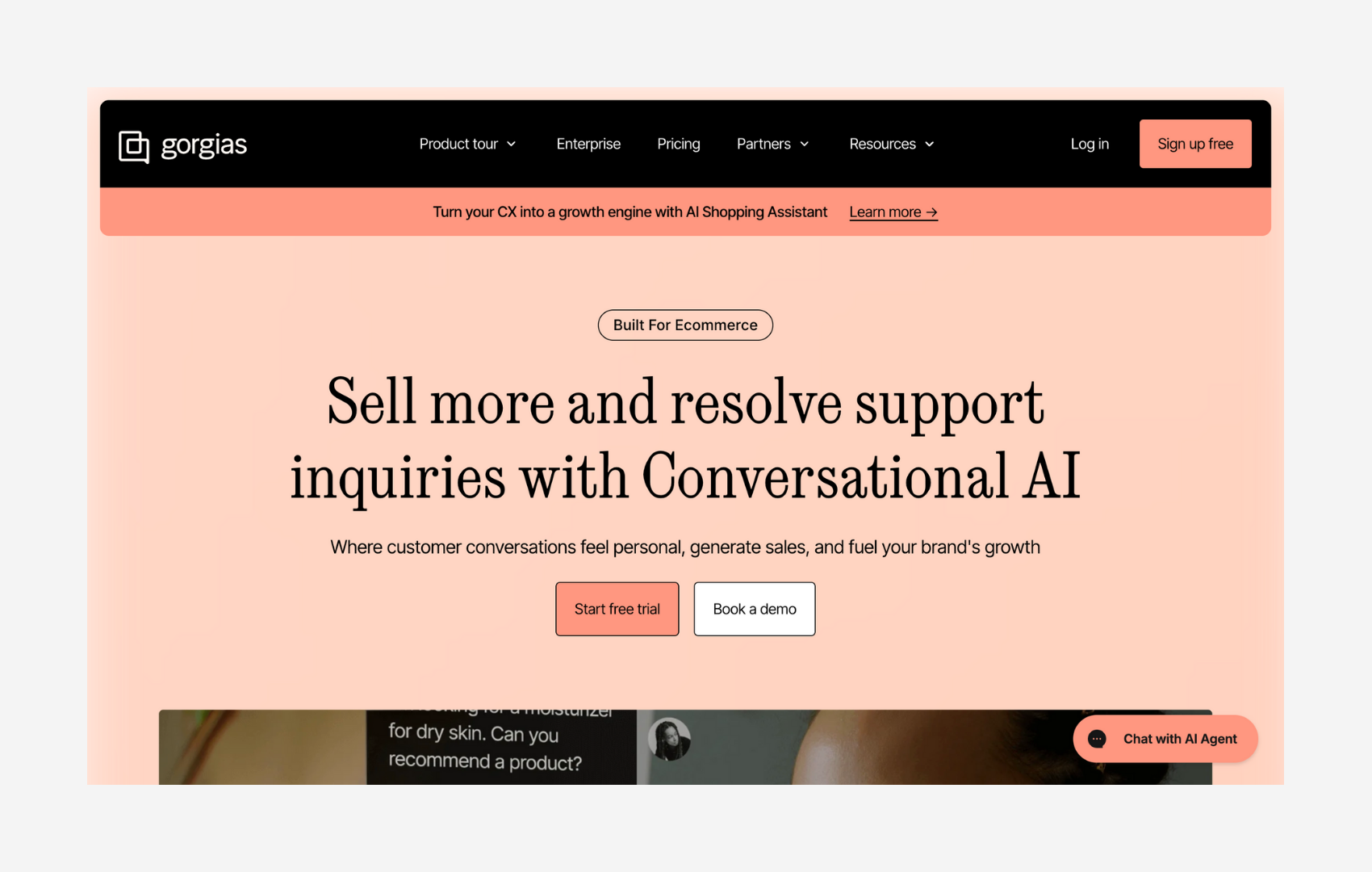
Gorgias is a helpdesk with native order actions in the ticket view and an AI Agent that can answer and resolve common requests. Gorgias’s AI Agent deploys across channels, and its knowledge relies heavily on a Help Center.
There’s also a platform limitation worth noting if you’re not on Gorgias. Gorgias AI Agent isn’t supported on Zendesk, Kustomer, or other helpdesks. For a closer look at how the platforms stack up, see our Yuma vs Zendesk AI comparison.
For brands standardized on Gorgias + Shopify, BigCommerce, Magento, or WooCommerce, this tight integration is a strength. If, however, you need AI resolution while running a non-Gorgias helpdesk, you’ll want to factor these scope notes into your comparison. Especially when comparing against AI platforms that work inside the helpdesk you already use (e.g., Zendesk, Kustomer, etc) and across multiple commerce stacks. See our full Yuma vs Gorgias AI breakdown for a side-by-side look at where each platform fits.
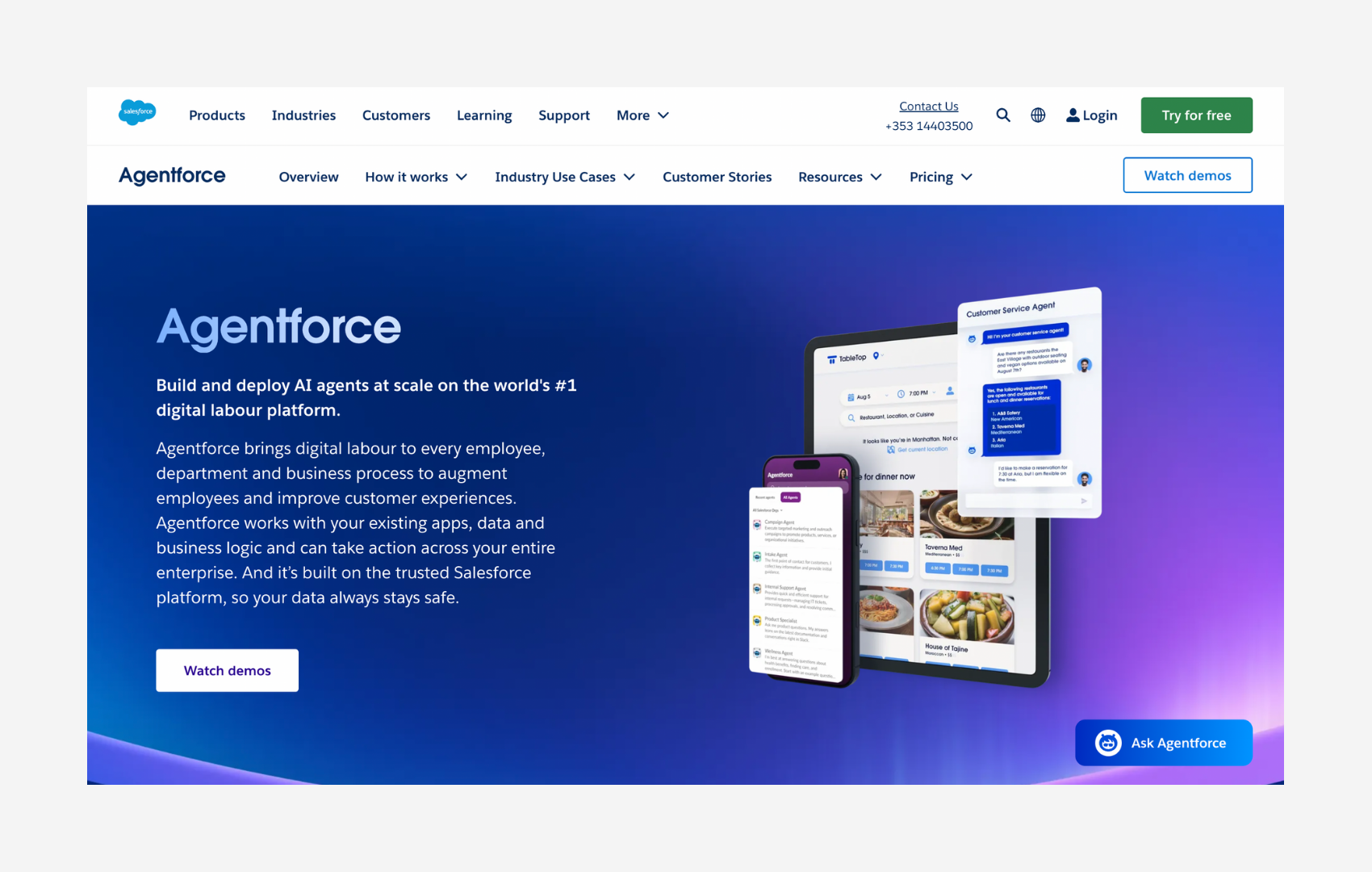
Service Cloud is Salesforce’s core support platform; Agentforce, powered by Einstein AI, is the built-in AI layer that drafts, routes, and now runs AI agents across channels (email, chat, voice, self-service). Salesforce recently launched Agentforce 3 with a Command Center for governance and observability, useful in big orgs that need control as they scale automation.
Best with Salesforce Commerce/Order Management, their agents can process cancellations, returns, reshipments, and refunds from the console. If you run Shopify or other storefronts, those actions typically rely on AppExchange connectors/partner apps, not native defaults.
Pricing/packaging spans multiple models and add-ons (often quote-driven), and non-Salesforce commerce stacks usually need extra connectors to reach end-to-end order actions. This adds setup complexity that focused ecommerce AI tools don’t require.
Agentforce add-on: from US$125/user/month; consumption-based options also available (US$2/conversation or Flex Credits). Contact sales for full pricing.
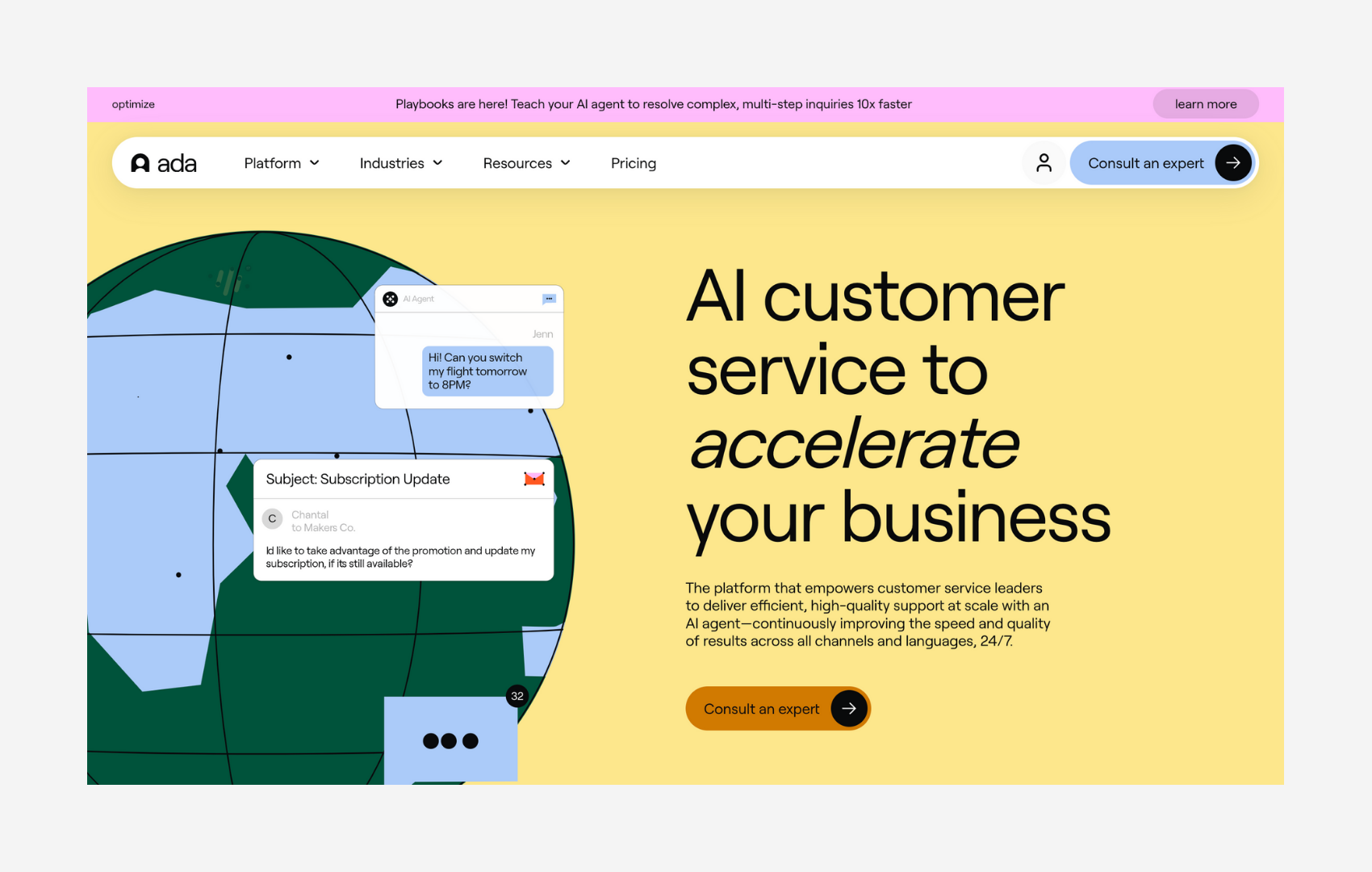
Ada is a cross-industry AI platform that runs customer-facing automation across messaging, voice, and email, with orchestration and governance built in. It’s positioned to resolve a large share of routine tickets and hand off cleanly when a human is needed.
Clear focus on usage-based pricing and an “all-included” packaging. Ada also publishes deep integration docs and turnkey integrations so teams can move from pilots to production faster.
Ada offers Shopify integration to look up orders and shipment details and to pull last-order/customer info. For end-to-end commerce actions (e.g., refunds, exchanges), teams typically wire Ada to storefront APIs or use helpdesk integrations, rather than relying on default, commerce-native behaviors. See how that compares in our Yuma AI vs Ada breakdown.
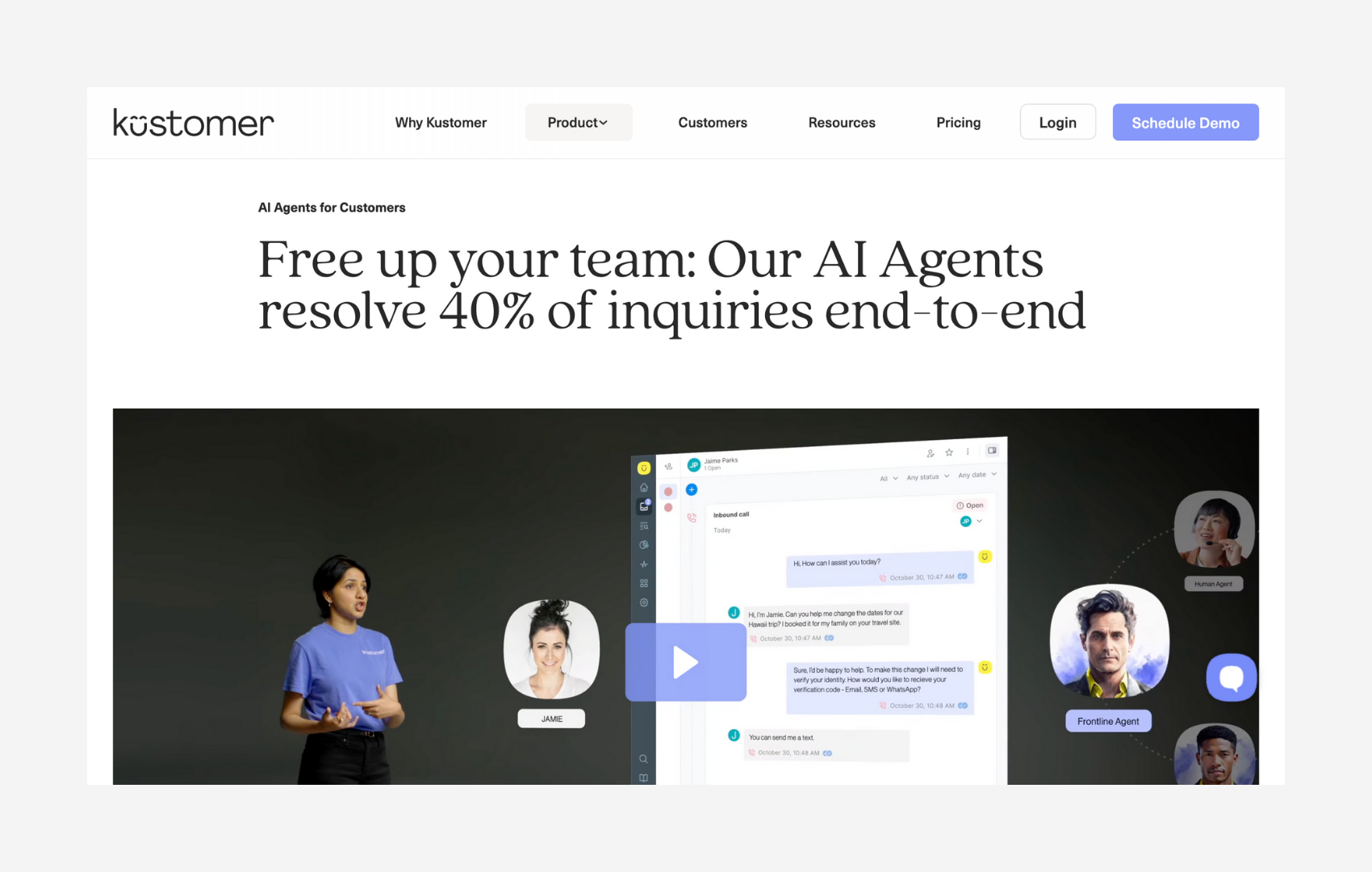
Kustomer is an AI customer service CRM with AI Agents for customers and agent assist tools built into a multichannel console (email, chat, SMS, social, voice). Recent product pages emphasize AI Agents operating across channels and a rep-facing automation mode.
The store integrations pull order history into the Kustomer timeline and expose store actions for agents; Kustomer’s rep-side AI can also trigger actions (e.g. cancel orders) with approval. In practice, end-to-end commerce automations are achievable but typically rely on longer setup, unlike tools that ship ecommerce-specific flows as defaults.
Top features
AI Agents for Customers
AI Agents for Reps
Multichannel workspace
Pricing + trial
Pricing: AI add-ons. AI Agents for Customers from $0.60 per engaged conversation; AI Agents for Reps $40/user/mo.
Decagon claims to run one “brain” across chat, email, and voice with guardrails, human handoff, and observability. Aimed at auto-resolving issues while keeping governance tight. Recent materials highlight Voice AI and a centralized engine rather than stitched-together AI tools.
Decagon offers a Shopify integration and connects to tools like Zendesk, Salesforce, and Stripe; agents integrated with platforms like Shopify can take real action in real time across chat, email, and voice. In practice, reaching full end-to-end flows typically involves wiring the agent into your CRM/helpdesk and internal APIs. The platform’s “one central brain” model for voice, chat, and email keeps logic consistent once those integrations are in place, but it does mean initial outcomes depend on the complexity of the setup.
If Decagon is on your shortlist, our guide to Decagon AI competitors and alternatives compares seven options by platform model, engineering effort, and pricing.
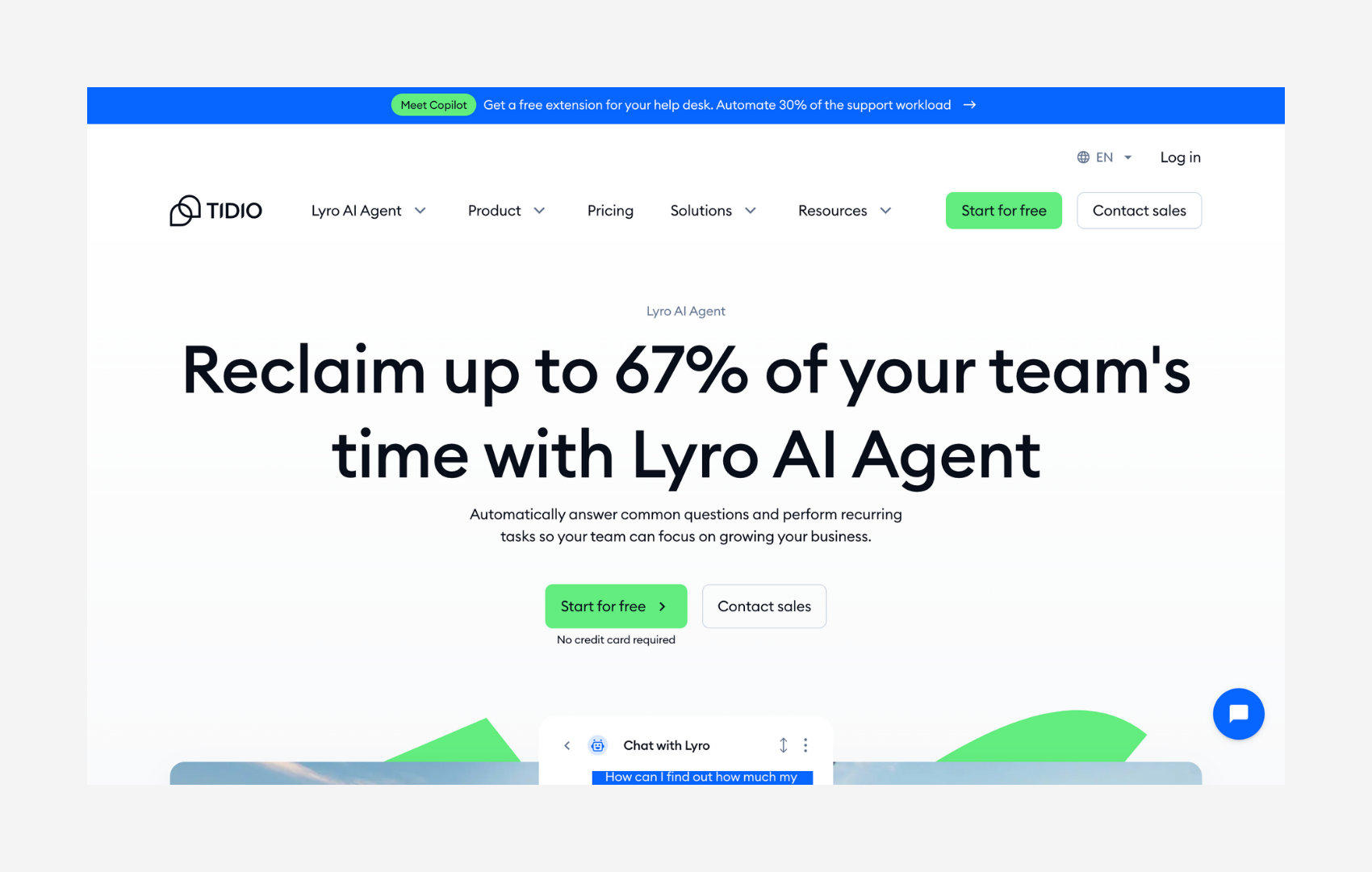
Tidio’s Lyro AI works with live chat and a multichannel inbox, automating common questions across website chat and email. Lyro learns from your support content and can run basic tasks like order-status checks or ticket creation.
Tidio’s integrations are quick to install (app listing + free trial) and are popular with SMB stores. Lyro’s autonomy depends on the quality of your knowledge base; Tidio highlights resolution-rate guarantees on higher tiers. If you need out-of-the-box, in-thread commerce actions (e.g., refunds/exchanges) tightly embedded in the helpdesk from day one, an ecommerce-first product typically gets you there faster.
Top features
Lyro AI agent
Live chat and multichannel inbox
Email automation
Pricing + trial
Pricing: Free plan available; paid plans scale by conversation volume (see tidio.com/pricing for current rates)
Botpress is an enterprise-grade AI agent platform for customer support. Founded as an AI-first company in 2017, Botpress has shipped over 750,000 AI agents and built a full AI-native helpdesk on top of that infrastructure.
It connects to Zendesk or Intercom with no migration required, and handles the complex, action-required tickets that most AI tools escalate back to the team: refunds, account changes, and multi-step workflows. Teams go live in days, not months.
Pricing is conversation-based with no per-seat cost, which makes it significantly cheaper at scale than Zendesk or Intercom.
Top features
AI agents that handle triage, FAQ resolution, and multi-step support workflows end-to-end across web, WhatsApp, Messenger, Slack, SMS, and voice
Human-in-the-loop handoff that escalates with the full conversation transcript, detected intent, and customer context
Studio (visual, no-code builder) and ADK (code-first builder), supporting teams from no engineering resources to full programmatic control, with 190+ integrations and multi-channel deployment
Pricing + trial
Pricing: Conversation-based, with no per-seat cost
Free trial: Free plan available
Best for: Heads of support at companies with L2+ support complexity, or who have tried a first-generation AI tool and hit its ceiling.
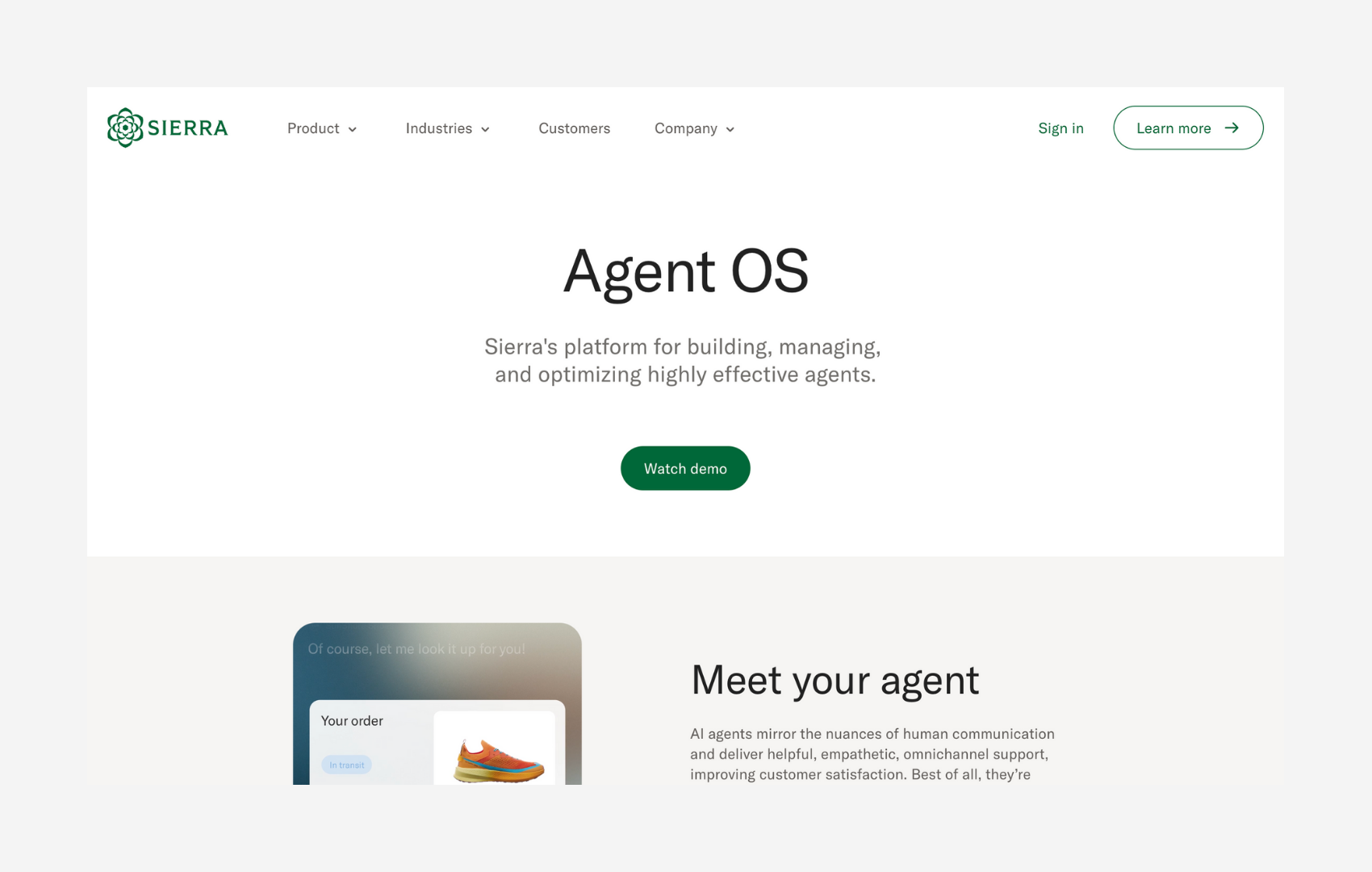
Sierra is a conversational AI platform for building and governing customer-facing agents across chat, email, and voice. It emphasizes empathetic, on-brand conversations, guardrails, and the ability to take actions in your systems.
Sierra is a generalist AI tool for CX that caters to various industries. It allows pre-purchase guidance and order management flows like track orders, request refunds, convert returns to exchanges, and update subscriptions. Sierra brings a robust, general-purpose agent platform with strong voice and governance. If you’re a Shopify or BigCommerce brand prioritizing default, in-thread commerce actions with outcome-aligned billing, Yuma’s ecommerce-first approach typically reaches value faster. According to third-party pricing analyses, Sierra typically requires $50,000 to $200,000 in professional services fees and 3 to 6 months of implementation time.
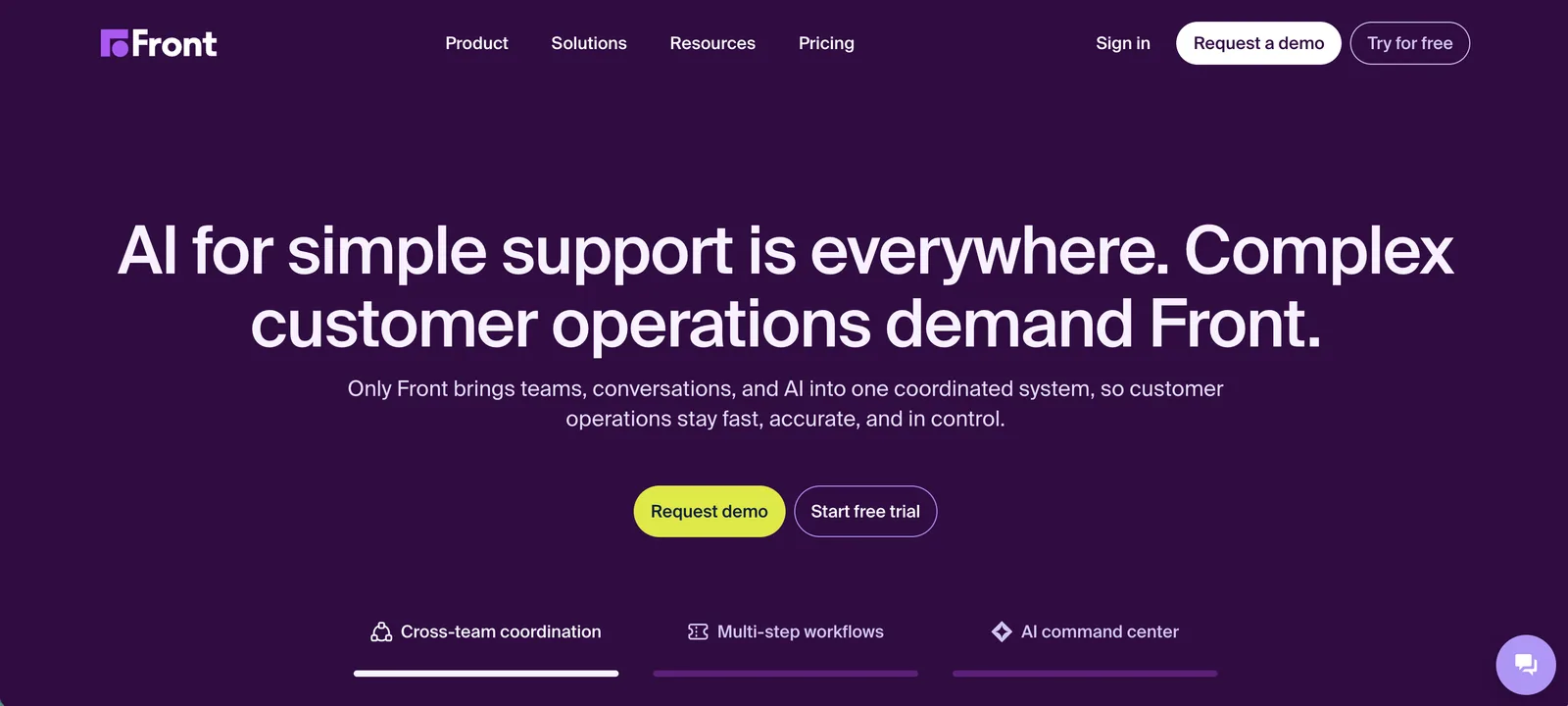
Front is built for high-stakes customer relationships where basic FAQ bots fall short. It brings email, SMS, chat, and other channels into a customer operations platform designed for cross-team coordination. Front AI helps teams automate routine work, investigate complex requests, determine next steps, and draft accurate responses.
The platform supports multi-step customer operations that require input from different departments. Front can route conversations, assign clear ownership, and loop in the right experts, reducing the risk that requests stall during handoffs. Front AI can resolve up to 70% of requests, including complex work that spans multiple systems or teams.
Front is built for industries such as logistics, financial services, and manufacturing, where accuracy and context matter. Its connected workspace brings customer conversations and information from business systems together, reducing tool switching and giving teams clearer visibility across the customer relationship.
Top features
Shared inboxes and cross-team collaboration
Autopilot for complex workflow automation
Copilot for research, next steps, and reply assistance
160+ integrations (Shopify, Salesforce, Jira)
Smart QA and analytics
Pricing + trial
Pricing: Starter from $25/seat/month, Professional from $65/seat/month, and Enterprise from $105/seat/month when billed annually
Free trial: 14-day Professional trial, no credit card required
Support teams adopting AI can resolve tickets faster, handle more volume with the same headcount, and cut cost per interaction, all without rebuilding their stack. Here's what that looks like in practice.
Cost efficiency: Companies using AI agents expect service costs and resolution times to decrease by 20% on average, according to Salesforce's State of Service report surveying 6,500 service professionals (2025).
Resolution at scale: Salesforce's 2025 State of Service report also found that an estimated 30% of service cases are currently handled by AI, a figure they project will reach 50% by 2027, driving higher first contact resolution (FCR) rates and faster deflection across the board.
Scalability: AI handles routine questions, reducing deflection rates on inbound volume and letting teams absorb ticket spikes without new headcount. Automation works best alongside prevention, and our six-step guide on how to reduce support tickets covers auditing, self-service, and proactive communication before you automate what's left.
Debunking a common misconception
“AI will replace agents.”
A Gartner survey of 321 customer service leaders (2025) found only 20% have reduced agent headcount due to AI. The majority report stable staffing while handling higher volumes: AI is expanding capacity, not cutting headcount. Gartner also predicts (2026) that 50% of companies that did reduce staff will rehire by 2027, because AI still can't fully replicate human empathy, expertise, and judgment in complex interactions. Before deploying, it's also worth understanding the most common AI implementation mistakes in customer support, and how to avoid them.
Six-question diagnostic to find the perfect tool
Ask the following six questions when considering an AI tool selection for ecommerce and partner for your customer support in 2026:
Can it automate inside your current helpdesk, no re-platforming? (Yuma plugs into Zendesk, Gorgias, Kustomer, etc., and performs these actions from the ticket thread.) If you run Zendesk, our roundup of Zendesk AI alternatives for ecommerce teams compares overlay tools that keep your workspace with full platform switches.
Is pricing aligned to outcomes (pay only for fully automated resolutions) with a real trial to prove value? (Yuma uses performance-based pricing and a 30-day free trial so you test before committing.)
How fast to first automation on core retail intents (WISMO, returns, cancellations)? Days, weeks or months? (Yuma ships retail defaults and runs in your existing stack, so most brands are live within a week.)
Can you encode policies as guardrails, such as refund windows by market, exchange eligibility, and partial refunds? (In Yuma, you write those rules into Handbook playbooks in plain language, and each playbook's tests check that the agent follows them consistently.) For teams that need controlled multi-step execution, Chatbase Procedures can require specific steps, branch based on returned data, pause for human approval, and continue or escalate according to the rules the team defines.
Does the AI understand attachments (receipts, labels, PDFs/screenshots) inside the thread and act on them? (Yuma can read images, PDFs, and documents so agents (or the AI) can resolve faster.)
Do you get actionable analytics and improvement insights? (Yuma’s Metrics and audit trails make performance reviewable in QBRs and day-to-day ops.)
Decision matrix (weights you can tune)
The default weights below sum to 100. Adjust them based on your priorities, then score each vendor 1 to 5 and multiply.
Ecommerce actions (refund, exchange, order edit inside helpdesk)
25
Onboarding speed
15
Data & guardrails
15
Security & privacy
15
Accessibility & localization
10
Ecosystem fit
10
Observability & audit
10
Tip: If you’re a multi-brand Shopify org with frequent returns, bump ecommerce actions to 30 to 35 and drop Ecosystem fit to 5.
Future trends to watch (2026 to 2027)
1. Voice AI becomes more common
Voice AI has moved from experiment to mainstream support channel. Dedicated voice agents are now handling a significant share of inbound contact-center volume, and adoption is still accelerating. Andreessen Horowitz notes that as models improve, voice will become the wedge capability for AI applications, not a standalone product. Vendors are shipping voice-first capabilities alongside chat and email as standard. Yuma Voice, for example, answers a brand's support phone line 24/7 and takes backend actions mid-call, reading the same Handbook as email and chat.
2. AI governance becomes part of the product
Enterprises want agents that act as well as draft. Just as important: observability. Companies are launching Command Centers to track, manage, and scale agent behavior. It’s evidence that monitoring, rollback, and policy controls are moving front and center.
3. Pay for outcomes, not promises
Outcome-based pricing is becoming increasingly common. More and more top companies are charging only for fully automated resolutions. Budget owners will increasingly ask vendors to share risk and proof.
4. Agents need UI, not just text
Commerce is visual and interactive, meaning text-only AI interactions aren't enough. Shopify's MCP UI protocol lets AI agents return interactive components (product pickers, carts, return flows) directly inside the conversation. Since its launch in August 2025, MCP has become standard infrastructure for agentic commerce. The chat interface is becoming the storefront.
5. Multilingual by default
Real-time translation is becoming table stakes in the inbox and in AI agents, shrinking language gaps for teams overnight. Top tools already offer fully multilingual capabilities, making it a standard for the industry.
6. Regulation hardens: disclose the AI, log the actions
The EU AI Act's transparency rules take effect on August 2, 2026, requiring providers to clearly disclose when customers are interacting with AI and to label certain AI-generated content. For ecommerce brands selling into European markets, this should be an immediate consideration. Procurement teams are already asking for audit logs, disclosure controls, and incident response frameworks. Platforms that have built governance in, rather than bolting it on, will be easier to deploy and lower risk to operate.
Customer support in 2026 isn’t a choice between speed and empathy. The right AI lets teams do both: automate the repetitive work and reserve human attention for the moments that matter. We defined what these systems actually are: tools that can understand requests and, increasingly, take actions (refunds, exchanges, order edits), not just draft replies. From there, we set a transparent methodology and used it to compare 14 credible platforms.
Across vendors, the buying pattern is converging: judge agents by what they can safely do, not how well they word answers; expect governance and auditability to be built in; prefer pricing tied to resolved conversations; and assume multilingual support as standard. The Six-Question Diagnostic and Decision Matrix give you a framework to compare like-for-like.
The advantage goes to teams that treat AI like a disciplined experiment. Start with a few high-volume intents, prove end-to-end actions with audit trails, and scale what works. Choose tools that act, not just answer.
What’s the difference between a chatbot and an AI agent?
A customer service chatbot answers; an AI agent answers and takes actions (e.g., change an order) under guardrails, often orchestrating multi-step workflows across systems.
Will AI hurt CSAT?
Not necessarily. A 2025 peer-reviewed study of 5,172 call support agents found that an AI copilot boosted productivity by 15%, and customers became more polite. AI assistance can improve outcomes when it's designed well.
How much “training data” do we need?
Less than you think. Modern tools ground answers in your knowledge base and policies, plus task templates. No model retraining required for most use cases.
Can an AI actually issue refunds in Shopify?
Yes, with proper permissions and approvals, AI agents can programmatically create and log Shopify refunds with audit trails. Today’s AI agents can perform complex tasks across platforms if set up properly.
How do vendors price AI for support?
Different vendors price their tools differently, which is why it’s so important to clarify pricing before adopting a tool. Two common models are outcome-based (pay only when AI resolves) and per-resolution or per-outcome (e.g., $0.99 per outcome). You can also compare AI customer service software pricing directly on our pricing page.