A young beauty brand made such an impression on Hadas Drutman that she wrote a 100-page university thesis about it. The thesis eventually found its way to Glossier founder Emily Weiss, opening the door to a role that hadn't previously existed.
It wasn't the last time Hadas would turn her love for a brand into a career opportunity.
She later joined Seed Health and Bobbie, having first experienced both companies as a customer. Each had made an impression on her for different reasons, but they shared something important: an ability to make customers feel connected to the brand beyond the product itself.
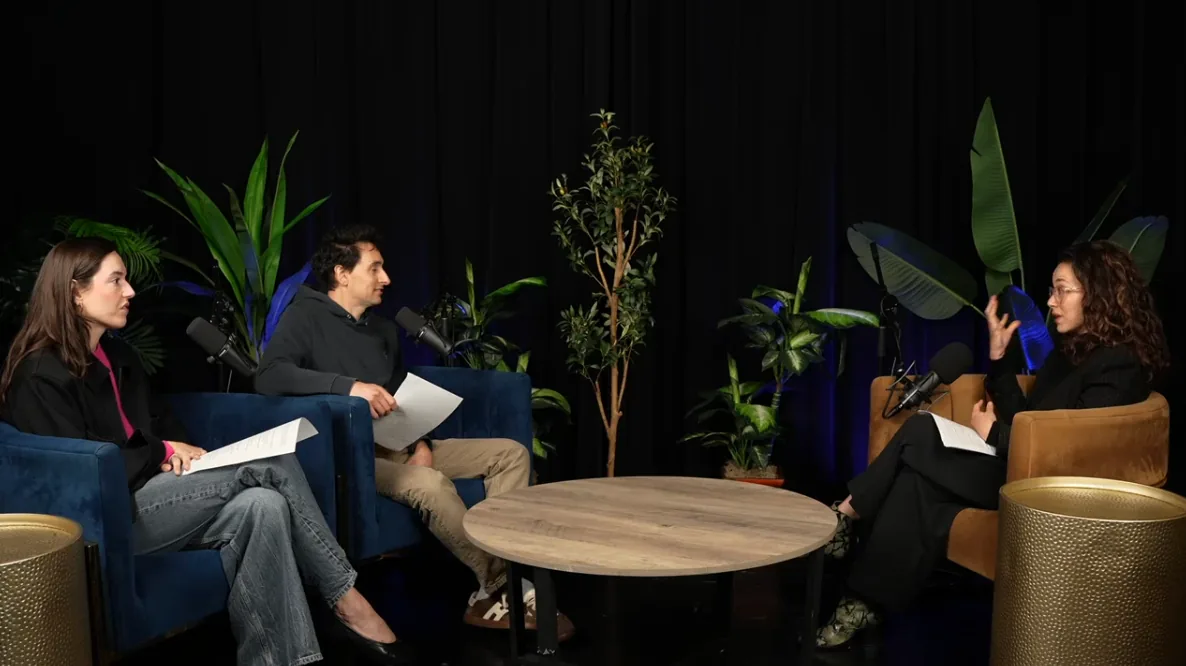
Those experiences have shaped the way Hadas now approaches customer experience, including some unconventional ideas about what CX teams should be trying to achieve.
In this episode of CX After Hours, Hadas joins hosts Anya Kelly and Guillaume Luccisano to discuss what creates genuine brand loyalty, why Bobbie wants more customer conversations rather than fewer, and how AI can help make customer experience more human.
Watch or listen to the full episode:
Apple Podcasts
Spotify
YouTube
What makes a customer want to work for a brand?
Hadas's relationship with Glossier began when the direct-to-consumer beauty industry was taking shape in New York.
She was an avid reader of Into The Gloss, the beauty blog founded by Emily Weiss. What interested her wasn't just the beauty content, but the way the blog brought together stories from celebrities and everyday people, and invited readers into the conversation.
When Glossier launched, Hadas watched a community built around a blog evolve into a beauty brand shaped by its customers.
At the time, she was studying strategic design and management at The New School. Fascinated by the emerging DTC movement, she decided to focus her master's thesis on customer experience and community building, with Glossier at its center.
She wrote roughly 100 pages analyzing what the young company was doing differently. One of her professors happened to have a meeting with Emily Weiss and brought the thesis along. That introduction led to conversations with the company and eventually a role translating Glossier's online customer experience into physical retail.
Hadas joined when Glossier had around 40 employees, before the company experienced a period of rapid growth.
But her attraction to brands that challenged industry conventions didn't end there. At Seed Health, the connection was personal. Hadas had been dealing with gut health issues and found that Seed's products helped her. She was also drawn to the brand's approach to science and education, particularly its efforts to make complex health information accessible to customers.
Her experience with Bobbie was even more emotional. After giving birth to her daughter, Hadas encountered breastfeeding difficulties she hadn't anticipated. From her hospital bed, she ordered a subscription to Bobbie's infant formula, which was waiting when she returned home.
What stayed with her wasn't simply the convenience of receiving the product. It was how the brand helped her feel that her unexpected feeding journey was normal.
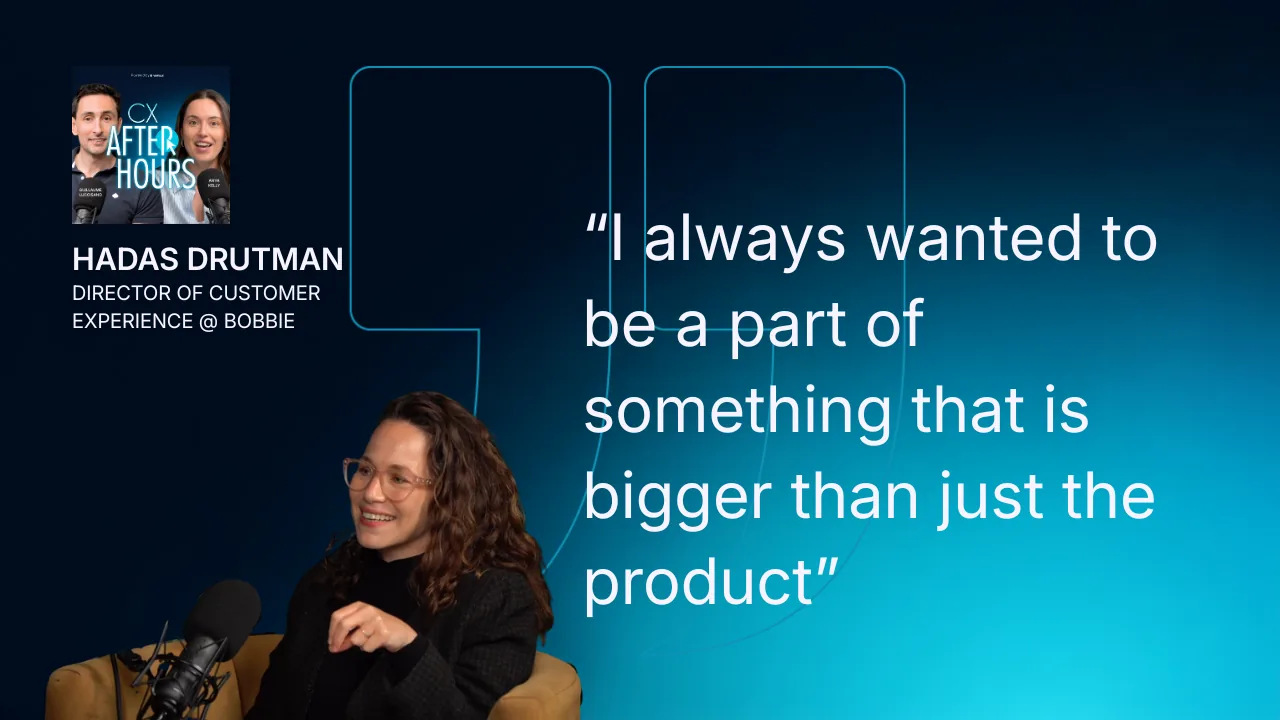
That reassurance made her an advocate for Bobbie long before she joined the company. For Hadas, the strongest brands create a sense of belonging that goes beyond the product itself.
"I always wanted to be a part of something that is bigger than just the product," she explains.
These experiences also demonstrate why having personal familiarity with a product can be so valuable in CX.
At Glossier, she recalls that retail employees were extensively trained and used the products themselves. Their ability to speak from experience helped them connect with customers and, according to Hadas, contributed to conversion rates of around 75% in stores.
At Bobbie, many employees are parents who bring their own feeding experiences into their work, whether they're in CX, operations, supply chain or another function.
The advantage isn't just product knowledge. It's understanding the emotions, questions and uncertainties that customers bring into an interaction.
Why Bobbie wants more customer conversations, not fewer
For many CX teams, reducing customer contact is a central performance goal. Fewer tickets, lower contact rates and higher deflection are often treated as signs that the support operation is becoming more efficient.
Hadas is taking a different approach at Bobbie.
"Increasing contact rate is actually a goal for my team," she says.
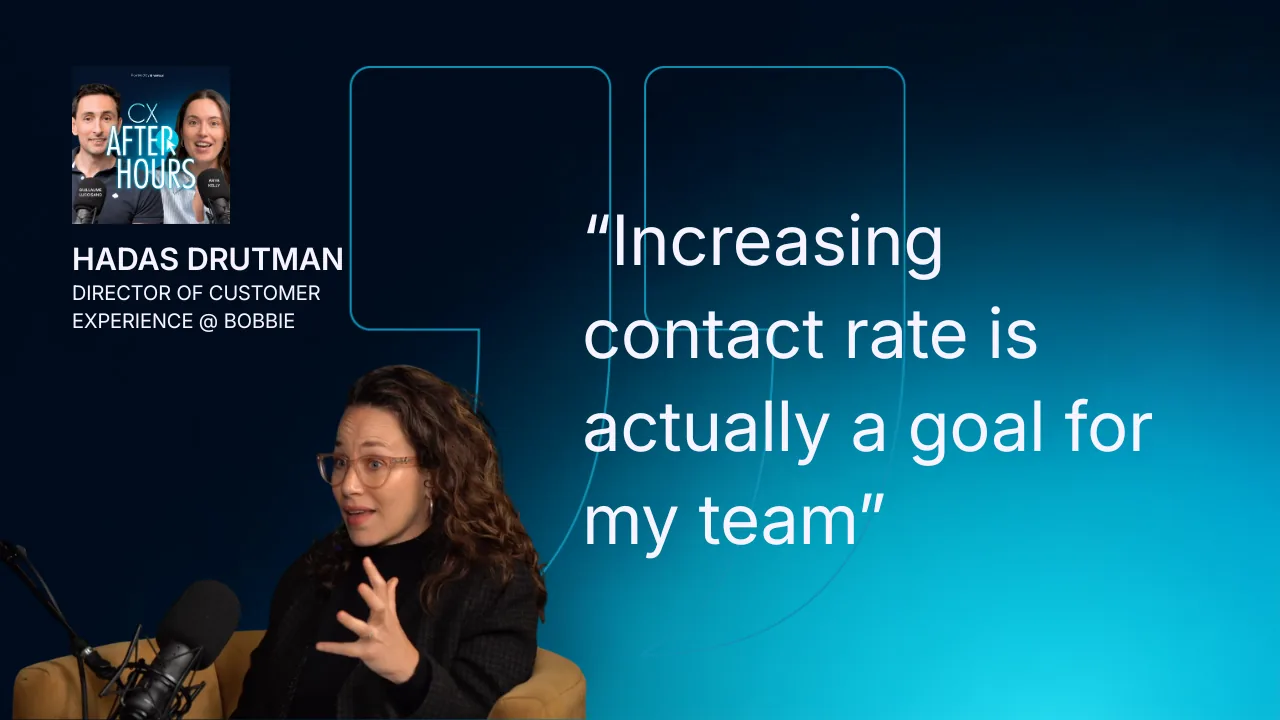
Rather than making it harder for customers to reach support, Bobbie wants to become more accessible.
Hadas describes plans to make contact information more visible, including putting a text-us call to action directly on formula cans and retail signage. The idea is to encourage parents to reach out whenever they have questions or need support.
That might sound counterintuitive in an industry focused on reducing support costs. But Hadas believes meaningful conversations are among the most valuable opportunities a brand has to build trust and loyalty.
For a company like Bobbie, those interactions can be particularly important.
A parent reaching out with a feeding question may not simply need information about a product. They might need reassurance, help understanding their options or someone who recognizes what they're going through.
Hadas wants her team to have the capacity to spend more time on those conversations.
That doesn't mean every increase in contact rate is a good thing.
She distinguishes between unnecessary contacts caused by operational problems and interactions that genuinely add value to the customer experience.
A missing order, damaged product or technical problem represents friction that the business should eliminate. But a customer contacting Bobbie for guidance or support can be an opportunity to strengthen the relationship.
And somewhat paradoxically, AI is making this approach possible.
By automating more transactional interactions, Bobbie can free up its internal team to spend more time on complicated, sensitive or emotionally important conversations.
For Hadas, AI shouldn't simply be another way to stop customers from reaching the company.
During the episode's Vent segment, she argues that CX teams need to stop treating deflection as the ultimate objective.
The goal should be to connect with customers, build relationships and add value to their experience, rather than shut down opportunities for interaction.
It's a different way to think about automation. Instead of asking how many conversations AI can eliminate, Hadas is asking what her team can do with the time it creates.
And whether those conversations ultimately lead to stronger customer relationships.
The small moments that turn customers into advocates
Hadas believes that customer loyalty is driven by something that can be difficult to capture in a dashboard.
"The way the brand makes you feel is what drives loyalty."
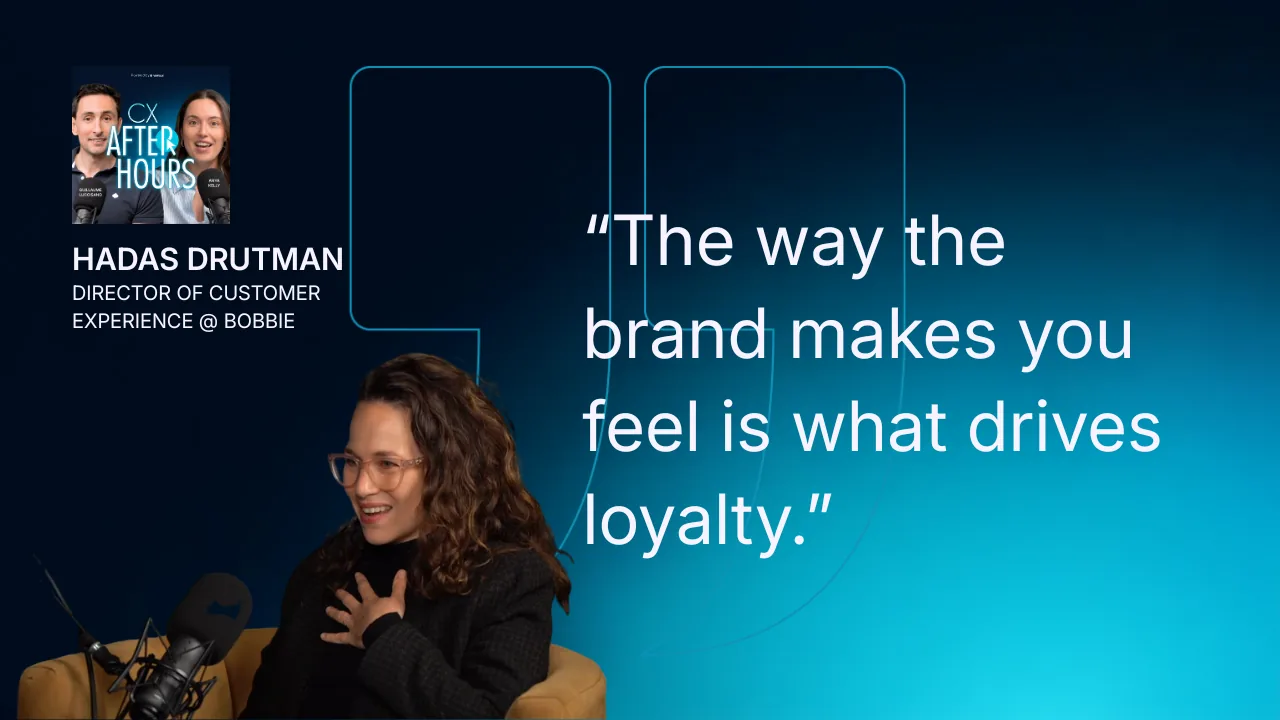
She shares a recent example from Bobbie that illustrates what she means.
Alyssa, a manager on her CX team, was reviewing subscription data when she noticed that several hundred customers appeared to have duplicate subscriptions.
Rather than waiting for customers to discover the problem themselves, the team decided to proactively reach out and cancel the unnecessary subscriptions.
One customer was particularly surprised.
She had recently lost her job and was caring for a nine-month-old baby. She'd already noticed that she had two subscriptions and intended to cancel one, but with everything else going on in her life, she hadn't managed to get around to it.
Then Bobbie contacted her and took care of it.
The customer was deeply moved, not just by the money saved, but by having one less thing to worry about.
The team followed up with an encouraging note and sent her flowers. After learning that she had worked in mental health, they also connected her with Bobbie's director of impact.
The experience meant so much to the customer that she shared the story publicly on LinkedIn, completely unprompted.
For Hadas, it was a reminder of why this kind of work matters.
Customer-centricity has to extend beyond the CX team
Hadas has been fortunate to work at companies where the importance of customer experience was already recognized by leadership.
But she knows that isn't the reality everywhere. At many businesses, customer-centricity is discussed as a priority while CX teams struggle to influence decisions made elsewhere in the organization.
Her advice is to bring the wider business closer to the customer. That means doing more than distributing reports or sharing high-level support metrics.
Hadas recommends bringing customers into company meetings, sharing their stories and testimonials, and making their experiences visible in the channels where employees and leadership already communicate.
She believes personal stories can be particularly effective because they make customer problems harder to ignore. Instead of telling executives that a certain number of customers experienced a problem, CX leaders can show them who was affected, what happened and why it mattered.
The 10% Fix: Don't get too comfortable with your CX technology
For her 10% Fix, Hadas offers a practical recommendation that many CX leaders may overlook. Every time a technology contract comes up for renewal, reassess whether the tool is still the right one for the business.
That might sound obvious, but it's easy for teams to become comfortable with their existing systems, particularly when switching providers involves migration costs, implementation work and the risk of disrupting operations.
Hadas shares how Bobbie recently went through this process with its AI customer service provider.
After a year using the tool, the team felt it had reached a ceiling in what it could achieve. Rather than simply renewing the contract, they developed an evaluation rubric, researched alternative solutions and selected a new partner.
According to Hadas, Bobbie completed the migration and implementation in three weeks. In less than two months, the team had tripled its performance from an automation perspective. A dedicated person responsible for the transition was critical to making that happen.
The experience also reinforced Hadas's belief that CX leaders need to rethink how they allocate budgets as AI changes the economics of customer support.
Investment may shift between outsourced support, internal employees and technology. But the objective shouldn't simply be to reduce spending.
It's about using those resources more strategically, including investing in the people and capabilities that create better customer experiences over the long term.
The same principle applies after implementing a new AI tool. Hadas argues that companies shouldn't expect to deploy automation and leave it alone. As customer needs, business processes and technology evolve, the systems supporting CX need ongoing attention and optimization.
Her advice is straightforward: regularly challenge whether your tools are delivering the value they should, and be prepared to change them when they're not.
Across Glossier, Seed Health and Bobbie, the common thread in Hadas's career isn't a particular technology, business model or CX metric.
It's the way those brands made her feel as a customer.
Glossier made her feel part of a community. Seed helped her navigate a personal health challenge through education. Bobbie supported her during an unexpected and emotional experience as a new mother.
Each created a connection that went beyond the product itself. Now, as a CX leader, Hadas is trying to create those same experiences for other customers.
AI, data and automation can help make that possible at scale. They can eliminate unnecessary friction, improve decision-making and give teams more time for meaningful interactions.
But the underlying goal remains remarkably human: making customers feel understood, supported and connected to the brand.
And occasionally, creating loyalty so strong that a customer wants to become part of the company themselves.
Watch or listen to the full episode:
Apple Podcasts
Spotify
YouTube


