Scaling customer experience creates a difficult trade-off. As ticket volumes grow, CX teams need more structure. More agents need training, more processes need documenting and more repetitive conversations need automating. Without that operational discipline, it becomes almost impossible to maintain consistency as the team grows.
But structure can create problems of its own. Agents start relying too heavily on macros, policies get applied without enough context and customers are pushed through the same workflows regardless of the situation. And as AI takes on more interactions, the experience can become more efficient while feeling less personal.
That tension is particularly relevant for 32 Degrees. Its CX team normally operates with around 20 overseas agents, but during the holiday season that number can grow to around 60. At the same time, the company is introducing AI, changing vendors, improving its post-purchase journey and trying to give frontline agents more freedom to make decisions themselves.
In this episode of CX After Hours, Jennifer Villalba, Director of Customer Experience at 32 Degrees, joined hosts Anya Kelly and Guillaume Luccisano to discuss how she is building a CX operation that can handle that scale without turning every customer interaction into a rigid process.
Watch or listen to the full episode:
Apple Podcasts
Spotify
YouTube
Scaling CX starts with building the foundations early
For 32 Degrees, preparing for peak season starts months before Black Friday.
Jennifer looks at the previous year's volumes, works with the BPO's workforce team and gradually adds new groups of agents rather than trying to scale all at once. In the previous Q4, that meant growing from around 20 agents to approximately 60.
This year, the planning has been complicated by another variable: AI. Jennifer doesn't yet know exactly how much automation through her AI tool will reduce the number of agents required. Hiring purely against last year's volume could therefore leave the company significantly overstaffed.
That makes flexibility important, but it also puts more pressure on the underlying operation. New agents need to become productive quickly and still understand how the company wants customers to be treated.
Jennifer had already spent much of her time at 32 Degrees building that foundation. When she joined, she saw a major gap around documentation and training, so she began creating an internal knowledge base covering SOPs, policies and product information. She supplemented it with Loom videos showing agents how to carry out practical tasks such as refunds and exchanges and changes to Shopify orders.
That work became particularly important when 32 Degrees made the decision to switch BPOs shortly before peak season.
Jennifer knew the timing was risky, but she felt that the goals of the business and its previous BPO were no longer aligned.
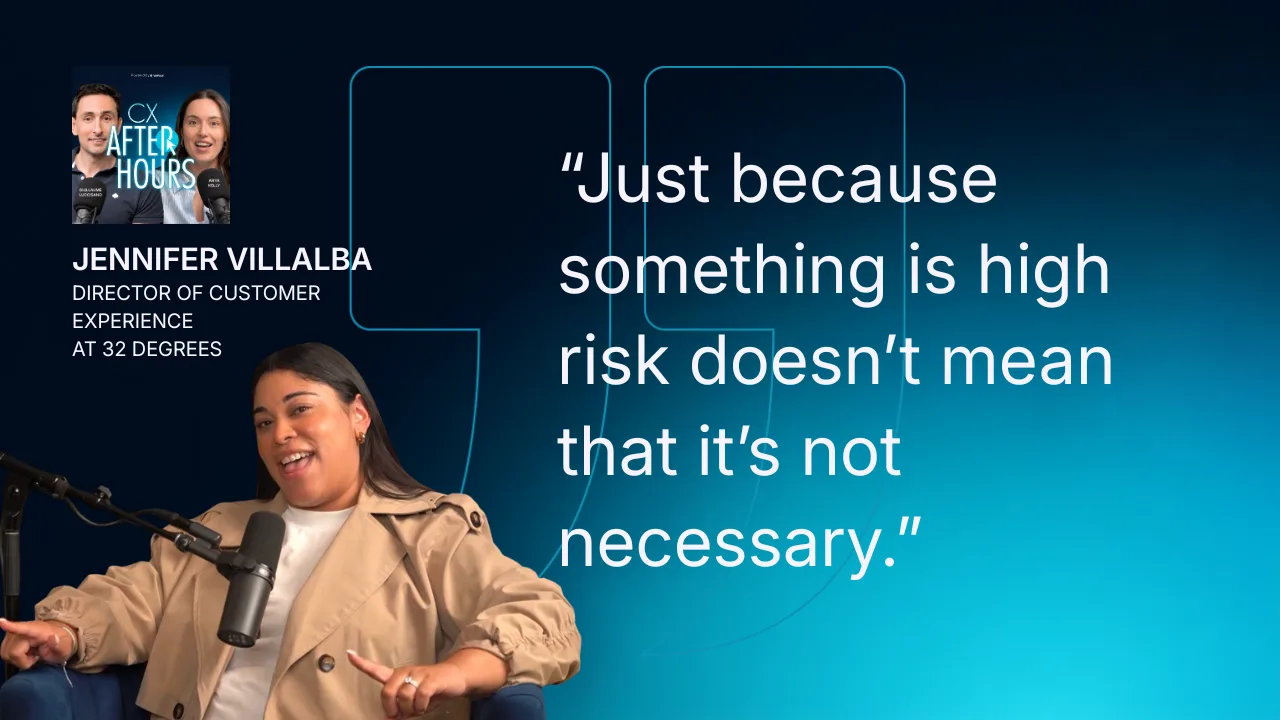
"Just because something is high risk doesn't mean that it's not necessary."
The new BPO, Customer First, could take the documentation that already existed and build its own training program around it. Jennifer could review the program rather than rebuilding everything herself, while also getting more visibility into the agents being hired.
For a CX team scaling rapidly, that kind of documentation is not just about enforcing consistency. It reduces the amount of basic operational knowledge that has to live inside one person's head and makes it much easier to add people without losing control of the experience.
Standardization should create room for personalization
32 Degrees still has macros and Jennifer includes recommended ones alongside SOPs in their knowledge base. But she no longer wants agents simply copying and pasting the same response to every customer.
"I really push my agents to personalize them."
The reason is that the tools available to agents have changed. With AI copilots now able to improve grammar, adjust tone and help draft responses quickly, the original argument for heavily scripted support becomes weaker.
Jennifer goes further:
"I just feel like macros honestly are outdated now."
Her point is not that agents should ignore policies or improvise the actual resolution. The process still needs to be correct. What can change is the language around it.
When 32 Degrees introduced new AI tools, Jennifer deliberately chose not to import the company's existing macro library wholesale. Instead, she created new language that better reflected how the brand wanted to sound today: in her words, "chill but professional."
That matters because brand voice doesn't stop at the marketing department. A company can spend years developing a distinctive voice across its website, advertising and social channels, then suddenly sound like a bank when a customer contacts support.
The problem becomes even more obvious when CX has to deliver bad news.
Jennifer describes an incident where the 32 Degrees warehouse unexpectedly shut down for a week. Rather than trying to hide behind vague corporate language, the team proactively emailed affected customers, explained what had happened and offered store credit.
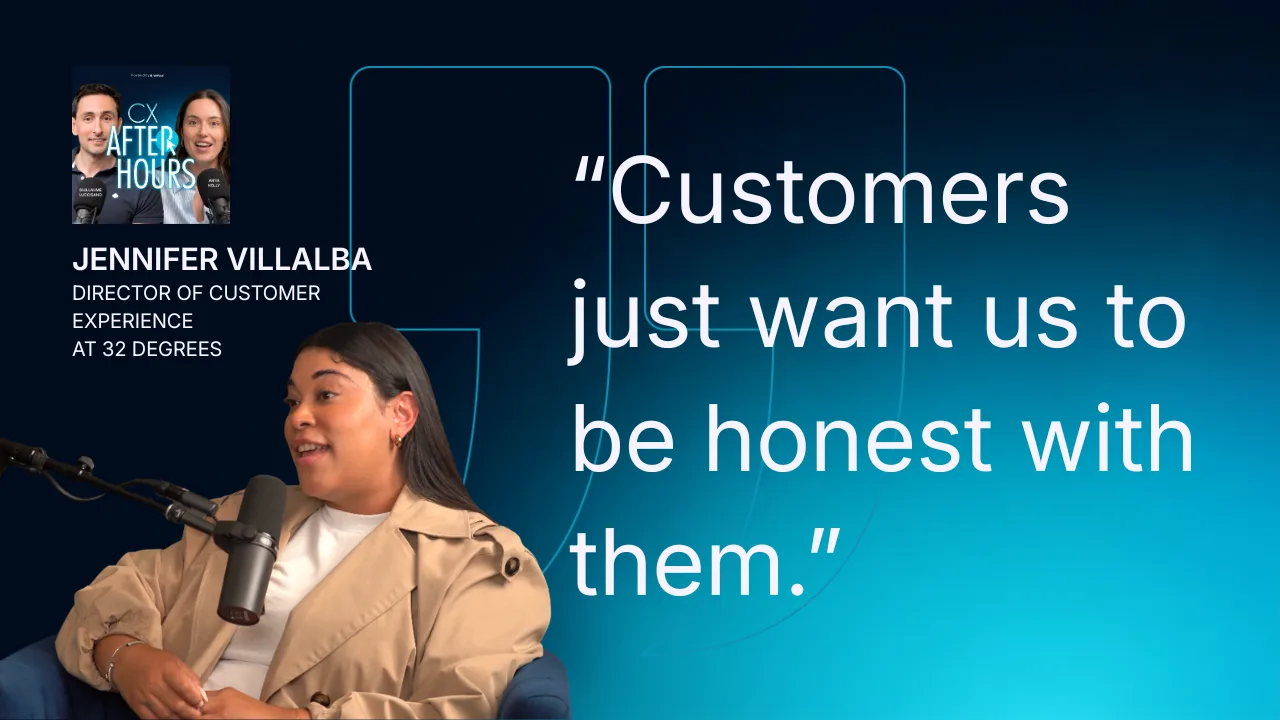
"Customers just want us to be honest with them."
The response was largely understanding. Customers knew what had happened, knew their order might be delayed and could see that the company was taking responsibility.
That is a useful distinction for CX teams. Standardize the operational response so agents know what to do, but give them enough flexibility in how they communicate it that the interaction still sounds like it came from a person.
Automate the conversations that don't need a human
Keeping CX human does not mean involving a person in every interaction.
In fact, one of Jennifer's priorities is making sure customers do not need to contact support in the first place when the answer should be easy to find.
At 32 Degrees, one of the clearest examples was the high number of WISMO (Where is my order?) tickets they were getting.
Customers tracking an order were previously being directed to standard carrier pages, where the information could be as limited as "label created." When customers could not understand what was happening, they opened a support ticket.
32 Degrees introduced parcelLab and built a dedicated tracking experience on its own website, supported by more proactive notifications around delays, returns to sender and other changes in the delivery journey.
"I don't want my customers to have to reach out to me unless they really need to, especially for something like that, like WISMO."
The change reduced the need for customers to seek basic information from an agent, but it also created a broader ecommerce opportunity. Jennifer says the tracking experience generated around 200,000 sessions in its first month and became a new place for the business to surface products and keep customers within the 32 Degrees environment.
Give agents rules, then give them permission to use judgment
At peak times, Jennifer and her direct report cannot personally approve every refund, replacement or policy exception. But the alternative cannot be forcing dozens of agents to escalate every decision or apply the same policy to every customer.
Jennifer's solution was to create an internal VIP framework.
Agents can use the customer profile in Gladly to look at factors such as purchase history and behavior before deciding what kind of resolution makes sense. A long-term customer may qualify for an exception, while somebody repeatedly reporting missing deliveries or returning a very high percentage of purchases may be treated differently.
"I really wanted to empower the agents to make those decisions themselves."
The result is faster resolution for the customer and fewer questions being escalated internally. Jennifer says the number of agent questions fell after the framework was introduced, while refunds and credits also became tighter because agents had clearer guidance on when an exception was actually justified.
The framework is important, but Jennifer is equally clear that it should not become another rigid rulebook.
"Rules are meant to be broken."
She gives the example of a customer who could not return an item because they had been in hospital. Technically, the situation might fall outside the normal policy. Jennifer's response is simply to refund the customer and tell them not to worry about sending the item back.
That is where human judgment becomes difficult to encode.
A policy can cover what should happen in the majority of cases. A framework can help agents understand how much flexibility they have. But neither can anticipate every circumstance a customer will bring to the conversation.
The goal is not to remove judgment from CX. It is to give agents enough context and confidence to use it well.
The queue can tell you what the rest of the business has missed
There is another reason Jennifer believes CX leaders should stay close to frontline conversations: customers often reveal operational problems before they appear clearly elsewhere.
She gives one particularly striking example.
Jennifer occasionally goes into Gladly and answers tickets herself. On one of those occasions, she noticed multiple customers mentioning orders shipped through the same carrier that had not moved for several days.
She went into parcelLab to investigate.
"6,000 orders, no movement. I was like, 'Okay, this is a huge issue.'"
Jennifer contacted the warehouse, which discovered that a truck containing those orders was sitting in the back. The orders had not moved and the problem had not otherwise been picked up.
A similar thing happened when 32 Degrees launched jeans.
Jennifer noticed unusually high exchange rates and then started seeing consistent customer feedback around sizing. The CX team gathered those conversations and took them to the buying and production teams, which eventually discovered that the manufacturer had made a mistake. The jeans were removed from the site, corrected and later relaunched.
For Jennifer, that is part of the value of staying in the queue even as a CX leader.
Reports and dashboards matter, but customer conversations provide another layer of information. Patterns can emerge there before somebody has created the right report or metric to expose them.
Anya argues that CX leaders should spend at least some time in the queue every week for exactly that reason.
The lesson goes beyond CX operations. As support becomes more automated, the conversations that remain may become even more valuable because they contain the unusual situations, recurring frustrations and product problems that customers could not solve themselves.
Scaling CX effectively is therefore not simply about removing humans from the process.
It is about deciding where structure helps, where automation genuinely improves the experience and where judgment still matters.
32 Degrees is using SOPs, AI, BPOs, self-service and customer segmentation to handle a growing operation more efficiently. But the common thread running through Jennifer's approach is that those systems should support better human decisions rather than replace them entirely.
That may ultimately be the more useful measure of whether a CX operation has scaled successfully: not just whether it can handle more tickets, but whether the customer on the other side can still feel the difference when their situation does not fit neatly into the script.
Watch or listen to the full episode:
Apple Podcasts
Spotify
YouTube


