A marketing campaign can look successful before the customer has experienced much of anything. The ad generated attention, the creator partnership drove traffic, and the conversion numbers moved in the right direction.
Then the order arrives.
The product is harder to use than the campaign suggested. Delivery takes longer than expected. The customer contacts support with a question the website never answered. A promise that worked perfectly in the ad now has to survive the reality of the customer journey.
Marketing created the expectation. CX inherited it.
Sound familiar?
Inside the business, responsibility may be neatly divided between marketing, ecommerce, operations and support. The customer does not see any of those boundaries. They experience one company, and every interaction either reinforces the original promise or gives them another reason to question it.
In this episode of CX After Hours, brand and customer experience strategist Aleni Mackarey, VP of Client Success at Base Beauty Creative Agency, joined hosts Anya Kelly and Guillaume Luccisano to discuss what happens when marketing and CX stop operating as separate conversations.
The central idea was simple: the strongest brands do not just make compelling promises. They make sure the rest of the business can keep them.

Watch or listen to the full episode:
Apple Podcasts
Spotify
YouTube
Your customers don't care about your departments
A customer might discover a product through TikTok, research it on Reddit, purchase it through Amazon and eventually contact your brand through your support platform. Internally, those moments could involve several teams, systems and external partners. To the customer, they are all part of the same experience.
"I don't know that there's so much of a handoff anymore. I think that every interaction that a consumer has with a brand is something that they're noticing, and it's going to either build trust for them or erode trust for them."
That is what makes the line between marketing and CX so difficult to draw. Marketing is not simply creating awareness or persuading someone to click. It sets the standard against which every later touchpoint will be judged.
In the episode, Aleni uses the example of a vitamin C cream promising brighter skin in three days. That claim might successfully generate a sale, but it also creates a very specific expectation. The customer will judge the product page, delivery experience, instructions, results and any later support interaction against the promise made at the beginning.
"They don't separate things by departments the way we do in-house. They're just kind of thinking about, 'What is this solving for me as a consumer?'"
When the experience falls short, the customer will not carefully work out whether marketing overpromised, operations underdelivered or the product page failed to explain something properly. They will simply trust the brand less.
That is why we shouldn't still be having a conversation about handoffs. The more useful question is whether the promise being created at the top of the funnel can be sustained throughout the rest of the journey.
CX needs to get involved before launch
For CX leaders, the practical implication is that their involvement needs to happen much earlier.
CX should not first hear about a campaign when customers begin quoting its claims in support tickets. The team should be part of the discussion while those claims are still being developed, helping marketing understand how customers are likely to interpret them and where the wider experience may struggle to deliver.
Now let's not get ahead of ourselves. We are not saying CX needs to approve every piece of creative or become the department that slows down launches. What we are saying is that frontline evidence should be brought into conversations that might otherwise be shaped almost entirely by acquisition goals.
CX teams know which words customers misunderstand, which claims create follow-up questions and where the actual experience repeatedly fails to match expectations. That knowledge gives them a valuable role in pressure-testing the promise before it becomes public.
Support tickets are marketing intelligence
Once CX has a seat at the table, the next step is turning frontline conversations into something the wider business can use.
Support teams often know exactly where the customer journey is creating unnecessary friction. They see the product claim that generates the same question every day, the delivery message that is repeatedly misunderstood and the gap between the language used by the brand and the language customers naturally use themselves.
Yet many companies continue to treat these as support problems. The agent answers the question, a macro is created and the ticket is closed. Response times may improve, but the source of the confusion remains untouched.
"I've seen one little copy change clear up an entire queue of questions that people have over and over and over."
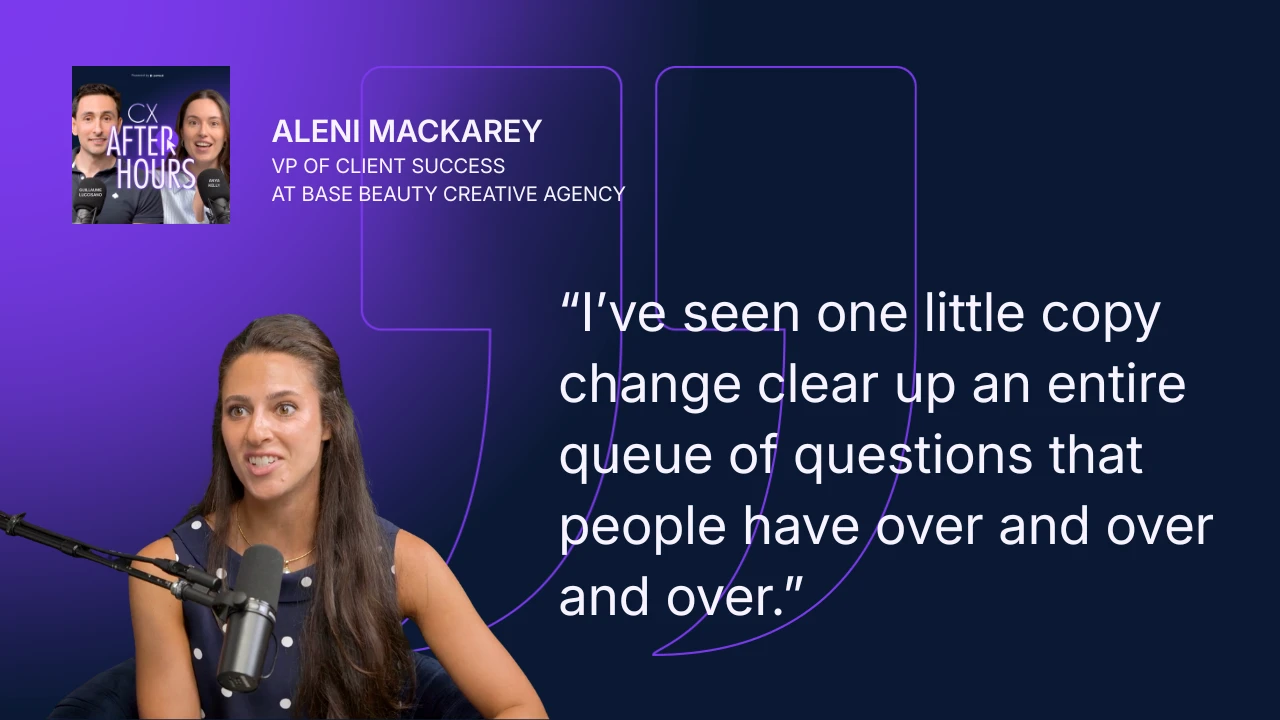
That is one of the most practical ideas from the episode. Some of the best CX improvements do not happen inside the helpdesk. They happen when the business removes the reason the customer needed help in the first place. When the highest-volume contact reasons are treated as a live record of where communication is failing, the same predictable questions can be resolved instantly with zero human agent time while the underlying copy gets fixed at the source.
"If we can find ways to come up with the responses people are looking for from the beginning, we're building that trust."
This is where CX, marketing and ecommerce should be working closely together. A growing support queue may look like a resourcing issue. Sometimes it is. But sometimes it is a sentence on the website that nobody has thought to change.
Difficult conversations reveal where the promise broke
Not every gap can be prevented. Even the clearest campaign and best-designed customer journey will still produce difficult conversations.
The instinct in those moments is often to defend the business, explain what happened or smooth over the interaction as quickly as possible. Aleni argues that this can mean missing the most useful part of the conversation.
"I actually think they're really helpful. Finding a way to navigate these conversations, that's when you're learning more about each other."
An upset customer is often telling the company exactly where the promise broke. They reveal what they believed would happen, which part of the experience mattered most and why the reality felt disappointing. Reading those signals well, whether in a ticket or a social comment, depends on being able to detect the intent and tone behind each message rather than reacting to the surface of it.
"For brands, if they read comments on social media or in a support ticket with curiosity instead of defensiveness, you can really learn a lot."
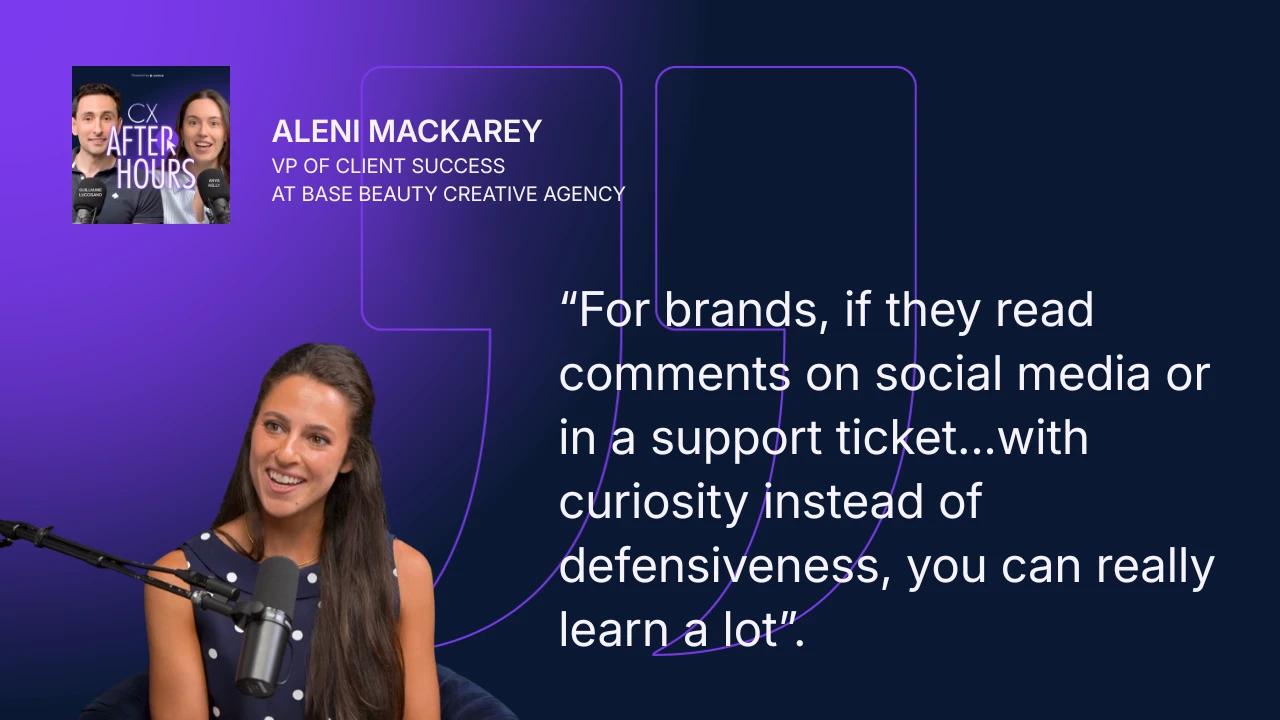
The goal is not to agree with every complaint or accept every demand. It is to remain curious long enough to understand what sits underneath the frustration.
"If you have an engaged conversation with someone and you have to together solve it, to me, I think that's a really great learning moment."
For CX leaders, the important part is making sure that learning does not stay inside the individual ticket. A difficult interaction may reveal that a policy is poorly explained, a campaign is creating unrealistic expectations or several customers are encountering the same operational failure in slightly different ways.
When that context is carried back to marketing, product and operations, the complaint becomes useful business intelligence. Without that feedback loop, the company continues creating the same frustration and asks CX to become better at apologising for it.
AI can help teams see the pattern
The volume of customer feedback makes this harder. Even a relatively small brand may receive thousands of comments, reviews, support tickets and social interactions across different channels.
This is where Aleni sees a practical role for AI.
"We've had AI for years, and we have to think about it as a helper, not an overtaker."
AI can help bring together large volumes of feedback, identify recurring questions and surface shifts in sentiment. It can show that hundreds of customers are asking different versions of the same question or that a particular campaign has created a new type of confusion. Turning that raw signal into deep shopper insights the whole business can act on is exactly the kind of pattern work that used to be impossible at scale.
But identifying a pattern and deciding what it means are different jobs.
"AI can help with automation and taking away some of the monotonous work. And then we have to kind of be the experts in the space for the culture and the nuance and the humanising of the experience."
The technology might reveal that customers keep asking how often they can use a product. A person still has to decide whether the solution is clearer packaging, a product-page update, better education or a change to the campaign itself.
AI can make the signal easier to see. It cannot decide what kind of promise the brand should make or what it owes the customer when that promise falls short.
Marketing and CX are already part of the same experience
The debate about where marketing ends and CX begins matters far more inside the business than it does to the customer.
Customers have already combined them.
The campaign, product page, delivery and support interaction all contribute to the same judgement: can this brand be trusted to do what it says?
The strongest companies recognise that marketing cannot create expectations in isolation and CX cannot be left to manage the consequences alone. CX needs to move upstream, bringing frontline insight into campaign planning and helping the business identify gaps before they become ticket categories.
That involvement has clear commercial value. Better expectation-setting can reduce complaints and refunds. Clearer communication can lower contact volume. More authentic customer language can improve marketing. A more consistent experience can strengthen the trust required for another purchase.
In the full episode, Aleni, Anya and Guillaume explore how marketing and CX can work together more effectively, how brands can use customer feedback to make better decisions and where AI fits into the process.
Watch or listen to the full episode:
Apple Podcasts
Spotify
YouTube


