Customer support has a positioning problem. In many ecommerce businesses, it's still treated as the entry-level part of CX: the team answering tickets, handling complaints and dealing with problems after they happen. The more strategic work supposedly begins when you move beyond the inbox and into customer experience.
For Zoe Kahn, founder of Inevitable Agency and host of Let's Laugh About It, the opposite happened. A part-time customer support job at Ghost initially felt like a step backwards in her career. Within three months, she had stopped going to class because she wanted to stay in the inbox. The role eventually gave her visibility into product development, fulfillment, warehousing and other parts of the business that affected the customer.
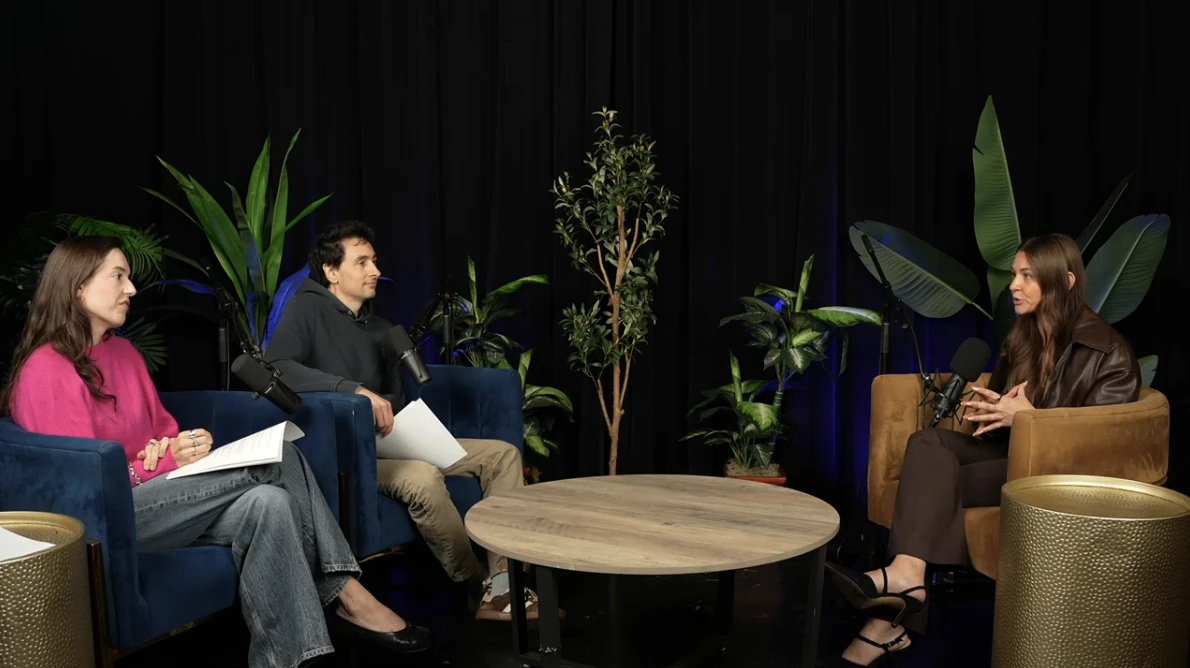
In this episode of CX After Hours, Zoe joined hosts Anya Kelly and Guillaume Luccisano to discuss why customer support deserves more respect, how AI is changing the way CX teams learn from customer conversations, and why becoming a more influential CX leader sometimes means proving your own assumptions wrong.
Watch or listen to the full episode:
Apple Podcasts
Spotify
YouTube
Customer support is the foundation of customer experience
Customer support is often treated as a starting point rather than a discipline worth celebrating.
Zoe understands why. Earlier in her career, she also wanted to distinguish between doing "customer support" and working in the broader field of customer experience. But she now thinks CX leaders can inadvertently make the problem worse when they rush to correct anyone who describes their work as support.
For Zoe, saying "it's not customer support, it's customer experience" risks reinforcing the idea that support is less valuable.
"We should be proud," she says. "Customer experience is way more than just the support inbox, but the support inbox is such a crucial part of it."
Most CX leaders begin by looking at what is happening in support because that is where the direct consequences of the customer journey often appear. A new policy, fulfillment process, product launch or website change may have been designed somewhere else in the business, but the inbox is where teams can see how customers actually reacted to it.
That means every significant change to the experience should eventually come back to the same question: what happened in support?
"You can never ignore customer support."
Zoe believes CX leaders should therefore do more to elevate the function rather than distancing themselves from it. In her words, the industry needs to "romanticize it a bit."
Anya makes the distinction that support is still only one pillar of customer experience. CX can touch warehouse operations, quality control and the entire end-to-end journey. But that broader work becomes difficult to justify if the fundamentals are not working.
The support operation is the foundation. Build the wider CX strategy on top of it.
The support inbox can reveal what the rest of the business has missed
The value of support goes beyond resolving the individual problem in front of an agent. Tickets can also reveal failures elsewhere in the business.
Zoe says she is frequently surprised by relatively basic operational problems when working with ecommerce brands, including customers repeatedly receiving the wrong items. The customer contacts support, but the root cause may sit inside fulfillment, inventory, the warehouse or another system entirely.
Proactive communication is another common gap.
Zoe gives the example of a brand overselling a product and leaving a customer's order waiting in the fulfillment queue. If the business already knows that the order has not shipped within the expected timeframe, there is no reason to wait for the customer to discover the problem themselves.
A relatively simple workflow can identify the delay and contact the customer first.
That matters particularly for a new customer because a fulfillment problem may become their first meaningful interaction with the brand. If they have to chase the company for an explanation, Zoe says they can have "a bad taste in their mouth before they even get the product."
The challenge is keeping those signals connected as a company grows.
Support is often one of the first things a founder wants to hand over because answering tickets is time-consuming. Zoe sees nothing wrong with that, but the risk is that leadership also hands over its direct connection to customer feedback.
The further decision-makers move from the inbox, the more important good feedback loops become. Support needs a way to feed what it is seeing back into operations, retention, marketing, product and leadership.
Otherwise, the company can become very good at resolving individual tickets without fixing the thing that keeps creating them.
AI can help CX teams find problems before they grow
One of the biggest changes AI brings to CX is not necessarily how tickets are answered.
It is how quickly teams can understand what those tickets are telling them.
Zoe describes how CX reporting historically required a lot of manual structure. Teams had to configure ticket fields correctly, categorize conversations and periodically pull reports to understand why customers were contacting support.
Even once a pattern appeared, the process could be slow. A team might notice several complaints, investigate whether they represented a wider trend, analyze the data and then work with another team on a solution.
"You'd analyze, and then three months later you've got a solution."
AI can compress that cycle considerably.
Instead of waiting for somebody to pull a spreadsheet once a month, tools can analyze incoming conversations continuously and identify changes in customer sentiment or contact reasons as they happen.
"You can have AI alert you as soon as something is off," Zoe says, "so you can get ahead of these issues."
Anya also uses AI to combine the quantitative picture with examples of what customers are actually saying. Numbers can show the size of a problem, while specific customer conversations can help leadership understand the emotion behind it and why it might lead to churn.
But Zoe is less enthusiastic about some of the ways AI is being used directly with customers.
Her Vent for the episode focuses on the poor automated experiences that have made many customers suspicious of AI support in the first place: bots that cannot answer the question, conversations that get stuck in loops and systems that make it difficult to reach a person.
For Zoe, good AI customer service should become almost invisible.
"Consumers shouldn't even know or even think about are they talking to AI or not."
The most important outcome is straightforward: customers want their problem solved, and they want it solved quickly.
That means the goal should not be to maximize the percentage of conversations handled by AI. Automate the interactions where the technology can genuinely provide a fast, accurate resolution, but make it easy to reach a human when it cannot.
CX leaders need to know which customer problems actually matter
Being close to the inbox creates its own problem. When you spend your day reading customer complaints, every issue can start to feel enormous.
Zoe admits that earlier in her career she became what she now describes as the "annoying squeaky wheel." She would see customers experiencing a problem and push the wider business to fix it without always having enough context about everything else the company was trying to solve.
The customer complaint was real. The problem was prioritization.
An issue might feel huge because a CX team has dealt with it repeatedly that week, but look very different when compared with the total number of orders or customers going through the same journey successfully.
That does not mean ignoring small groups of unhappy customers. It means understanding scale well enough to decide what deserves the organization's attention first.
Zoe says the change in her own thinking happened when she started understanding the data.
"I started to prove myself wrong when I would look at the data."
Sometimes a problem that felt enormous from inside the queue simply was not the most important problem facing the business.
"This isn't the biggest fish in the pond right now."
That ability to distinguish between customer pain and business priority is important for the credibility of CX internally.
If a CX leader continually raises an issue affecting one customer while overlooking another that affects thousands, Zoe argues that eventually "you'll lose your credibility as like a thought leader in your organization."
Instead, CX teams need to bring context with the complaint. How many customers are affected? What is the potential revenue impact? How does it compare with other problems? What might a solution look like?
Zoe also recommends going one step further and offering to help fix it.
Other teams already have long lists of priorities. Walking into a meeting with another problem for them to solve is very different from arriving with the customer challenge, its potential business impact and a possible solution.
"Here's how much revenue it could potentially impact. Here's how much revenue it can bring. Here's a potential solution."
That also requires CX leaders to have enough visibility into the rest of the company to make those judgements. Zoe believes they should have access to the relevant business data, understand company KPIs and OKRs, and have a place at the table when important decisions are made.
If CX is expected to represent the customer without understanding the wider business, it becomes much harder to know which customer problems should actually come first.
The simplest CX habit is to experience the journey yourself
For Zoe's 10% Fix (the small change that can have an outsized impact), her recommendation is surprisingly simple.
Test the customer journey from beginning to end.
Any time the business changes something, somebody should experience that change as a customer rather than assuming it works because the individual systems appear to be working.
That could mean buying a bundle, checking whether loyalty points are added correctly, clicking through new buttons, testing emails or simply making sure a reply actually reaches the inbox it is supposed to reach.
"At the very minimum," Zoe says, somebody should shop the site with a critical or genuinely fresh eye at least once a quarter. Once a month is even better, particularly for parts of the experience that are new or have recently changed.
Her advice is to actively try to break things because seemingly small changes can create unexpected problems elsewhere in the journey.
CX teams have more data, automation and AI available to them than ever. Those tools can help businesses understand customers faster and solve problems more efficiently.
But they do not remove the need to stay close to what customers are actually experiencing.
That might mean reading the support inbox, looking beyond a complaint to understand its true scale, or occasionally going through the checkout yourself and seeing what breaks.
Customer support is not the whole of customer experience. But it remains one of the clearest places to see the consequences of decisions being made across the rest of the business.
And if CX teams learn to use that information well, the inbox becomes much more than a queue of problems to resolve. It becomes a source of insight for deciding what the business should fix next.
Watch or listen to the full episode:
Apple Podcasts
Spotify
YouTube


