
Kim.cc built its support model to pair AI with trained human specialists called Sentinels. When the AI's confidence on a ticket drops below 90%, the ticket goes to one of Kim.cc's human agents who review it and work out what's blocking a resolution. Kim.cc estimates that around 70% of tickets are auto-handled.
It's a clear division of labor. The AI handles routine volume, and Kim.cc's team handles the tickets the AI isn't sure about. It's a unique way to approach AI accuracy, as many other tools do keep humans in the loop, but have your own team manage output instead of the third-party team. The difference between these two approaches is who owns the quality control (QC) process and how it holds up when ticket volume doubles.
This list covers nine alternatives, each with a different approach to balancing AI autonomy and human oversight.
What Kim.cc does and why teams look for alternatives
Kim.cc is an AI customer support platform built for ecommerce. In July 2026, it raised an institutional round led by Stellaris Venture Partners (terms weren't disclosed). The company says it works with more than 200 Shopify brands and is targeting more than $100M in annual revenue by 2028. Its founding team previously managed 2 million support inquiries per week.
The AI scores each incoming ticket for confidence. Tickets below 90% go to Sentinels, whom Kim.cc describes as "trained CX professionals who implement, train, and QA the AI." So Sentinels can both catch edge cases and impact how the AI performs over time.
The Sentinel model means merchants don't have to build a QC process themselves. That's useful for teams without the bandwidth to manage AI quality in-house. It also means a third party is making quality decisions, which is where Yuma and Kim.cc differ most, and where some teams start looking at other options.
- Control: Some teams want their own staff, who know the brand and its edge cases, deciding what goes out to customers.
- Scaling: As volume grows, so do the exceptions that need a person. Some teams would rather settle those calls once in their own documentation than rely on an outside team to make them.
- Training. Kim.cc's Sentinels "implement, train, and QA the AI." With tools like Yuma, the rules the AI follows live in a Handbook your own team edits, starting from the SOPs you already have.
9 Kim.cc alternatives for ecommerce teams
Adoption of AI agents in customer service jumped from 39% to 66% in one year. Many ecommerce teams in particular are moving quickly, with 96% of ecommerce professionals saying they use AI in their roles, up from 69.2% in 2024. As a result, plenty of organizations are choosing new platforms that can help them deliver great customer service at speed.
Here are nine of the top Kim.cc alternatives to consider:
| Tool | Best for | Quality control approach | Pricing model |
|---|---|---|---|
| Yuma AI | Ecommerce brands wanting high automation with merchant-controlled QC | Safety Guard checks every response; Hard Limits cap sensitive actions; merchant's team controls rollout | Outcome-based (pay per resolved ticket) |
| Siena AI | DTC brands prioritizing brand voice | Guardrails and policy controls; AI handoffs to your team include a context note | Platform fee + per automated ticket |
| DigitalGenius | Brands with heavy damage, loss, and warranty volume | Business rules plus image recognition to confirm damage | Not published; quote via demo |
| Gorgias AI Agent | Shopify brands already on Gorgias | Helpdesk-native AI with handoff to agents | Helpdesk tier + per automated resolution |
| Zendesk AI | Brands on Zendesk wanting single-vendor AI | Platform-native AI agents | Plan allotment + additional resolutions billed |
| Fin (Intercom) | Teams wanting multilingual AI across several helpdesks | AI agent with handoff to your team | Per outcome |
| Ada | Enterprise brands across industries | Safeguards against hallucinations, continuous monitoring, and testing tools for AI agent performance | Not published; quote via sales |
| Sierra | Large consumer brands | Guardrails, supervisor steps in the agent's reasoning, Monitors that flag conversations, and review of agent updates before shipping | Outcome-based |
| Tidio (Lyro) | Small and medium businesses testing AI | Lyro Actions with human handoff | Free plan; paid tiers |
1. Yuma AI
Best for: Ecommerce brands that want high automation with their own team in control of quality.
Yuma is an AI agent platform built exclusively for ecommerce customer support. Where Kim.cc routes uncertain tickets to its Sentinels, Yuma gives quality control to the merchant's own team, backed by software guardrails.
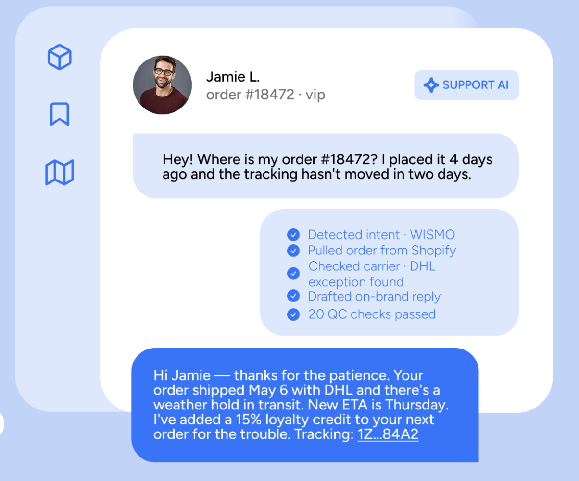
Everything in Yuma connects back to the Handbook, a single source of truth written in plain language. Ask Yuma writes the pages from a description of how you do support, your SOPs, or real tickets. Here's how a ticket moves through it:
- The Handbook sets the rules. Playbooks cover each situation, and brand pages set tone.
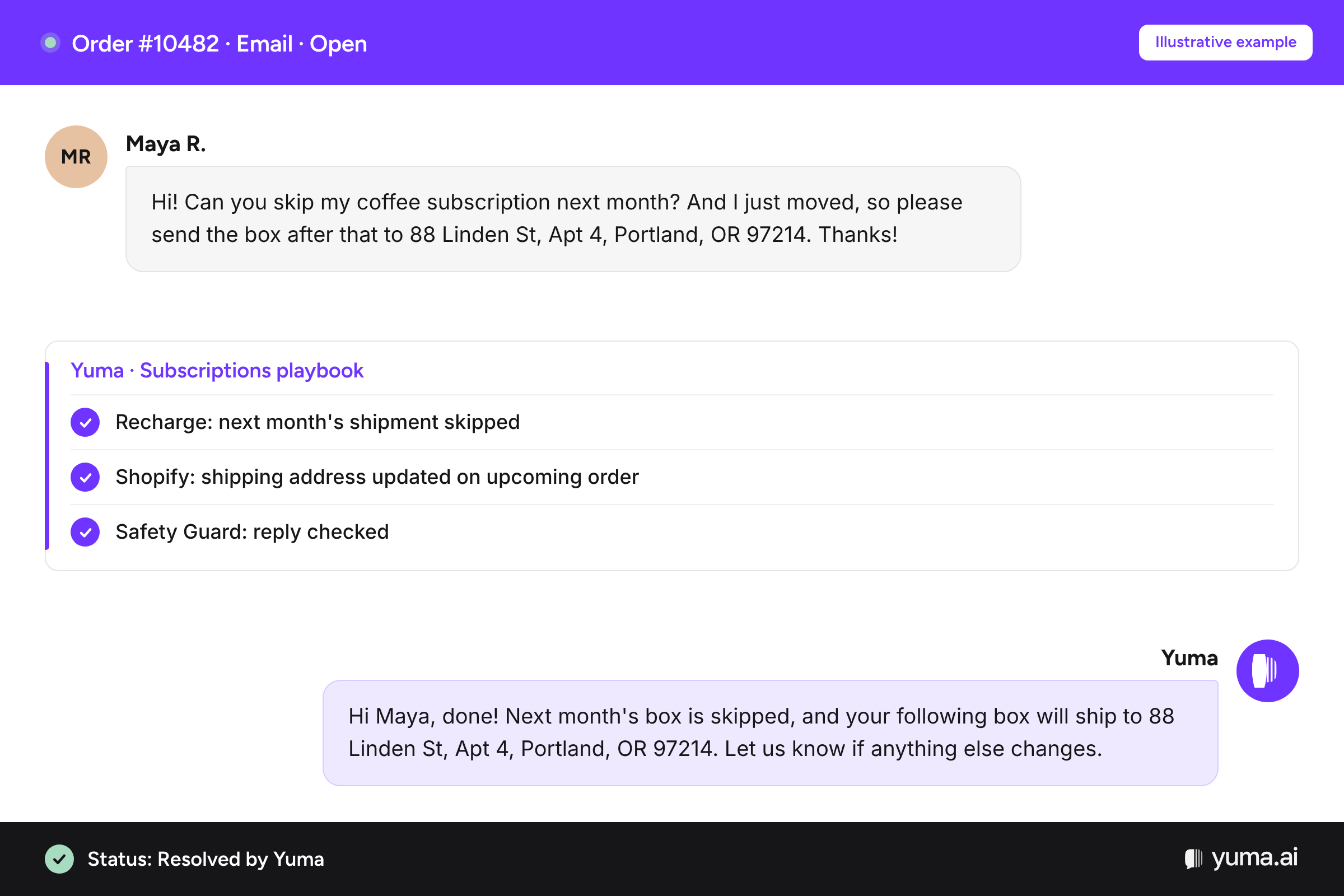
- Yuma takes the action. It processes refunds, updates addresses, cancels orders, and changes subscriptions through 100+ pre-built actions, plus Web Actions for tools with no API.
- Guardrails check the work. Automated Safety Guard checks every AI response, and Hard Limits cap refund amounts, coupon values, and loyalty points.
- Phone runs on the same Handbook. Yuma Voice answers calls and makes refunds and order changes mid-call.
- Your team sets the pace. A new playbook can start on 10% of matching conversations, and nothing reaches a customer until you publish.
2. Siena AI
Best for: Voice-led DTC brands that want a consistent tone across many channels.
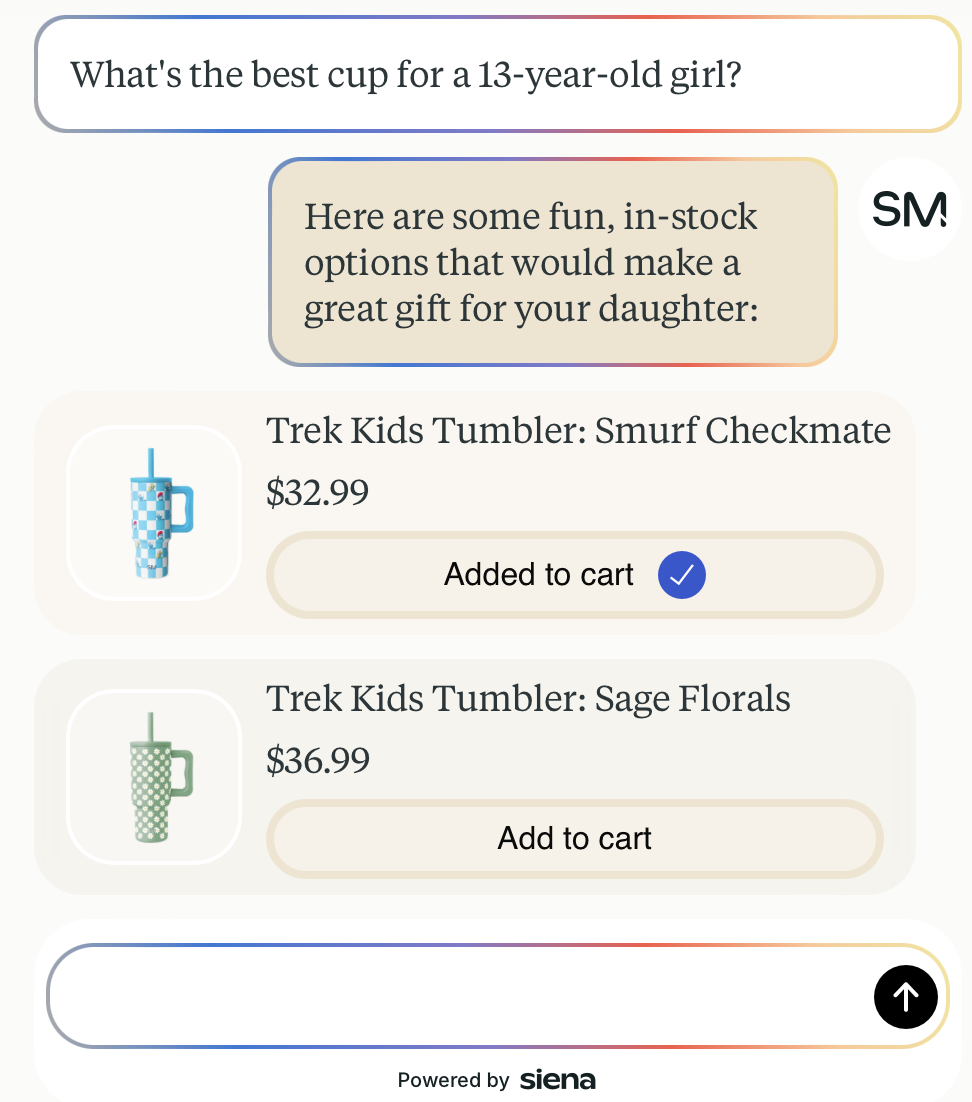
Siena AI is an AI agent built around brand voice. Its personas are built on each brand's tone, voice, and customer language, and its reasoning engine, CoRE, adapts replies for email, SMS, social, and chat.
Strengths
- Brand voice is the center of the product, with personas tuned to how each brand already talks to customers.
- It covers a wide set of ecommerce actions, including tracking across carriers, address updates, return labels, refunds, replacements, and subscription skips, pauses, and swaps.
Trade-offs
- Pricing pairs a monthly platform fee with a $0.90 charge for each automated ticket. The platform fee costs $750 and applies at any volume, so it can be expensive for smaller businesses.
- Quality control centers on Siena's AI personas and reasoning engine. Teams moving from Kim.cc's human review should ask how refunds and other sensitive actions are reviewed and escalated.
3. DigitalGenius
Best for: Brands where damage, loss, and warranty claims make up a large share of tickets.
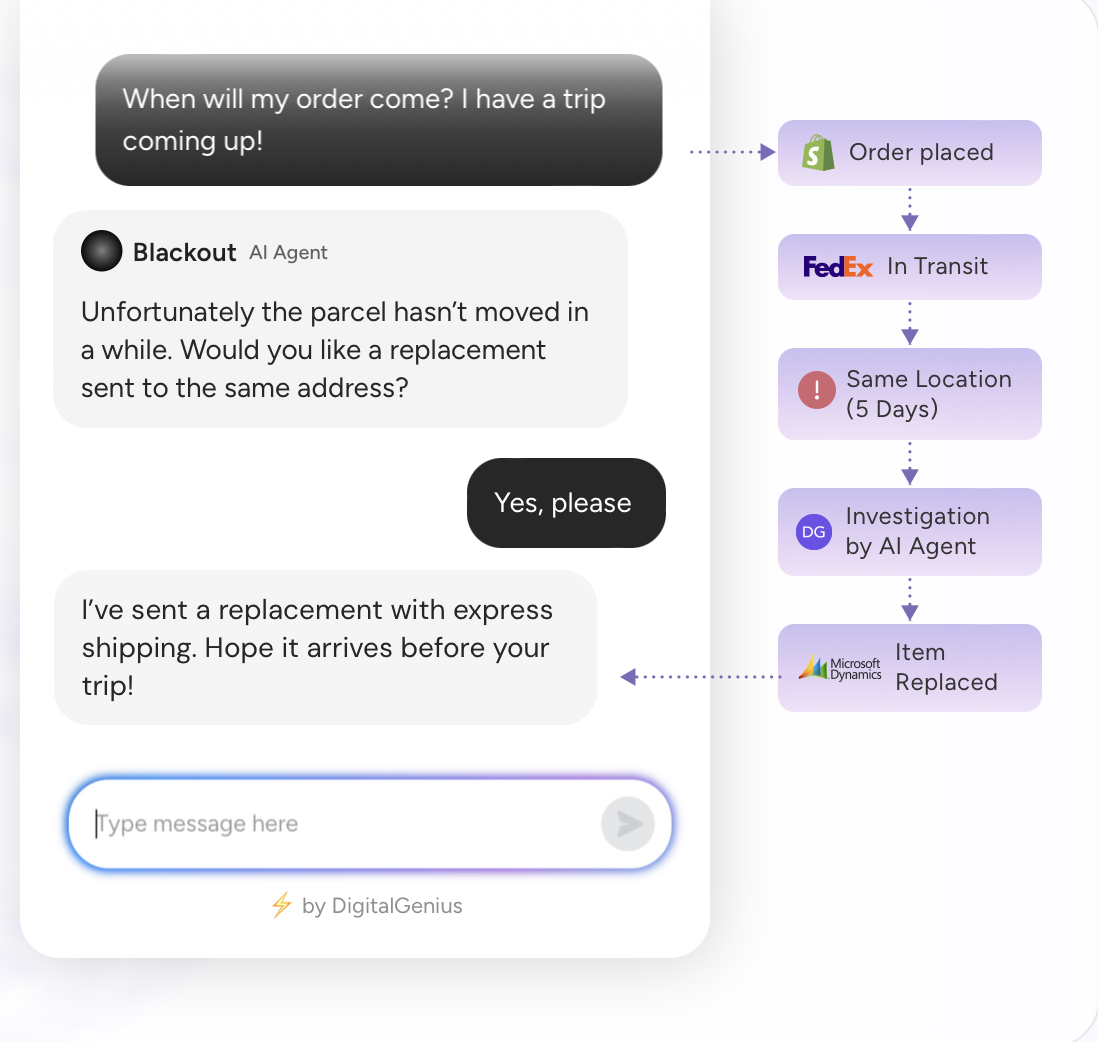
DigitalGenius focuses on post-purchase support, with image recognition as its signature feature. When a customer sends a photo of a damaged product, the AI can confirm the damage and approve the claim based on the brand's rules.
Strengths
- Image recognition can approve damage claims without an agent reviewing each photo.
- It covers a broad set of post-purchase tickets, including order status, delays, lost deliveries, returns, refunds, and warranty issues, plus subscription management.
- Carrier integrations with UPS, FedEx, DHL, USPS, and others help with tracking and replacement tickets.
Trade-offs
- Its site centers on post-purchase use cases, so brands with heavy pre-sale question volume should check coverage there.
- Refund and replacement decisions follow business rules you set, so plan time to configure them.
- Pricing isn't published, and quotes require a demo.
4. Gorgias AI Agent
Best for: Shopify brands committed to Gorgias that want AI with minimal setup.
If your team already runs on Gorgias, its native AI Agent lives inside the helpdesk your agents already use and resolves tickets without handing them to a human.
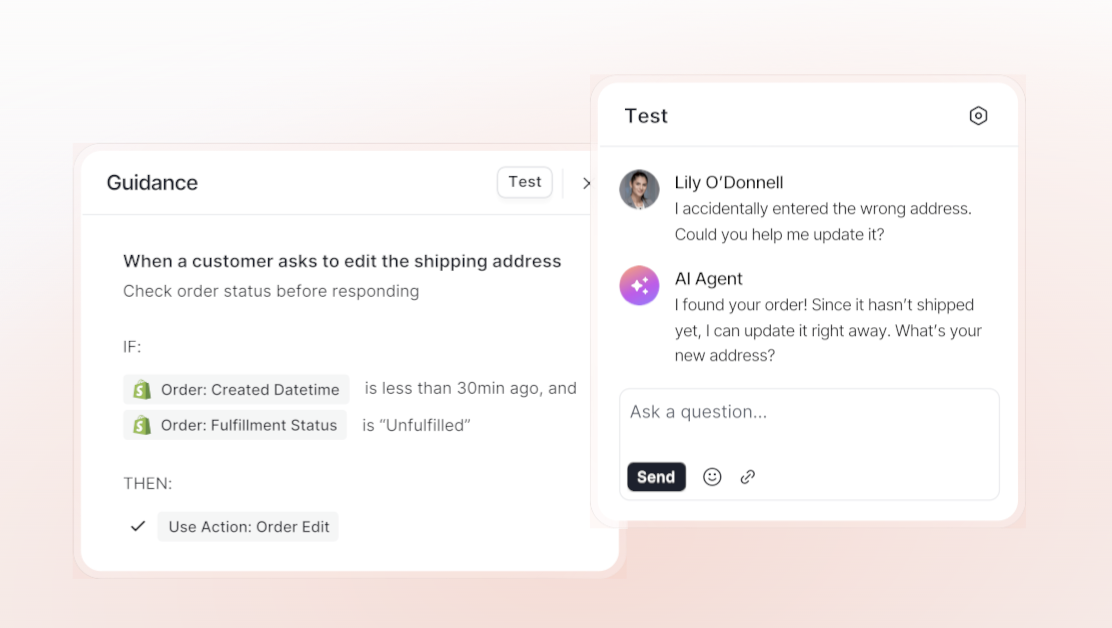
Gorgias and Yuma can also run together. Yuma is available as an app inside Gorgias, so teams can add Handbook-driven playbooks and Web Actions without changing helpdesks.
Strengths
- There's no new tool to onboard, since agents keep working in the same workspace.
- Gorgias charges an outcome-based fee, so you pay for tickets the AI Agent resolves.
Trade-offs
- It only works inside Gorgias, so changing helpdesks later means changing your AI too.
- The fee per resolution depends on your helpdesk tier, and overage fees apply past your plan's limit, so model peak months before committing.
5. Zendesk AI
Best for: Brands already on Zendesk that want helpdesk and AI from one vendor.
Zendesk has built out its AI through two acquisitions (Ultimate in 2024 and Forethought, completed in March 2026). Its AI agents sit inside one of the most widely used helpdesks, with a marketplace of more than 1,200 apps.
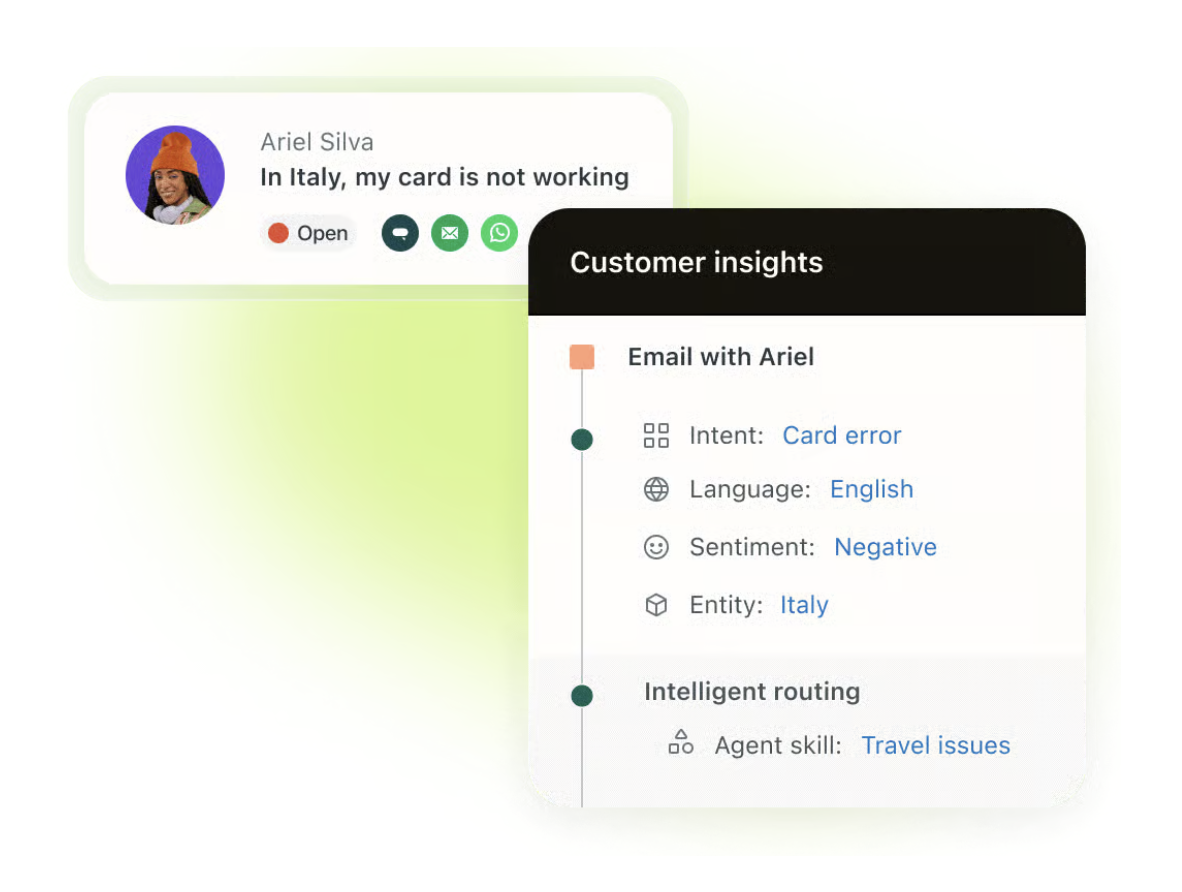
For ecommerce teams staying on Zendesk, Yuma can run inside it to handle ecommerce-specific tickets with its own playbooks and guardrails.
Strengths
- Helpdesk and AI come from one vendor, backed by a large app ecosystem.
- It's built for support teams across every industry, which suits brands with support needs beyond ecommerce.
Trade-offs
- Shopify actions usually run through marketplace apps such as Shopify for Zendesk, so each ecommerce action may take extra setup.
- Plans include an allotment of automated resolutions per agent each month, with additional resolutions billed on top. Model peak months like BFCM before committing.
- Zendesk began moving accounts to new resolution tiers in May 2026, so confirm which pricing applies to your account.
6. Fin by Intercom
Best for: Teams that need multilingual AI and want to keep their existing helpdesk.
Fin is Intercom's AI agent. It answers in 45+ languages, handles multi-turn conversations, and works with Salesforce, HubSpot, Zendesk, and Freshdesk.
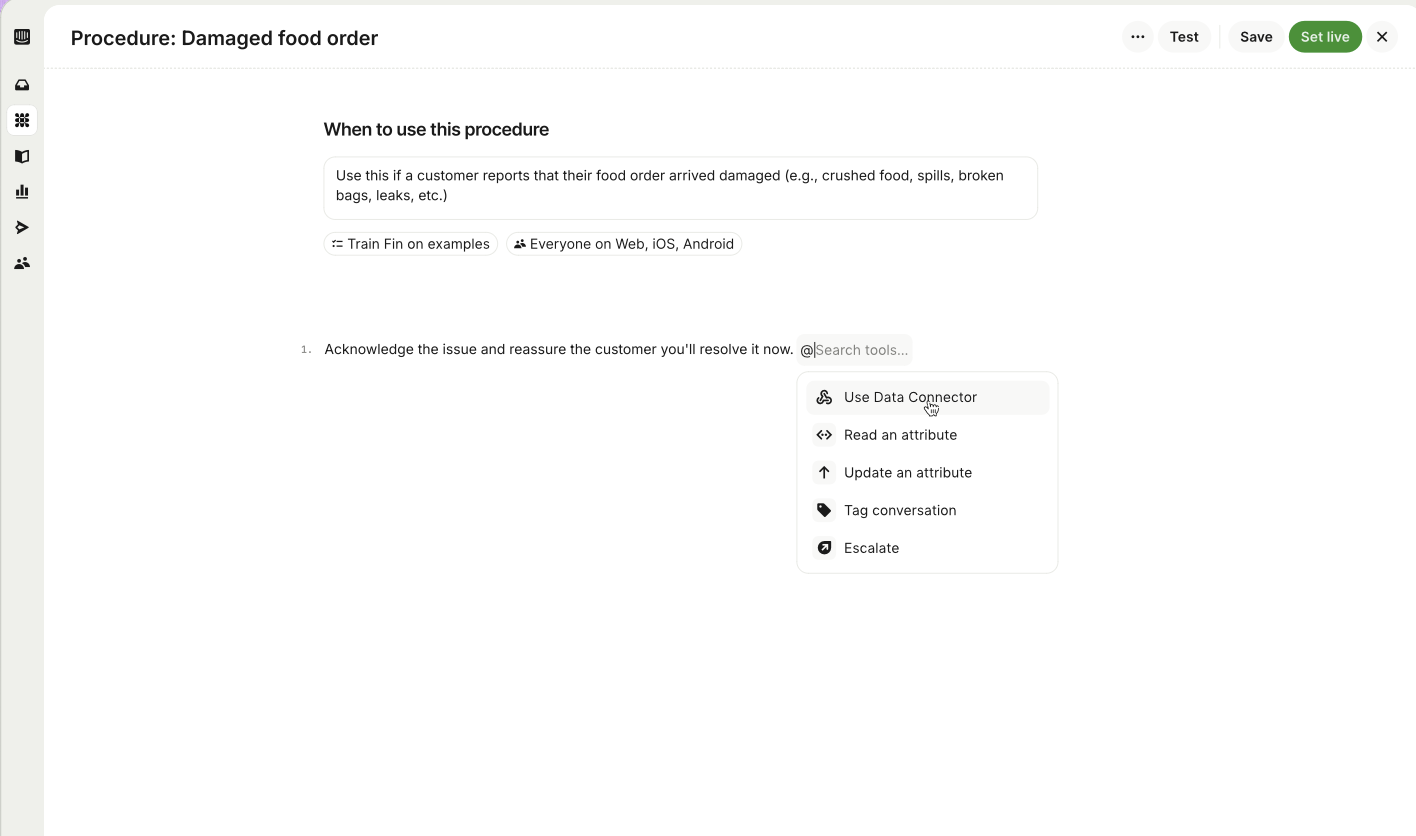
Strengths
- Fin can process partial or full cancellations, issue refunds, and handle returns or exchanges, with integrations for Shopify and Stripe.
- It works with several helpdesks, so teams can keep their current setup.
- Intercom reports a 76% average resolution rate across its customers, a vendor-reported figure.
Trade-offs
- Pricing is per outcome, and while it's great that resolutions count, so do some handoffs that complete a configured procedure. This means you can pay for some conversations your human agents ultimately had to handle.
- Fin's ecommerce page doesn't mention subscription platforms, so subscription-heavy brands should confirm coverage.
7. Ada
Best for: Enterprise brands running support across several business lines.
Ada is an AI customer service platform for enterprise CX teams, used across ecommerce, financial services, SaaS, travel, insurance, and gaming.
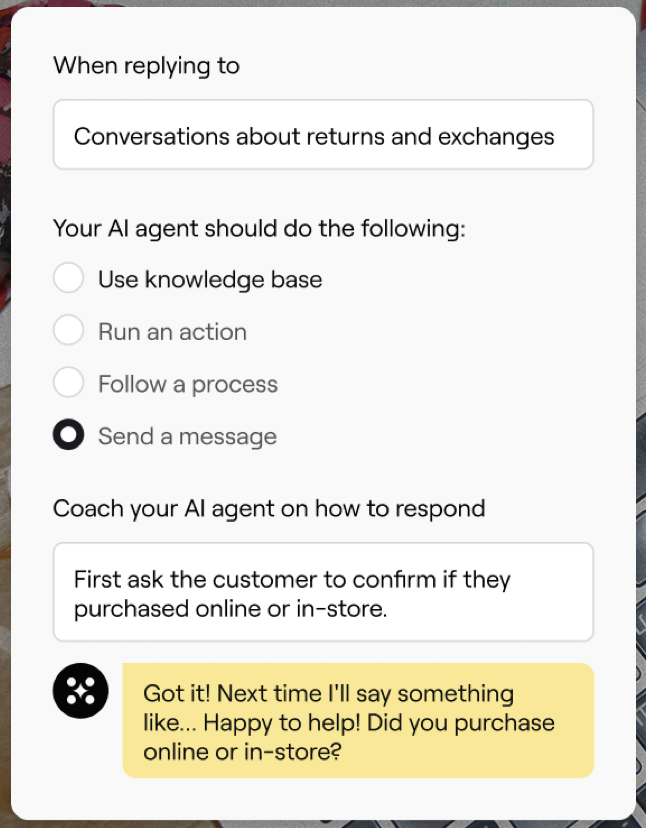
Strengths
- It supports more than 50 languages and automates complex procedures with agentic AI.
- It integrates with Shopify and covers returns, order tracking, refunds, and return labels.
- Built-in safeguards were designed to reduce hallucinations.
Trade-offs
- Ada is built for enterprise CX teams. Smaller ecommerce teams should check whether the platform's scope matches what they need.
- Ada's ecommerce page doesn't mention subscription platforms, so subscription-heavy brands should confirm coverage.
- Pricing isn't published. Quotes come through sales.
8. Sierra
Best for: Large consumer brands that want one agent across every channel, voice included.
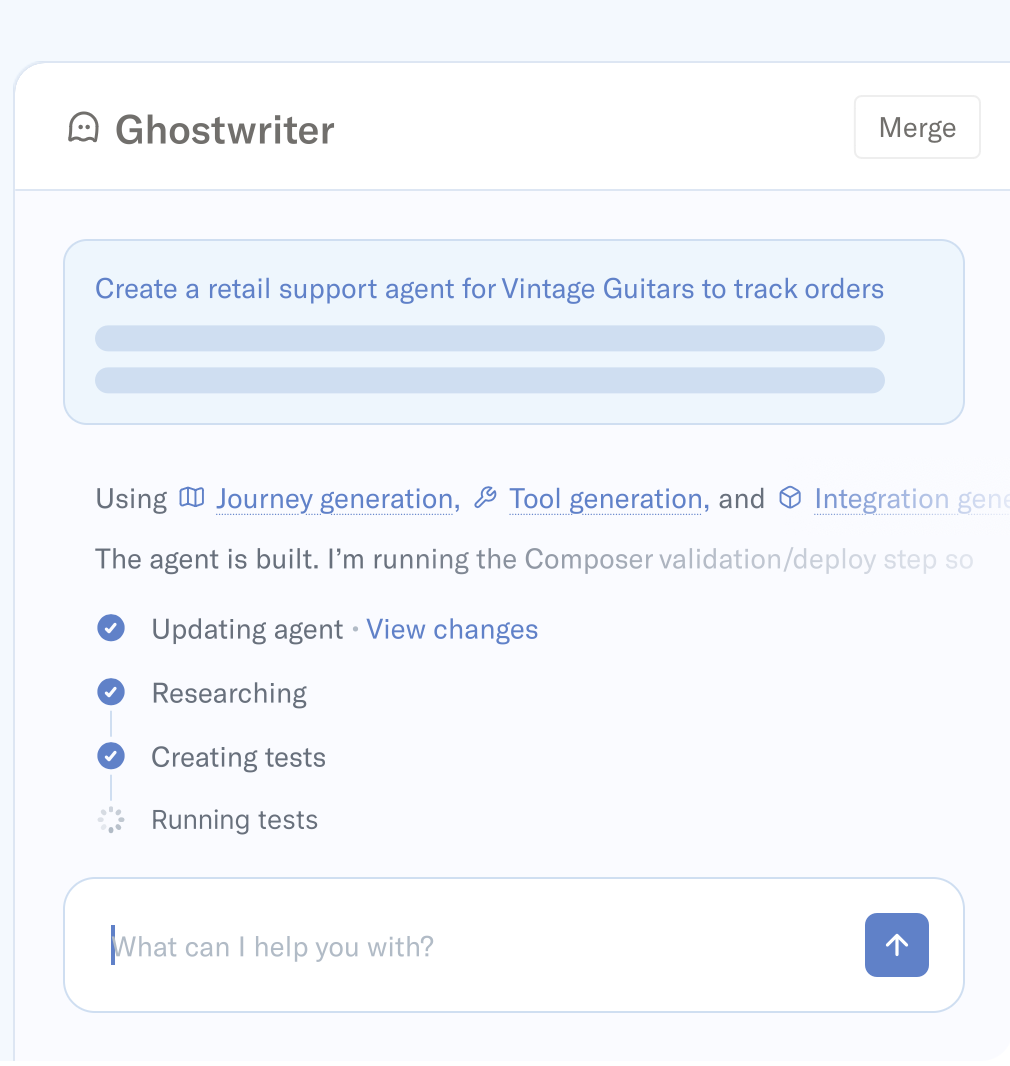
Sierra was founded by Bret Taylor, former co-CEO of Salesforce, and Clay Bavor, who spent 18 years at Google and most recently led Google Labs. Its customers include large consumer brands such as SiriusXM, Hyatt, and Rocket Mortgage.
Strengths
- One AI agent works across chat, SMS, WhatsApp, email, and voice, with built-in guardrails.
- Pricing is outcome-based, so brands pay for the results Sierra delivers.
- Teams can build agents with or without engineering support.
Trade-offs
- Its customer list leans toward very large brands. Mid-market Shopify teams should ask what a deployment looks like at their size.
- Sierra serves many industries, so ask how it connects to your commerce stack, including Shopify, subscriptions, and returns.
9. Tidio (Lyro)
Best for: Small brands testing AI for the first time on a few hundred tickets a month.
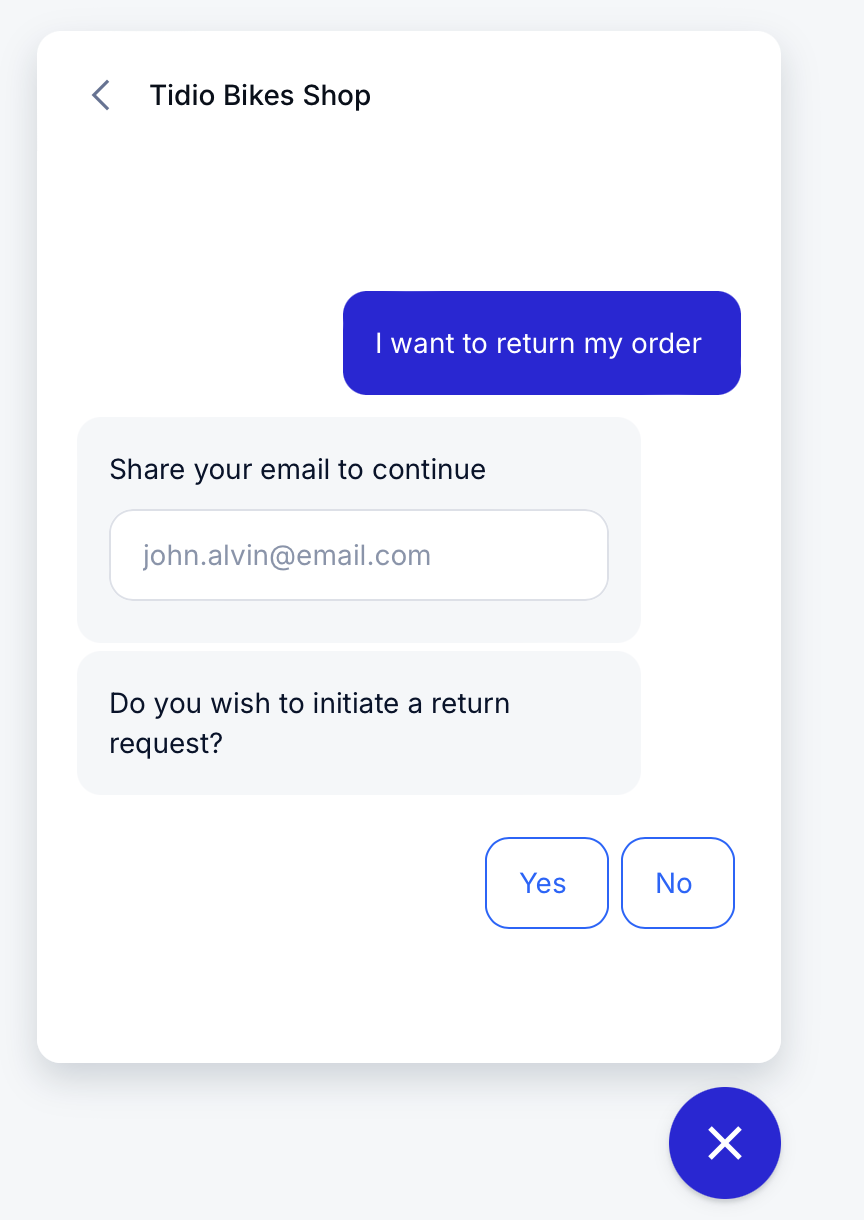
Tidio's AI agent, Lyro, is designed for small and medium businesses, and it has a user-friendly interface that's popular with many customers.
Strengths
- Tidio has a free plan, and Lyro is free for the first 50 conversations.
- Every account has Lyro Actions, which can share tracking links, cancel or modify orders, issue refunds, and manage subscriptions.
- When Lyro can't help, it hands the conversation to a person on your team.
Trade-offs
- Free Lyro usage covers only the first 50 conversations, so ongoing use needs a paid plan.
- Lyro Actions don't include return label generation, so returns-heavy brands should confirm how labels get created.