Zendesk's AI works within Zendesk's ecosystem, which means it can route tickets, suggest replies, and deflect with knowledge base content. But it can't take actions inside external platforms like Shopify or Recharge without third-party marketplace apps. For ecommerce teams where the bulk of tickets require those actions, that can become a significant limitation.
The Zendesk AI alternatives below fall into two groups:
- AI overlay tools that install on top of Zendesk and replace the native AI while your team stays in the same workspace.
- Full platform alternatives, which can replace Zendesk entirely for teams where the helpdesk itself is the bottleneck.
In this post, we cover seven options across both groups, with pros, cons, and pricing for each so you can shortlist based on your stack and budget.
Why some ecommerce teams may benefit from Zendesk AI alternatives
Zendesk has invested heavily in AI over the past two years. It acquired Ultimate in 2024 for AI-powered ticket automation, then acquired Forethought in March 2026 to offer AI agents capable of multi-step resolution.
The result of these acquisitions is a more capable AI stack than Zendesk had 12 months ago, but for ecommerce teams specifically, three friction points may remain.
Zendesk's pricing adds up quickly. Suite plans start at $55/agent/month and go up to $115 for Professional (billed annually). AI add-ons like Copilot bill on top of that. Zendesk doesn't publish its per-resolution rate, but Vendr's data from approximately 1,000 verified purchases puts the median annual Zendesk contract at $53,035 before AI add-ons are factored in.
Ecommerce action depth is narrower. Zendesk's official Shopify integration handles order lookups, refunds, and cancellations, and its AI Agents can automate these at basic thresholds. But workflows that reach beyond Shopify into subscription platforms, shipping carriers, and returns tools require custom middleware. Purpose-built ecommerce platforms can arrive with deeper integrations across the full commerce stack.
The Forethought integration is relatively new. Zendesk acquired Forethought in March 2026, so the combined AI stack may look different twelve months down the line.
7 Zendesk AI alternatives for ecommerce and mid-market teams
Deloitte's 2026 Global Contact Center Survey found that 48% of companies with mature service capabilities already use agentic AI, compared to just 24% of low-maturity peers. The tool you pick determines which side of that gap you land on, and it means you need to determine whether you need to adjust your current tech stack or add to it.
The alternatives below are grouped into two categories based on where the friction with Zendesk usually starts:
- AI overlay tools install on top of Zendesk and replace the native AI while your team stays in the same helpdesk workspace. No migration, no rebuilt workflows.
- Full platform alternatives replace Zendesk entirely, helpdesk and AI in one. They make sense when the complexity, admin overhead, or pricing model has become the bottleneck rather than just the AI layer.
Here's a quick overview:
| Tool | Category | Best for | Pricing model |
|---|---|---|---|
| Yuma AI | AI overlay (ecommerce) | Shopify brands on Zendesk | Outcome-based, from ~$1.20/resolution |
| eesel AI | AI overlay (general) | Teams wanting flat-rate AI on Zendesk | From $299/month, no per-resolution fees |
| Siena AI | AI overlay (general) | DTC brands prioritizing brand voice | $750/month + $0.90/conversation |
| Gorgias AI | Full platform (ecommerce) | Shopify brands switching helpdesks | From $40/month + interaction fees |
| Fin (Intercom) | Full platform (SaaS) | SaaS and product-led teams | $0.99/resolution |
| Freshdesk | Full platform (general) | Budget mid-market teams | From $19/agent/month |
| Help Scout | Full platform (general) | Small email-first teams | From $25/month, $0.75 per resolution |
AI overlay alternatives (keep Zendesk, replace the AI)
These tools install on top of Zendesk and handle resolution while your team stays in the same workspace, saving you migration, retraining, and rebuilding workflows.
Yuma AI
Yuma can integrate into your existing Zendesk account. This means it syncs your existing Zendesk macros and uses them as response templates, so nothing your team has already built gets thrown away. The AI integration for Zendesk page walks through how the overlay works in practice.
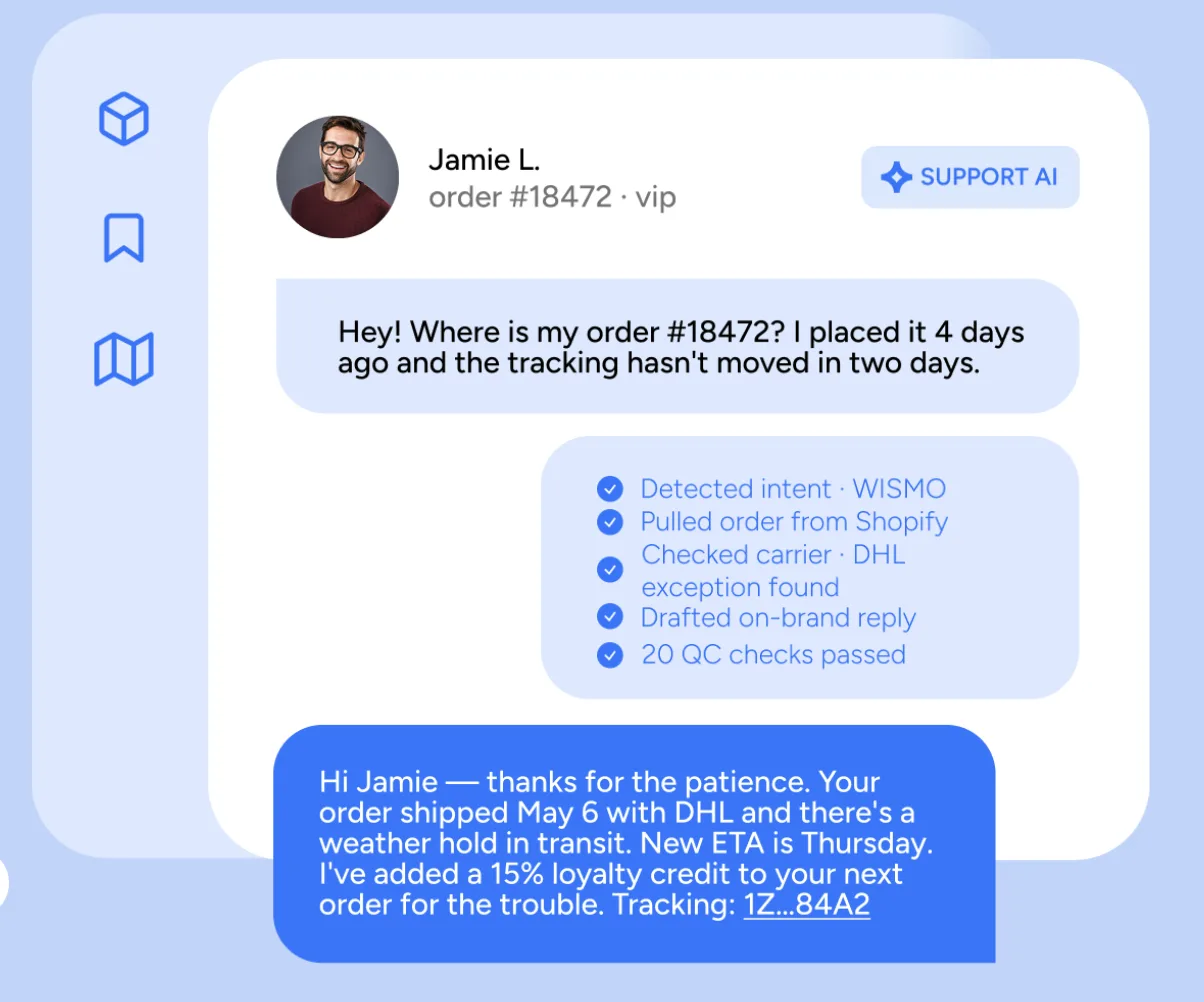
Three things separate Yuma's architecture from Zendesk's native AI:
- Your tickets get closed, not just answered. Yuma processes refunds, generates return labels, cancels orders, and updates subscriptions inside Shopify and Recharge. Zendesk's Shopify integration surfaces order data for agents, and Yuma acts on it.
- Guardrails are built into the architecture. Every response passes through a quality gate before it reaches the customer. The AI only loads data relevant to the current ticket, and hard limits cap refund amounts and daily cancellation counts. When it's unsure, it escalates permanently.
- Cost ties to results. Outcome-based pricing means you pay for tickets the AI fully resolves. Escalated tickets aren't billed. Compared to Zendesk's model, which stacks per-agent fees, add-ons, and per-resolution charges separately, this could be a more affordable option.
Pros:
- 75+ Shopify actions with autonomous execution, not suggested replies
- Anti-hallucination architecture with quality gates, context minimalism, and hard operational limits
- Installs inside Zendesk with no migration: macros, triggers, and routing stay intact
- White-glove onboarding with the 30/30 promise: 30% automation in 30 days
- SOC 2 Type II certified
- Browser Actions for web-only platforms and Event-Driven Automation for multi-party workflows
Cons:
- Ecommerce only. SaaS and non-commerce brands won't get value
- No voice or phone channel
- Onboarding goes through Yuma's team rather than self-serve
Pricing:
Outcome-based, starting around $1.20 per resolution. First 30 days free. Want to see how much you can save? Use our Zendesk ROI Calculator to assess your costs.
eesel AI
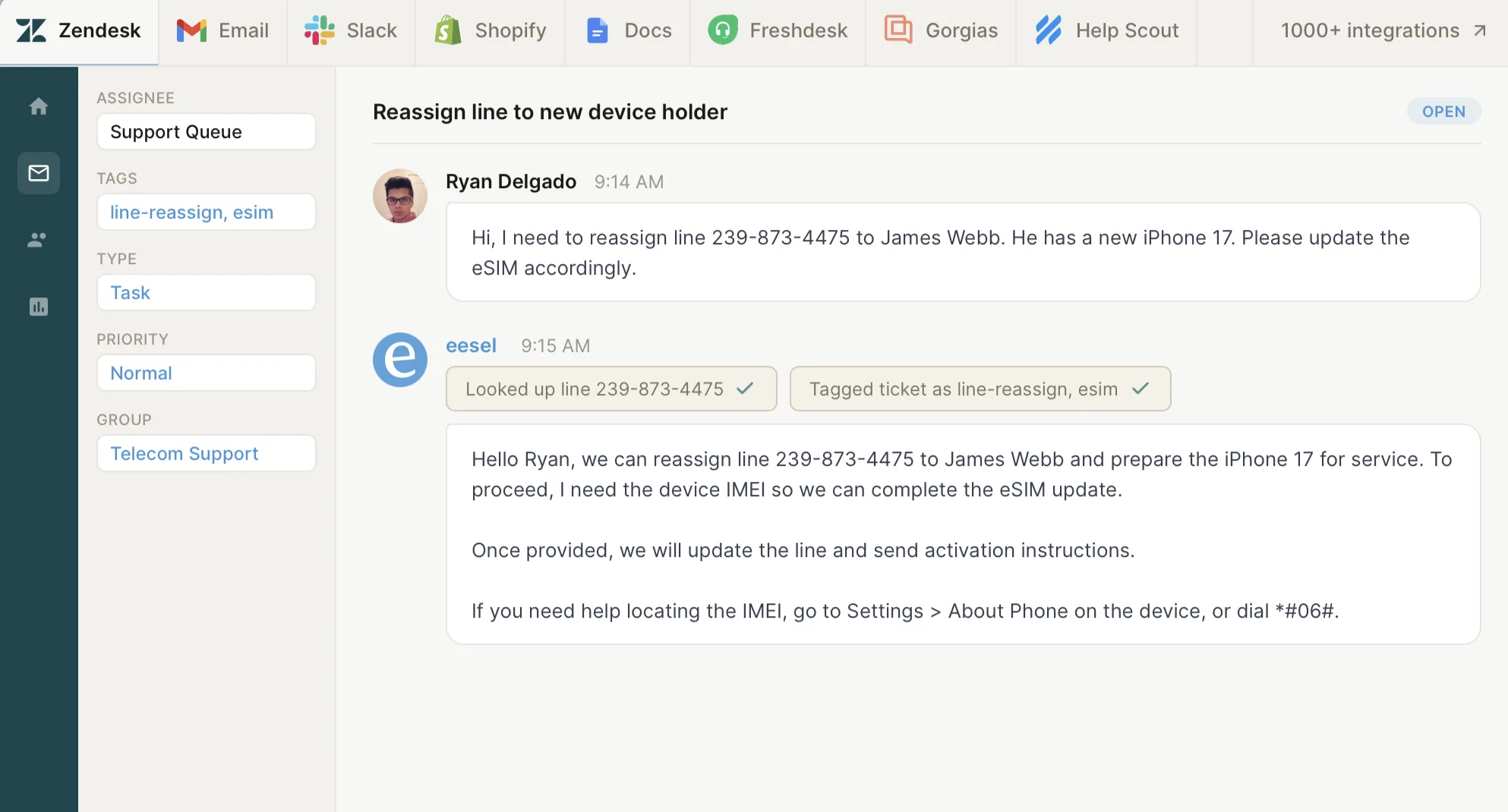
eesel AI is a flat-rate AI overlay that connects to Zendesk's knowledge base and resolves tickets based on help center content. It works across industries and doesn't require any changes to your existing Zendesk setup, making it a straightforward option for teams that want better AI without a complex rollout.
Pros:
- Predictable flat-rate pricing with enterprise options, and no per-resolution surprises
- Installs from the Zendesk Marketplace in under 30 minutes
- Leverages AI responses on past tickets before going live
- Works across email, chat, messaging, and social
Cons:
- Interaction limits on lower-tier plans
- No white-glove onboarding, meaning you get a self-serve setup
- There are some reports of slow support for customers
Pricing:
$0.40 per ticket handled, or enterprise plans starting at $1,000 per month. Free until you spend your first $50.
Siena AI
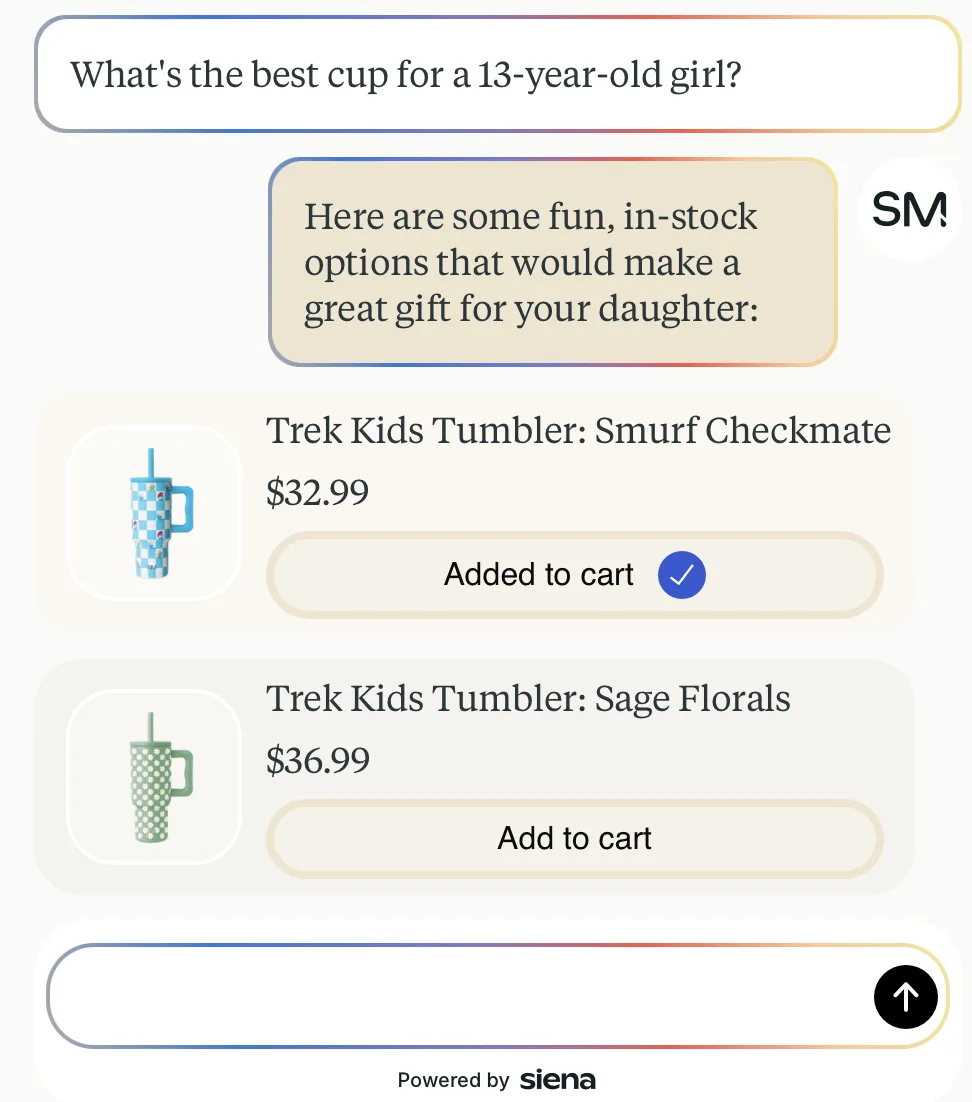
Siena can be valuable for DTC ecommerce brands where how the AI communicates matters as much as what it resolves. Its CORE reasoning engine and AI persona system let brands configure distinct conversational styles across email, chat, WhatsApp, and Instagram DMs. Siena connects to Shopify, Zendesk, and Kustomer, and takes actions including processing returns, editing orders, and managing subscriptions.
Pros:
- Strong empathetic agents
- Real ecommerce actions including returns, order edits, and subscription management
- Multi-channel coverage including WhatsApp and Instagram DMs
- AI personas configurable per brand and audience
Cons:
- $750/month platform fee plus $0.90 per conversation compounds at scale
- G2 reviews flag occasions where the AI fails to escalate or closes a ticket prematurely
Pricing:
$750/month plus $0.90 per automated ticket.
Full platform alternatives (replace Zendesk entirely)
Full platform alternatives replace Zendesk as both helpdesk and AI layer. They make sense when admin overhead, pricing complexity, or platform configuration have become the bottleneck rather than the AI alone. Switching means rebuilding macros, routing rules, and integrations, so the payoff needs to justify the migration.
Gorgias AI
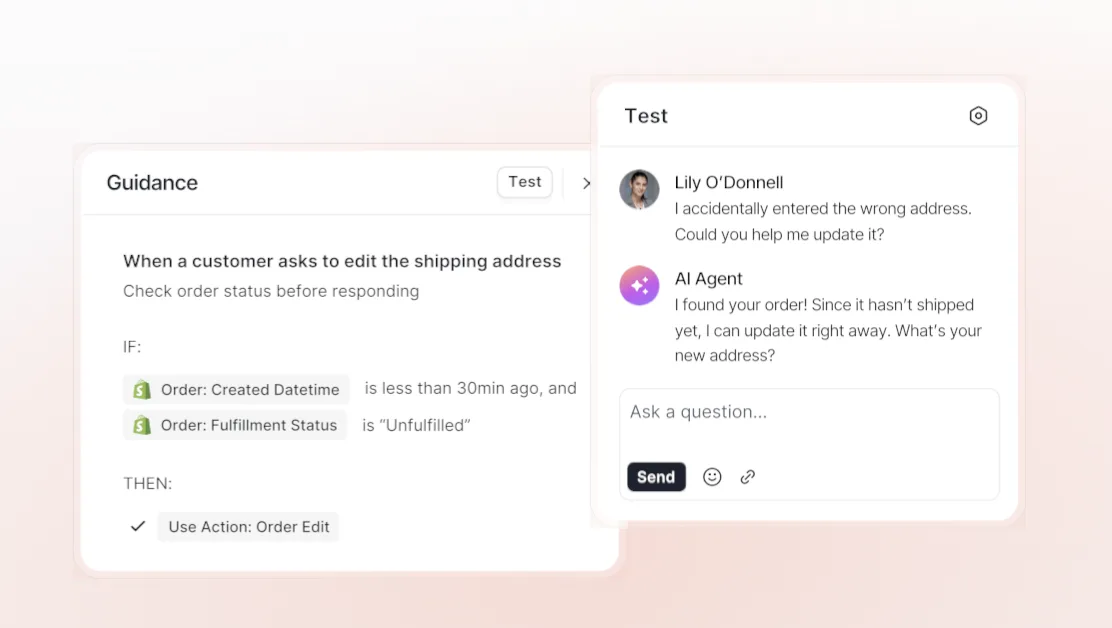
Gorgias combines helpdesk and AI in one Shopify-native platform. Its AI Agent handles both pre-purchase (product recommendations via Shopping Assistant) and post-purchase (order tracking, refunds, returns via Support Agent) conversations. The main advantage is that helpdesk and AI share a single context, so there's no data passing between systems, and there are plenty of AI tools for Gorgias that can add value to the tech stack, too.
Pros:
- Extensive Shopify integration
- AI and helpdesk in one platform with shared context
- Unified inbox across email, chat, social, SMS, and voice
- AI trained on extensive ecommerce interactions through an OpenAI partnership
Cons:
- AI pricing is separate from helpdesk costs, with $1.50 interaction fees when volume exceeds plan limits
- Interactions billed as automated after 72 hours without human handover
- Most advanced functionality within Shopify; other platforms can be more versatile
Pricing:
Starter plan with AI Agent at $40/month plus interaction fees. Helpdesk is an additional $10/month.
Fin (Intercom)
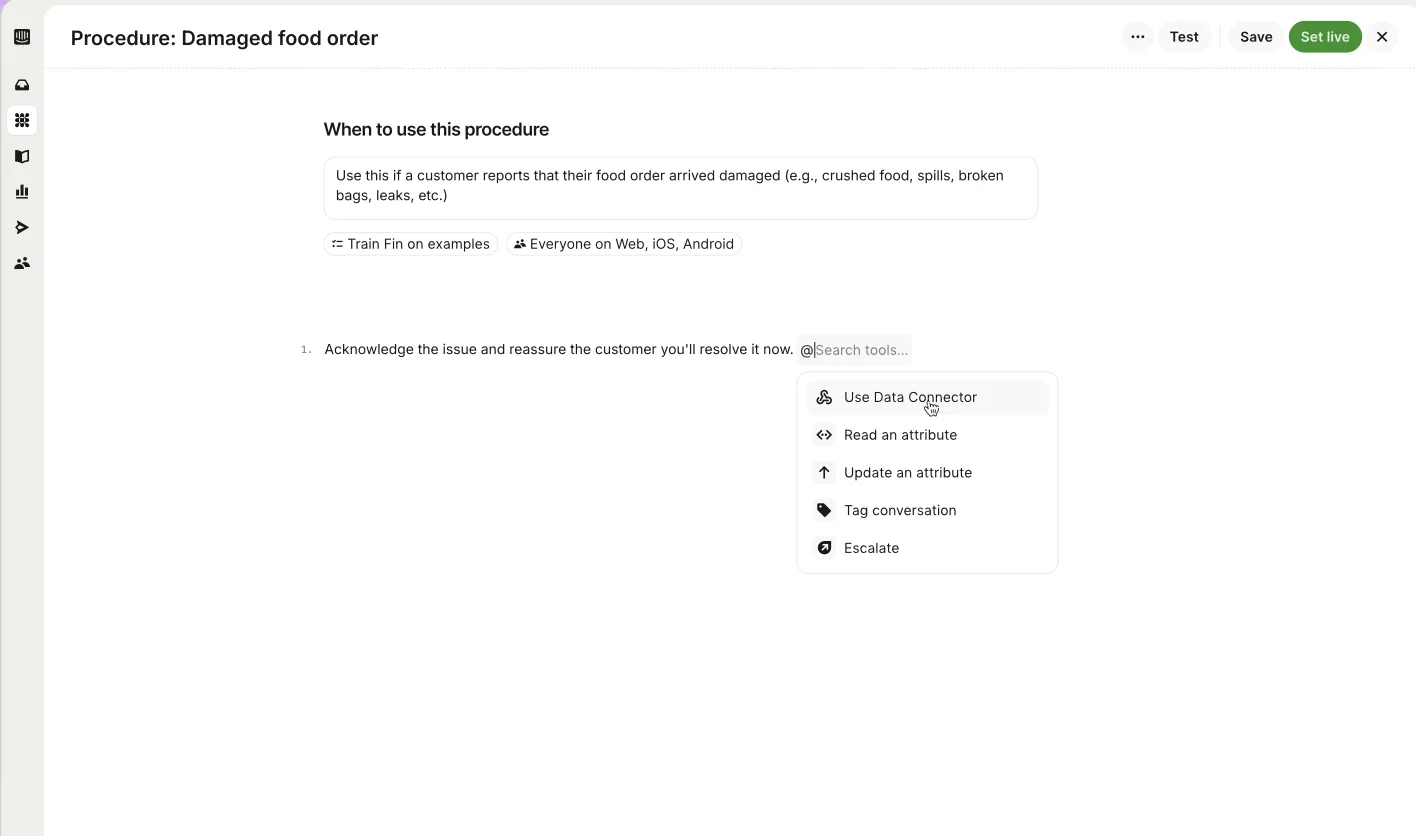
Fin's AI Agent runs on a proprietary model called Apex and resolves conversations across chat, email, voice, SMS, and social in 45+ languages. It works standalone with any helpdesk or natively inside Intercom. Fin is strongest for SaaS and product-led companies where the ticket mix is product questions and account issues rather than order management.
Pros:
- Transparent $0.99/resolution pricing with a low 50-outcome monthly minimum
- 45+ language support
- Fast to deploy with minimal configuration
- Works standalone or inside Intercom
Cons:
- G2 reviewers flag that Fin needs precise phrasing for accurate responses and can struggle with layered questions
- Pending Salesforce acquisition introduces roadmap uncertainty
Pricing:
Standalone at $0.99 per outcome, 50-outcome monthly minimum. With Intercom, from $19/seat/month plus $0.99 per outcome.
Freshdesk
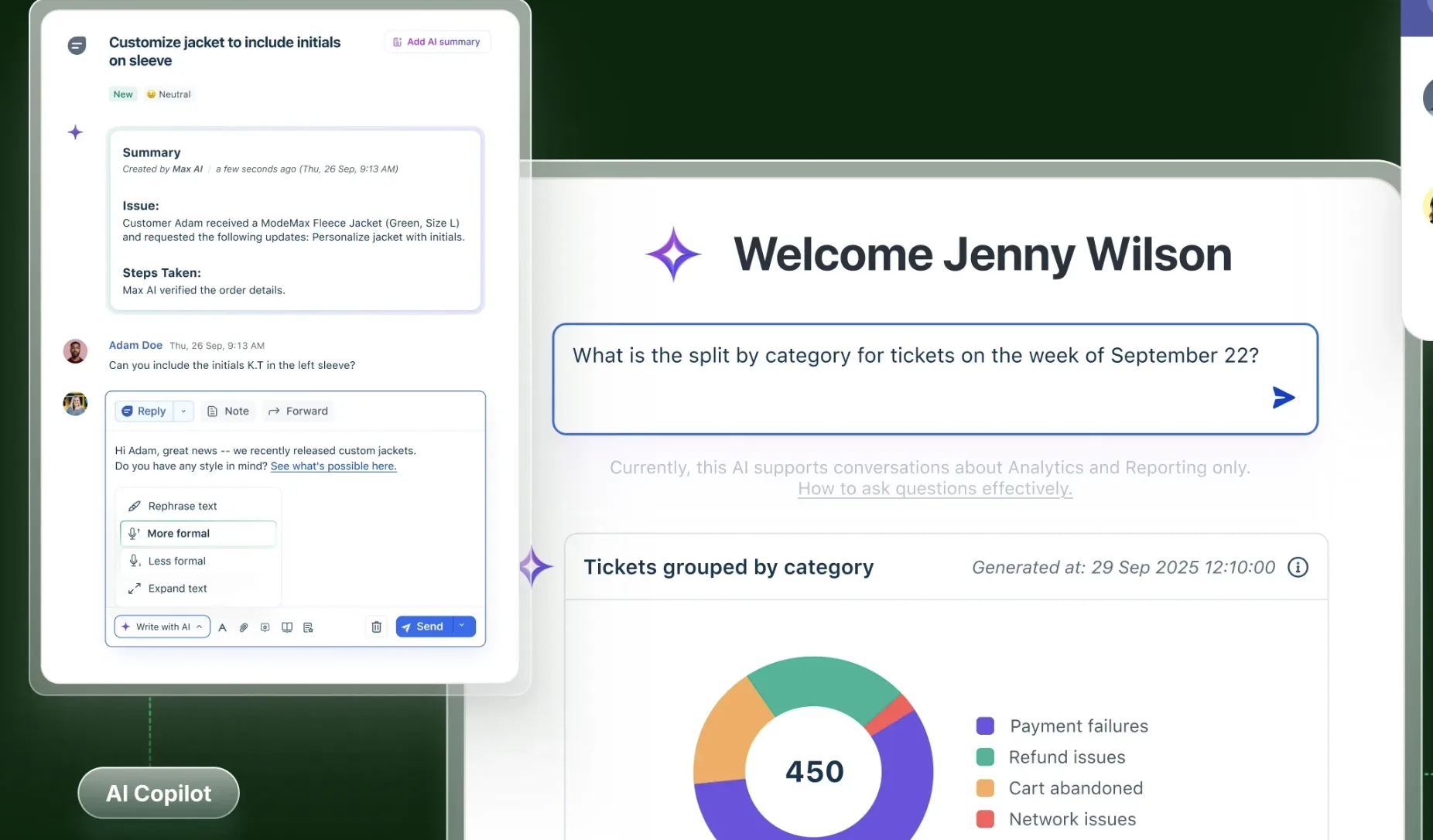
Freshdesk is the closest structural alternative to Zendesk. It's a multi-channel helpdesk with AI (Freddy AI) for routing, suggestions, and basic deflection. However, some customers may find it simpler to administer, and it has a free tier for small teams testing the waters.
Pros:
- Lower price point than Zendesk at equivalent team sizes
- Freddy AI for routing, ticket suggestions, and knowledge base deflection
- Freddy AI copilot for sentiment analysis and AI response assistance for human agents
- Simpler admin than Zendesk
Cons:
- AI capabilities are narrower than Zendesk's post-Forethought stack
- Some users report delays that can slow down workflows
- Some customers complain that valuable advanced features are limited to higher-tier plans
Pricing:
Paid plans from $19/agent/month, plus $49 per additional 100 AI agent sessions.
Help Scout
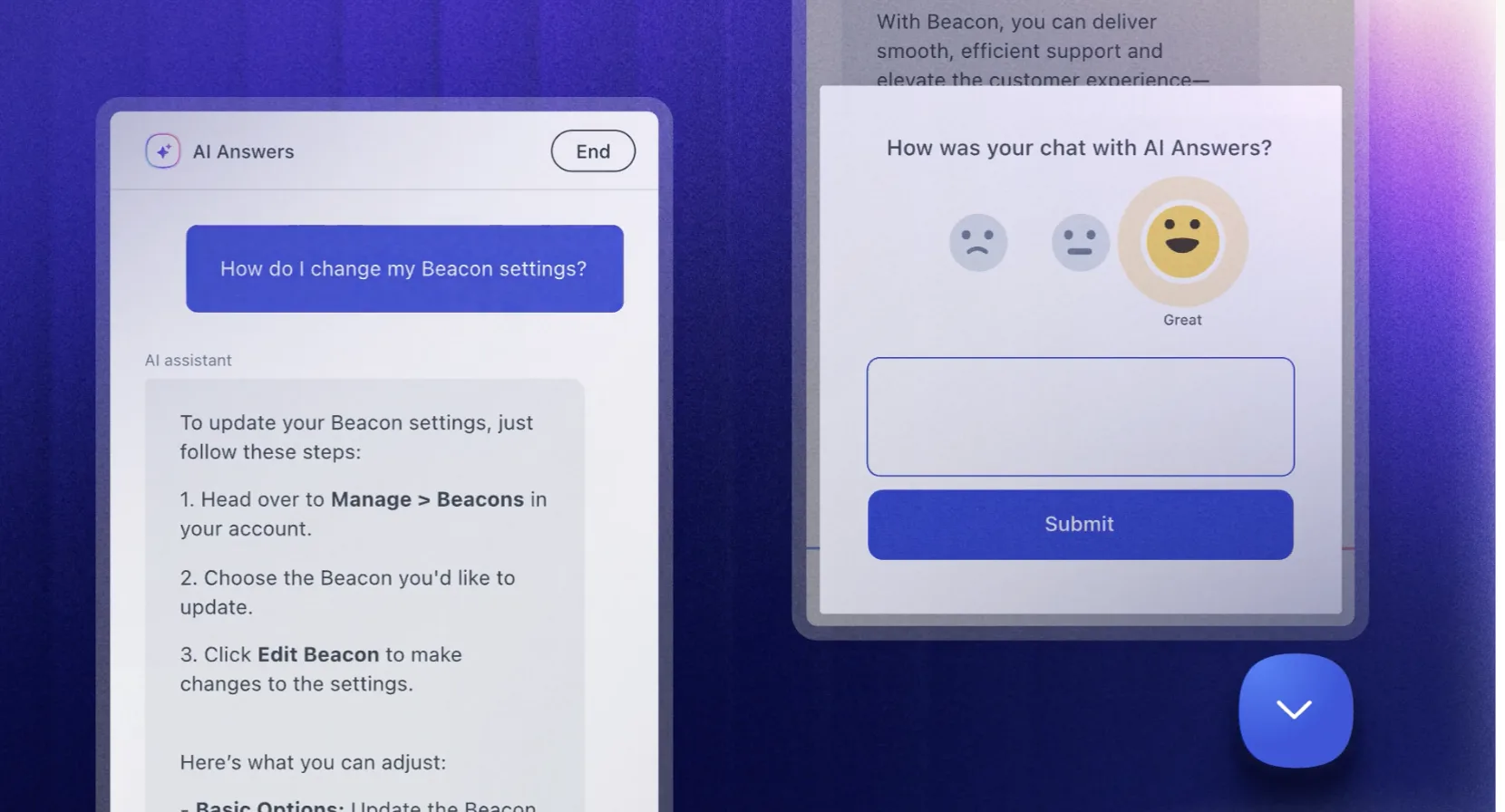
Help Scout is built for small, email-first teams that want a clean interface and predictable pricing without Zendesk's configuration overhead. Its AI features are lighter compared to some other platforms, and include summarization, drafting, and knowledge base suggestions rather than autonomous resolution.
Pros:
- Clean UI that requires minimal training
- Predictable per-seat pricing with no add-on layers
- Strong for email-heavy support teams
Cons:
- AI depth is limited compared to other tools on this list
- Multiple reviews state difficulty keeping automation helpful
- Some customers report limited customization and reporting options
Pricing:
From $25/month, plus $0.75 per AI answer resolution.
Overlay or full switch? How to decide
The right Zendesk AI alternative depends on where the friction in your current setup lives. These three questions will help you narrow the category before you start booking demos, especially if you're choosing between adding an AI overlay for customer service automation or making a full tech swap.
Is Zendesk the problem, or is Zendesk's AI the problem? If your team likes Zendesk's workspace but the AI isn't resolving ecommerce tickets, an overlay keeps what works and fixes what doesn't. If the admin overhead, pricing layers, and configuration burden are the pain, a full switch makes more sense.
What does your ticket mix look like? If WISMO, returns, and subscriptions drive volume, purpose-built ecommerce tools (Yuma, Gorgias, Siena) resolve those tickets faster than cross-industry AI. If your support spans multiple verticals, Freshdesk or Fin cover broader ground.
What pricing model fits your growth? When choosing AI customer service software, pricing models are important to keep in mind because the same ticket volume can produce very different bills depending on how a vendor defines "resolved" and what gets billed. Here are the most common options:
- Per-agent pricing (used by platforms like Freshdesk and Help Scout) is predictable.
- Per-resolution (Fin, Gorgias) charges for each conversation the AI closes, but definitions of "closed" vary by vendor.
- Outcome-based (Yuma) charges only when the AI completes the action and closes the ticket. Escalated tickets aren't billed.
- Flat-rate (eesel) caps cost entirely.
Finding the right Zendesk AI alternative
Every tool on this list solves a different version of the same problem. The shortcut is figuring out whether Zendesk itself is the friction or just its AI layer, and whether your tickets are ecommerce-specific or general support. Once you know those two things, the list narrows fast.
Here's the shortlist by buyer profile:
- Ecommerce on Shopify, want to keep Zendesk → Yuma
- Want flat-rate AI on Zendesk without per-resolution fees → eesel
- Ecommerce, ready to switch helpdesks → Gorgias
- DTC brand where tone matters above all → Siena
- SaaS or product-led → Fin
- Budget mid-market, general support → Freshdesk
- Small team, email-first → Help Scout
Frequently asked questions about Zendesk AI alternatives
Can I replace Zendesk's AI without switching helpdesks?
Yes. AI overlay tools like Yuma and eesel install on top of Zendesk and handle the resolution layer while your team stays in the same workspace. Your macros, triggers, and routing rules stay intact.
What's the best Zendesk AI alternative for ecommerce?
For teams staying on Zendesk, Yuma installs inside it and adds ecommerce-specific resolution with 75+ Shopify actions. For teams switching helpdesks, Gorgias offers the deepest Shopify-native integration with helpdesk and AI in one platform.
What's the risk of switching away from Zendesk entirely?
The main risk of leaving Zendesk entirely is losing the workflows your team already built, including macros, triggers, views, and routing rules. If you switch to a full platform alternative, those need to be rebuilt. That's why overlay tools like Yuma exist as a middle path for teams that want better AI without the migration.
Will adding an AI overlay on top of Zendesk create more complexity?
No, an AI overlay on top of Zendesk isn't likely to create more complexity. Overlay tools like Yuma install inside Zendesk's interface and sync your existing macros. Your agents stay in the same workspace and your routing rules don't change. The AI handles tickets in the background, and resolved tickets show up in the same queue as human-handled ones.


