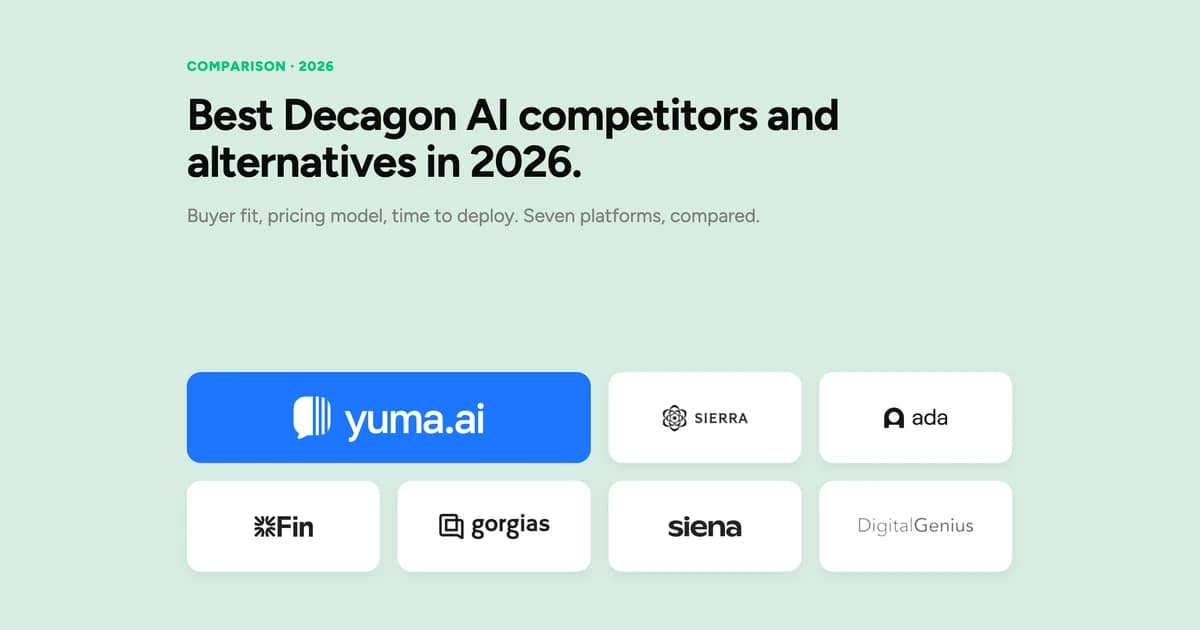
With a seemingly never-ending list of AI platforms to choose from, companies now need to determine how to integrate platforms offering agentic AI and AI-powered automation into their existing tech stack.
Decagon's Agent Operating Procedures (AOPs) give teams precise control over how AI agents behave. But its reported $50K annual floor, sales-led process, and standalone platform model mean that mid-market teams without six-figure automation budgets often find it's built for a larger operation than theirs.
This list covers seven alternatives, organized by who they actually serve, so you can match the tool to your team rather than the other way around.
What Decagon does well and where teams look for alternatives
Decagon uses a framework called Agent Operating Procedures to define exactly how AI agents handle each type of interaction. AOPs give technical teams granular control over agent behavior, and the results show in Decagon's enterprise deployments across tech, fintech, and SaaS.
There are two factors, though, that can make Decagon not compatible with how some teams operate:
- Standalone platform model. Decagon connects to helpdesks like Zendesk and Gorgias but runs as a separate system alongside them rather than inside them. For ecommerce teams with workflows already configured in their helpdesk, that means managing two platforms instead of one.
- Pricing floor. Vendr marketplace data places the median Decagon contract over $400,000 annually, with a reported $50K floor. For mid-market ecommerce brands, that can exceed the entire CX automation budget, especially since the McKinsey 2026 State of AI report found that one in five respondents said their organization was limiting AI usage due to operating costs.
Best Decagon alternatives for 2026
The tools below span ecommerce-specific platforms, enterprise peers, and helpdesk-native options. Information is current as of August 2026, sourced from each vendor's website and G2 reviews. Verify directly with vendors before making a decision.
| Tool | Best for | Platform model |
|---|---|---|
| Yuma AI | Ecommerce on Shopify + Gorgias/Zendesk | Installs inside your helpdesk |
| Fin | SaaS and product-led | Standalone or inside Intercom |
| Sierra | Enterprise retailers | Standalone |
| Ada | Enterprise, high volume | Standalone |
| Gorgias AI | Shopify brands wanting helpdesk + AI in one | Helpdesk with built-in AI |
| Siena AI | DTC brands prioritizing brand voice | Standalone, connects to helpdesks |
| DigitalGenius | Ecommerce with complex shipping | Standalone |
Yuma AI
Yuma AI was built from scratch for ecommerce. Where Decagon requires adding a standalone platform to your stack, Yuma installs inside the helpdesk your team already uses, which means it can integrate into your existing macros, triggers, and routing rules.
The core difference is what happens when a ticket arrives. Yuma's Auto-Pilots take autonomous actions such as processing refunds inside Shopify, managing subscriptions in Recharge, generating return labels, and updating orders. Each ticket type gets its own specialist agent with its own process and guardrails, and no engineering resources are needed from your team during setup.
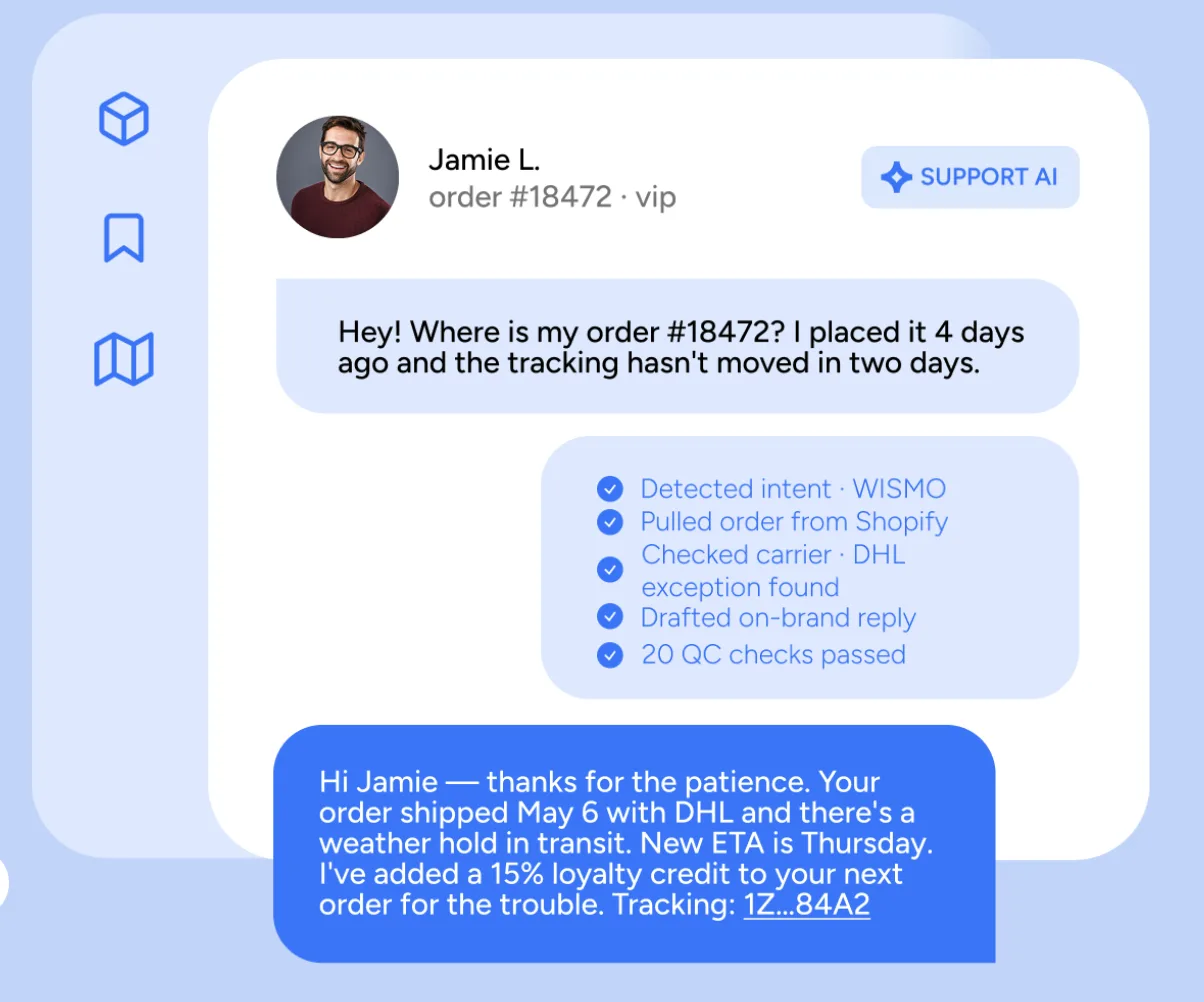
Importantly, accuracy is important. Yuma's anti-hallucination architecture includes:
- Context minimalism, where the AI only loads data relevant to the current ticket
- Modular sub-processes that prevent cross-contamination between unrelated workflows
- A pre-send quality gate that checks every response before it reaches the customer
- Hard-coded operational limits on destructive actions like refunds and cancellations
- Permanent escalation when the AI isn't confident, rather than guessing
Pros:
- Autonomous actions with 75+ Shopify actions, not suggested replies
- Anti-hallucination architecture with quality gates, context minimalism, and hard operational limits
- Installs inside Gorgias, Zendesk, Kustomer, or Gladly with no migration
- Browser Actions and Event-Driven Automation handle the tickets that stall other platforms
- 30/30 promise: 30% automation in 30 days
- SOC 2 Type II certified
Cons:
- Ecommerce only. SaaS and non-commerce brands won't get value
- No voice or phone channel
- Onboarding goes through Yuma's team rather than self-serve
Pricing:
Outcome-based, starting around $1.20 per resolution. Escalated tickets aren't billed. First 30 days free. The Yuma AI vs Decagon page covers the head-to-head, and the broader Yuma AI comparison page shows how Yuma stacks up across the category.
Fin (Intercom)
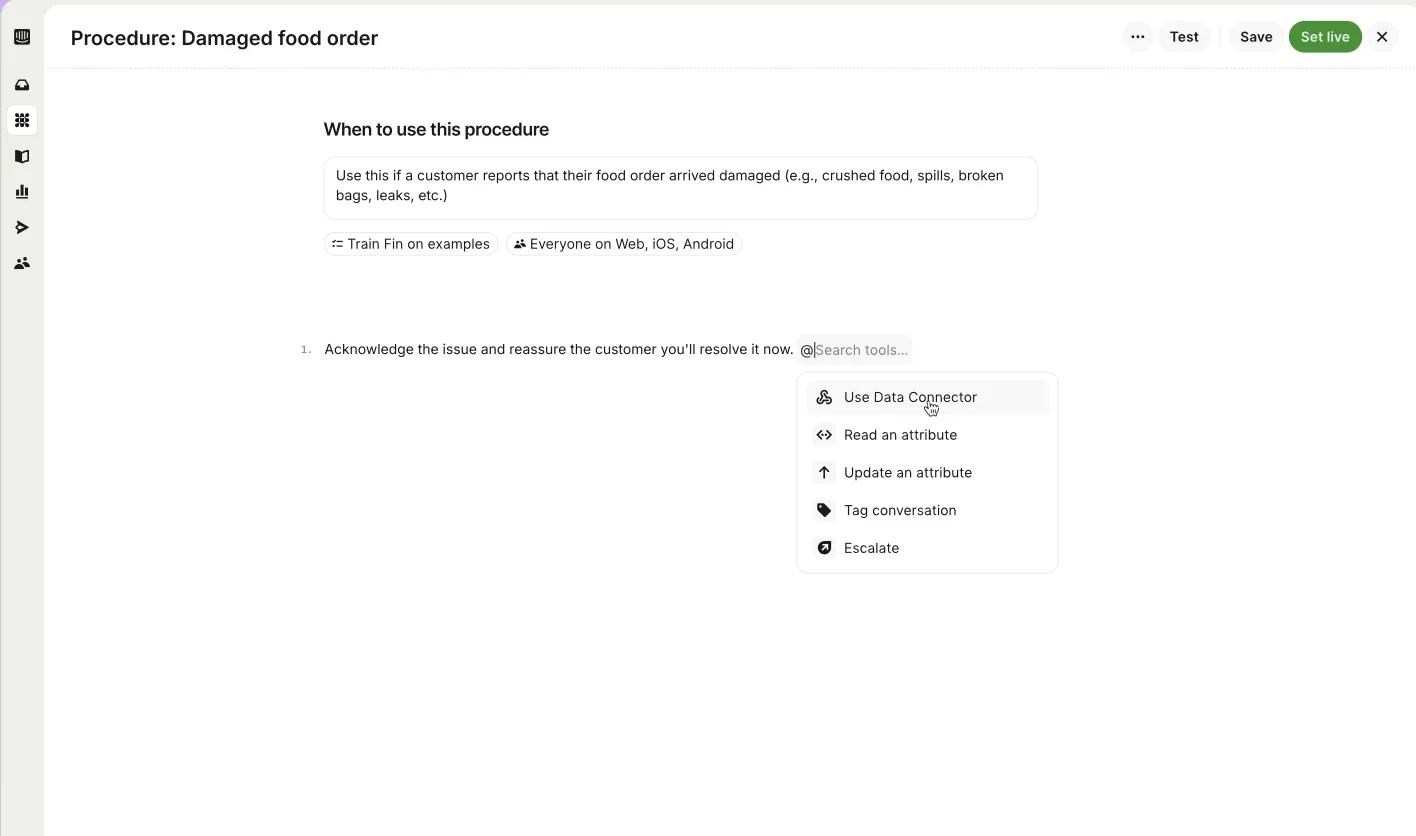
Fin runs on a proprietary model called Apex and resolves conversations across chat, email, voice, SMS, and social. It supports 45+ languages and reports resolution rates of up to 66%. For SaaS and product-led companies, Fin is often the first tool that comes up because it works standalone or inside Intercom's helpdesk.
Pros:
- Transparent $0.99/resolution pricing with a low 50-outcome monthly minimum
- Fast to deploy, with relatively minimal configuration required
- Support for 45+ languages
- Works standalone or inside Intercom
- Dedication to advancement, with 226 updates being shipped in 2025 alone
Cons:
- There are some customer complaints that you need to use specific phrasing for accurate responses, and that the platform can struggle with nuanced or complex issues
- The pending Salesforce acquisition raises questions about future pricing and product direction
Pricing:
Standalone at $0.99 per outcome, 50-outcome monthly minimum. With Intercom, plans start at $19/seat/month plus $0.99 per outcome.
Sierra
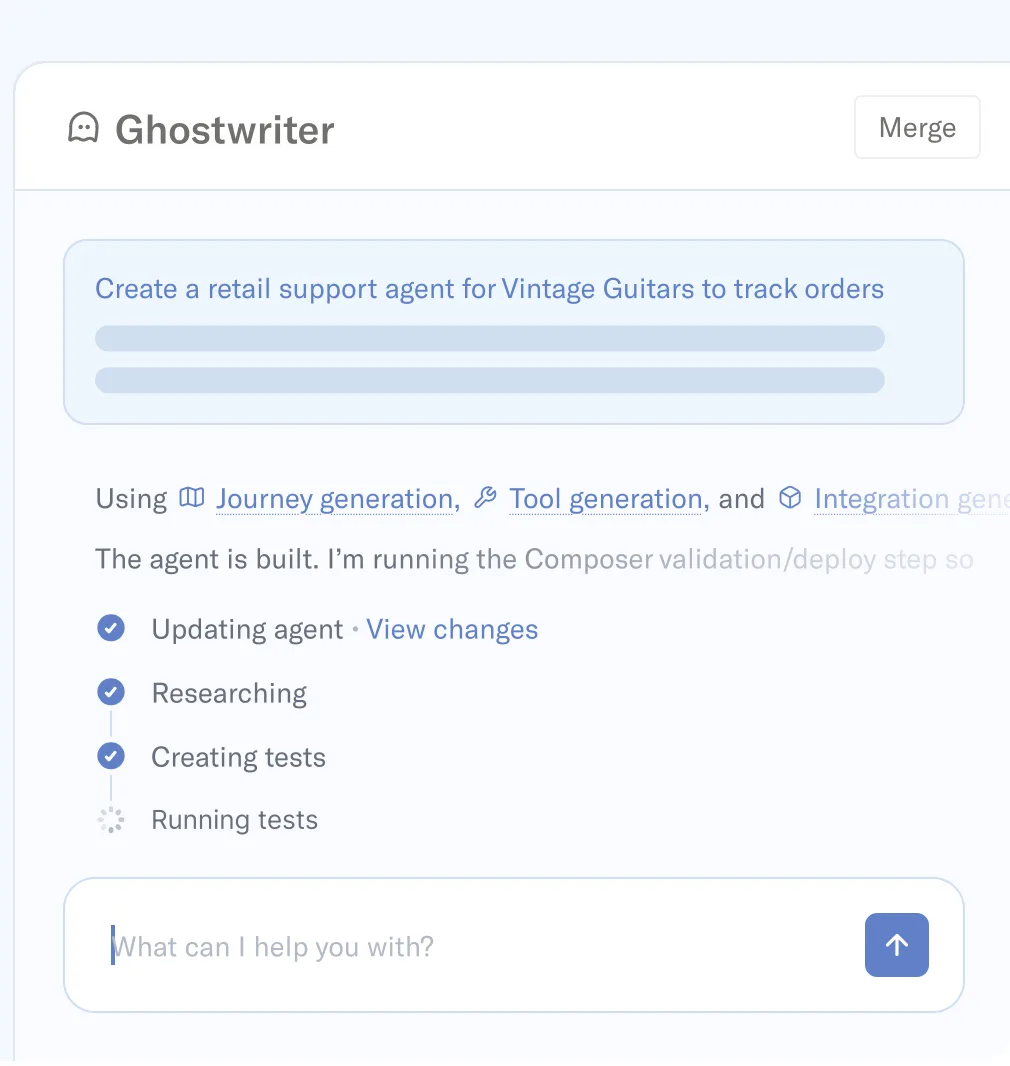
Sierra was co-founded by Bret Taylor (former Salesforce co-CEO) and Clay Bavor (18-year Google veteran). Its AI agents handle conversations across chat, email, and voice with outcome-based pricing tied to business results. Sierra serves large enterprise retailers and consumer brands.
Pros:
- Leadership team with deep enterprise credibility
- Outcome-based pricing ties vendor incentives to your results
- Strong in retail and consumer brands at scale
- Works across SMS, chat, WhatsApp, email, voice, and ChatGPT
- Explorer dashboard to analyze AI agent performance for continual improvement
Cons:
- Reported annual minimums around $150,000, with first-year costs often reaching $200,000 to $350,000
- Deployments typically take up to nine months
Pricing:
Custom enterprise contracts only, but the platform uses outcome-based models with per-resolution rates negotiated per deal.
Ada
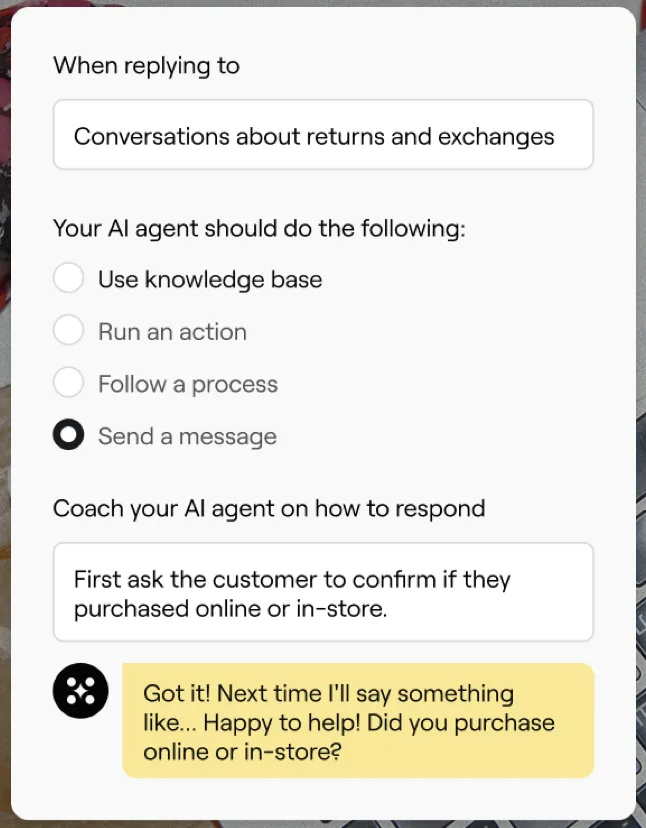
Ada's no-code builder lets non-technical teams design AI conversation flows without engineering support, which directly addresses one of Decagon's biggest barriers. SOP-driven playbooks structure how the AI resolves issues across chat, email, voice, SMS, and social. Ada supports 60 languages and targets enterprise buyers across industries.
Pros:
- No-code builder removes the engineering dependency that Decagon requires
- Strong multilingual and multi-channel coverage
- Industry-specific Playbooks give structure to complex resolution workflows
- Focus on security, compliance, and brand safety guardrails to offer consistent brand experience
- Extensive integrations with other customer support tools
Cons:
- No public pricing, and enterprise contracts are only available through a sales process
- No native Shopify integration currently, so ecommerce workflows will need custom configuration
- G2 reviewers flag complexity when connecting Ada to existing systems
Pricing:
Custom enterprise contracts. No public pricing page.
Gorgias AI
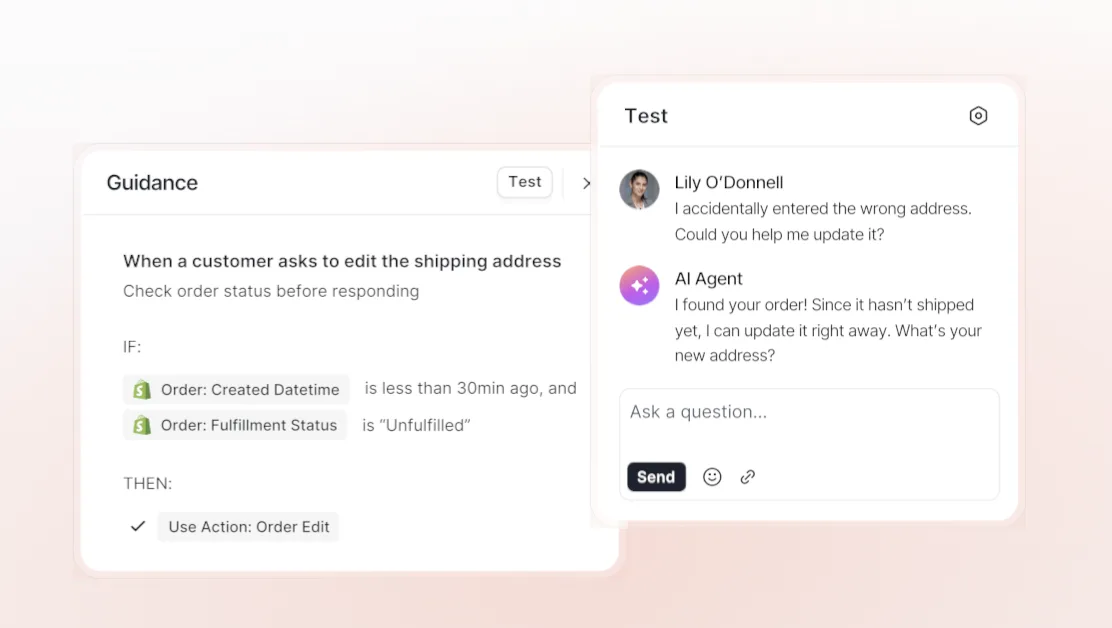
Gorgias combines helpdesk and AI in one platform, which solves the standalone-vs-overlay question entirely. Its AI Agent has two modes: a Shopping Assistant for pre-purchase product recommendations and a Support Agent for post-purchase resolution including refunds, order tracking, and returns.
Pros:
- Deepest native Shopify integration in the category
- Helpdesk and AI share context, so nothing gets lost between systems
- AI trained on millions of ecommerce interactions through an OpenAI partnership
- Dedicated Support Agent and Shopping Assistant can help customers at different stages of the funnel
- Ticket classification based on urgency and intent, with all sensitive issues being escalated immediately
Cons:
- AI pricing is separate from helpdesk costs, with $1.50 interaction fees when volume exceeds plan limits
- Delays in reporting can happen since interactions are only counted as automated once they've gone 72 hours without handover to a human agent
Pricing:
Starter plan with AI Agent at $40/month plus interaction fees. Helpdesk is an additional $10/month.
Siena AI
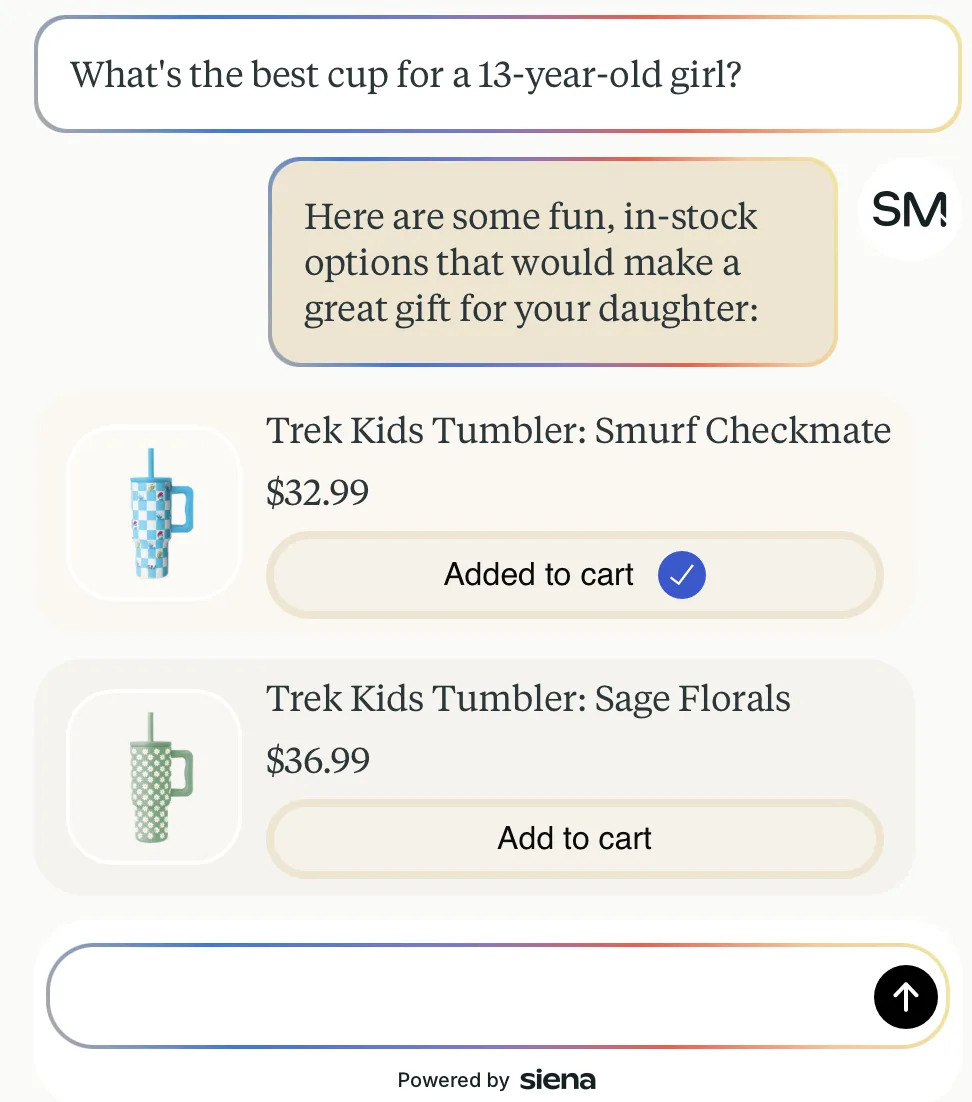
Siena AI was designed for DTC brands that care about how the AI sounds as much as what it does. Its CORE reasoning engine and AI persona system let brands configure distinct conversational styles, which makes it a strong pick for lifestyle, beauty, and fashion companies where tone shapes the customer relationship.
Pros:
- Agents that can reliably portray your brand voice consistently
- Takes real ecommerce actions, including returns, order edits, and subscription management
- Records of good customer support
- Generative product recommendations during conversations to drive sales
- Integration with popular platforms, including Shopify, Yotpo, and ShipBob
Cons:
- G2 reviews said that sometimes AI doesn't escalate tickets properly when it should, which can be a significant customer service concern
- Similar to Yuma, it requires a separate helpdesk
Pricing:
$750/month plus $0.90 per automated ticket.
DigitalGenius
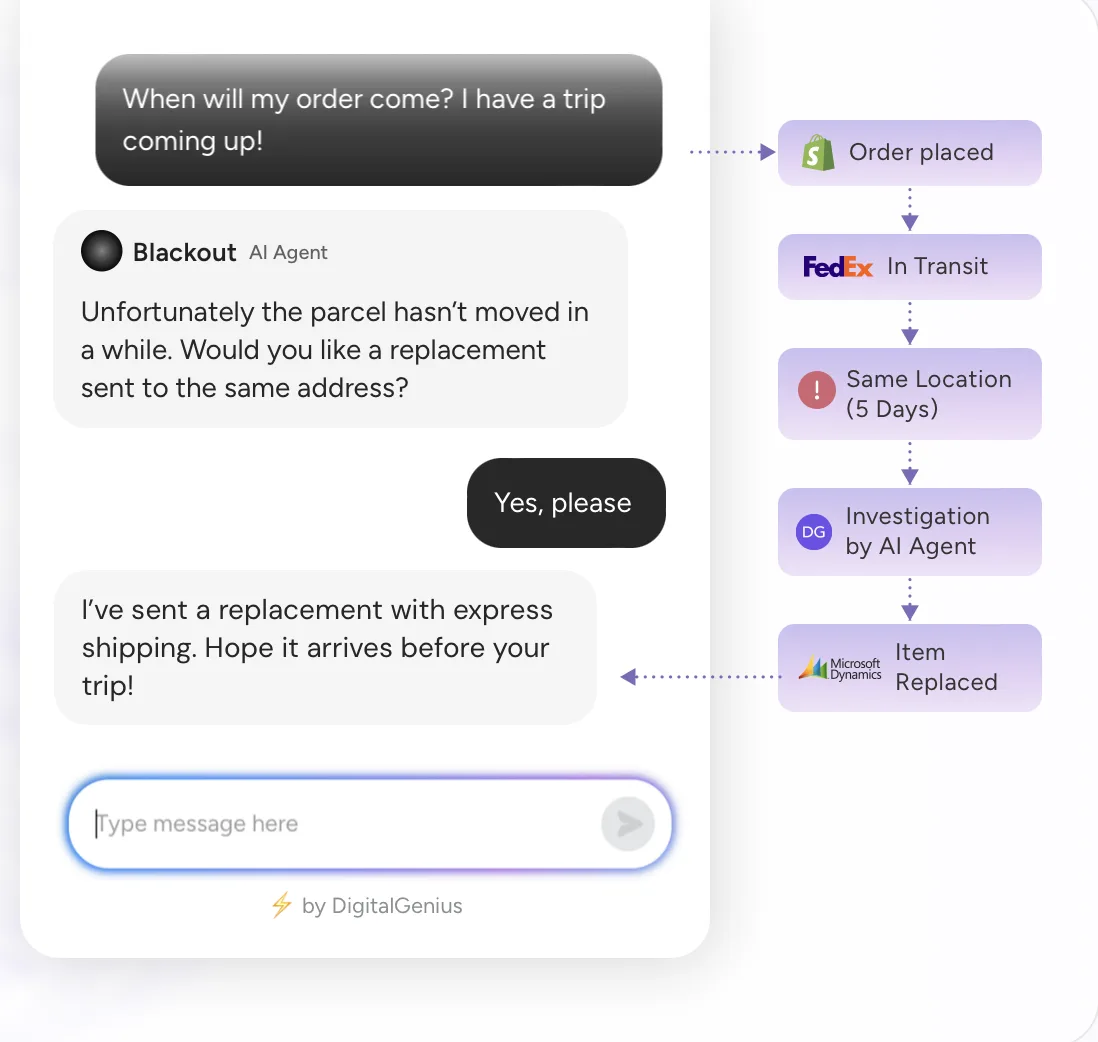
DigitalGenius focuses on ecommerce brands with complex shipping and logistics operations. Its 50+ pre-built use cases cover the standard ticket types such as WISMO, returns, and refunds, but the real differentiator compared to DigitalGenius's competitors is visual AI that analyzes customer-submitted photos of damaged items, and deep carrier integrations that pull real-time shipping data directly into the resolution flow.
Pros:
- Visual AI for damage claims and warranty tickets is a significant advantage
- Pre-built ecommerce use cases reduce configuration time
- Deep carrier and logistics integrations
- Personalized shipping recommendations from merchandising and customer data
- Analytics to help identify top business issues that customers contact your brand about
Cons:
- G2 reviewers note complex processes and limited reporting capabilities
- Less flexibility for edge cases outside the pre-built library
- Enterprise pricing with no public rates
Pricing:
No public pricing page.
Separating real AI agents from chatbots
Decagon and the competitors we've featured in this post are all true AI agent platforms, but the broader market is harder to navigate.
Gartner predicts that over 40% of agentic AI projects will be canceled by the end of 2027 due to escalating costs, unclear business value, or inadequate risk controls. They also estimate that only about 130 of the thousands of vendors claiming "agentic AI" are building the real thing, flagging "agent washing" as a growing market problem.
This is because many chatbots are adding an "AI agent" label to their platform just to sell more seats. They don't actually have agentic capabilities, making it difficult for customers to easily determine what they're actually buying.
Chatbots can complete small, specific actions, like providing canned responses to specific user questions, meaning they're highly limited. Many organizations benefit more from genuine agentic AI capabilities that can plan and execute complex actions like processing refunds or canceling orders without requiring human intervention.
If you're evaluating Decagon alternatives, some of the tools you'll encounter actually are chatbots instead of AI agents. These questions will help you tell the difference when choosing customer service automation software:
Does it take actions, or just draft replies? The line between an AI agent and a chatbot is whether it can process a refund, cancel an order, or generate a return label on its own. If a human still has to click send, you're paying for a drafting tool.
How does it handle mistakes? AI that guesses when it's unsure creates a different kind of cost. Look for structural safeguards: pre-send quality checks, hard limits on destructive actions like refunds and cancellations, and escalation logic that permanently exits the ticket when the AI can't resolve it. These are architectural decisions, not toggleable settings.
Does it plug into your stack, or replace it? Decagon operates as a standalone platform that connects to helpdesks like Zendesk and Gorgias. If your team wants AI working inside their current helpdesk rather than alongside it as a separate system, overlay tools avoid the operational overhead of managing two platforms. Check whether the tool connects natively to your commerce platform or requires middleware.
How does pricing actually work? Per-seat models are predictable but don't tie cost to results. Per-resolution and outcome-based models align spend with what the AI actually does, but "resolved" means different things to different vendors. Ask for the exact definition and whether escalated tickets are billed.
Stop comparing features and start resolving tickets: your shortlist by team profile
When you're making your choice of AI customer service software, remember to account for your specific needs. Here's where each Decagon alternative may benefit different customers:
- Ecommerce brands on Shopify with Gorgias or Zendesk → Yuma
- SaaS and product-led companies → Fin
- Enterprise retailers with six-figure budgets → Sierra
- Enterprise teams that need a no-code builder → Ada
- Shopify brands that want helpdesk and AI in one → Gorgias AI
- DTC brands where tone and voice matter above all → Siena
- Ecommerce with complex shipping and damage claims → DigitalGenius
For ecommerce teams, Yuma handles the ticket types that drive the most volume, including WISMO, returns, subscriptions, and order changes, and it does it autonomously inside your existing helpdesk. That means you won't have a standalone platform to manage, engineering resources aren't required from your team, and there's no charge for tickets that get escalated to a human.
Frequently asked questions about Decagon AI alternatives
What is Decagon AI?
Decagon is an AI customer service platform that uses Agent Operating Procedures (AOPs) to define how AI agents handle interactions. It serves enterprise clients in tech, fintech, and SaaS and operates as a standalone platform that connects to helpdesks like Zendesk and Intercom.
How much does Decagon cost?
Decagon doesn't publish pricing. Vendr marketplace data places the median annual contract over $400,000, with a reported $50K floor.
What's the difference between Decagon and ecommerce tools like Yuma?
Decagon is cross-industry and runs as a separate platform alongside your helpdesk. Yuma is ecommerce-only and installs inside your existing helpdesk. Yuma arrives with 75+ Shopify actions ready to deploy, while Decagon requires those workflows to be configured through AOPs.
Can Decagon handle ecommerce tickets like WISMO and returns?
It can be configured to, but those workflows aren't pre-built. They need to be defined through AOPs and connected via integrations. Ecommerce platforms like Yuma and Gorgias AI come with those capabilities on day one.


